On low pile, well. On thick pile, no - and that is true of the $1,200 machines too. Here is exactly where the line sits and why it does not move with price.
By Scooter M., Enthusiast - published September 2, 2026
We have not tested these machines. Everything here comes from published specifications, manufacturer manuals and retailer listings, all cited below. Prices last verified September 2, 2026.
How this is funded: if you buy through a link here we may earn a commission, at no extra cost to you. It does not change which machines we recommend or what we say about them. Full disclosure.
Robot vacuums work well on low-pile carpet for maintenance cleaning - lifting the surface layer of dust, crumbs and hair daily so it never gets ground in. On medium and high pile they skim rather than clean. The threshold is roughly medium pile, and it does not move if you spend more, because the limit is battery power and machine weight rather than price.
Why the limit is physical, not financial
Three things make an upright vacuum work on carpet, and a robot has none of them.
Mains power. An upright draws whatever the wall socket allows. A robot carries a battery it has to make last 100 to 300 minutes, which hard-caps how much current the motor can pull. A larger motor would simply flatten the battery in twenty minutes.
Weight. An upright weighs fifteen pounds or more, and that mass presses the beater bar down into the pile. A robot weighs four to eight pounds because it has to be carried by small wheels and lifted over thresholds. It physically cannot press as hard.
You. You push an upright slowly, back and forth over the same patch, applying downward force. A robot drives across at walking pace in one direction.
None of those is a cost-cutting decision. A $1,200 robot vacuum has exactly the same battery and weight constraints as a $200 one - it simply has better sensors, a nicer dock and more processing. This is the single most important thing to understand before buying one for a carpeted home.
Where the threshold actually is
How each carpet type behaves under a robot vacuum
Carpet type
What happens
Verdict
Low pile / loop
Surface debris lifted well; brush reaches most of the pile
Works properly
Medium pile
Surface cleaned, base of pile untouched
Maintenance only
High pile / shag
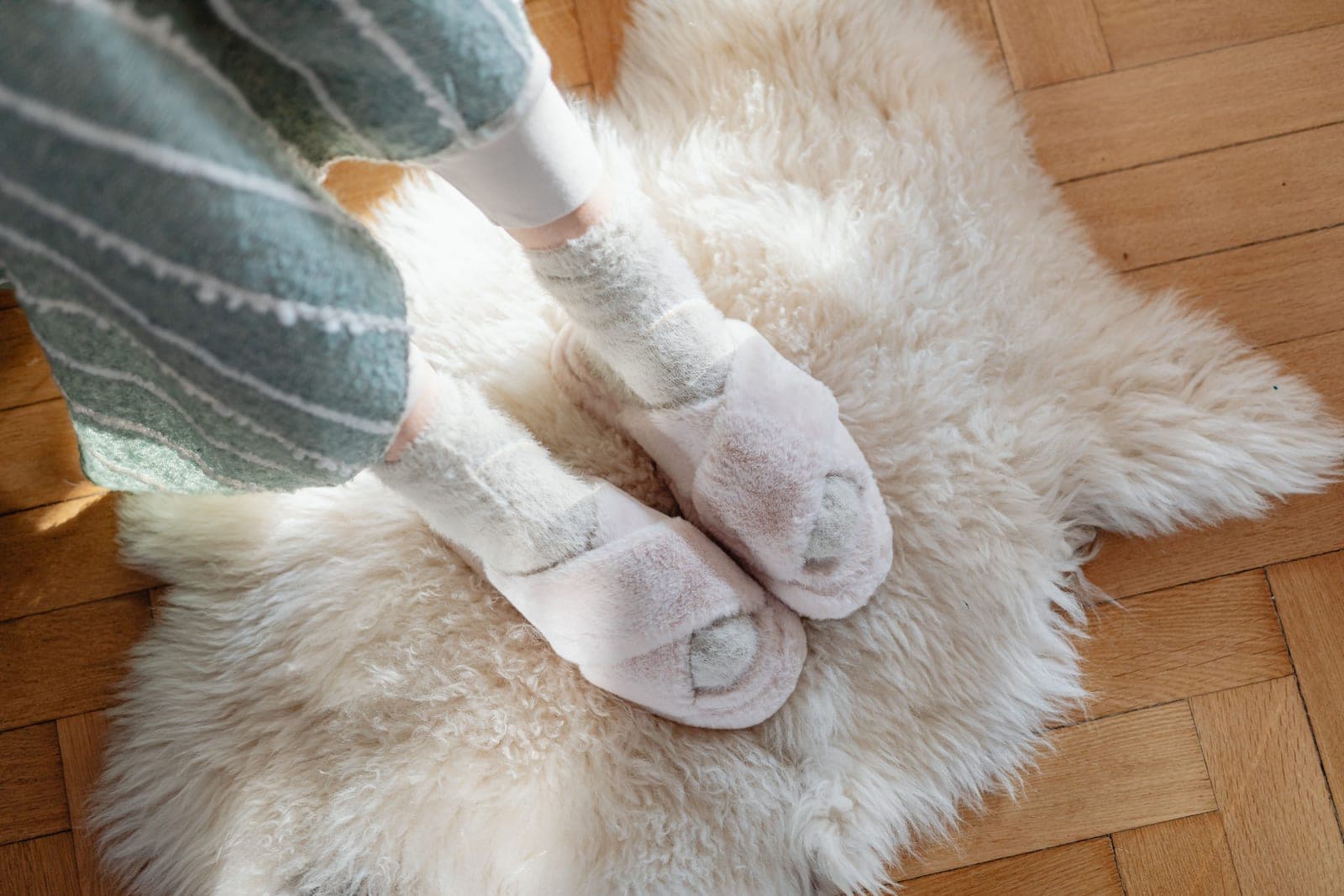
Machine struggles to drive; may beach itself
Draw a no-go zone
Rugs with tassels or fringes
Fringe wraps around the brushroll
Draw a no-go zone
This is a description of the mechanism rather than a test result. We have not run any of these machines on any of these surfaces.
The fringed-rug case is worth stressing because it is the one that actually damages things. A tasselled edge is exactly the right shape to be drawn into a spinning brushroll, and the machine will keep pulling until something gives. Treat fringed rugs as no-go zones regardless of pile height.
The two features that genuinely help
Automatic carpet boost. The machine detects that it has driven onto pile and raises suction without being told. This matters more than the headline Pascal figure, because that figure is normally a peak the machine will not sustain across a whole run - what you want is for the peak to be applied exactly when it is needed. All three picks on this page publish this behavior.
Mop lift. Only relevant if you buy a vacuum-and-mop machine, and then it is essential. Without it, a machine that has just mopped your kitchen drives onto your lounge rug still dragging a wet pad. The Roborock Q10 S5+ publishes an 8 mm automatic lift with ultrasonic carpet detection; everything else at this price relies on you drawing no-mop zones correctly.
What does not help
A bigger suction number on its own. Pascal ratings have no shared test standard between manufacturers, and a fan that can generate high pressure with a sealed inlet does not necessarily move more air across a carpet. See what Pa actually measures.
A brushless suction inlet. This is genuinely excellent for hair on hard floors and it is the wrong tool on carpet - there is no brush to agitate the pile, so it lifts what is sitting on top and leaves everything worked into it. Lefant's own M210 listing goes further and tells you not to use zigzag mode on carpet at all.
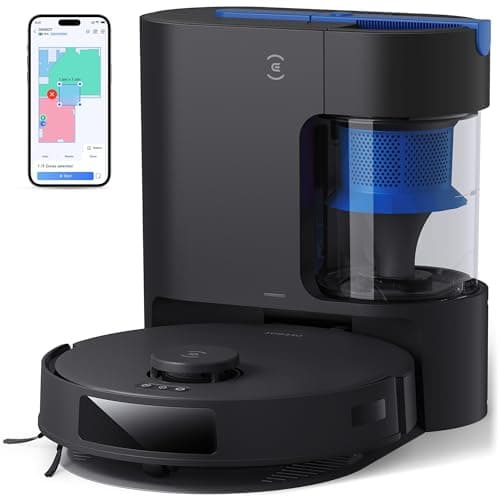
2.7 L bag, manufacturer states up to 70 daysSource: Manufacturer listing
Mopping
Sonic vibration mopping, up to 3,000 scrubs per minute, lifts up to 8 mm on carpetSource: Manufacturer listing
Carpet handling
Ultrasonic detection, raises the mop and increases suctionSource: Manufacturer listing
Anti-tangle
JawScrapers main brush plus anti-tangle side brushSource: Manufacturer listing
What it gets right
Structured-light obstacle avoidance is the single feature that separates a machine that finishes from one you rescue. Nothing else under $300 has it
A mop that lifts 8 mm means it can do hard floors and carpet in one run without wetting a rug
3,000 scrubs a minute is an actual scrubbing mechanism, not a damp pad
10,000Pa, dual anti-tangle brushes, multi-level maps - it gives up almost nothing to a $600 machine
What it gives up
The most expensive machine on this site, and it sits close to the ceiling
2.7 L bags are a recurring cost, and 70 days is mid-pack
The dock does not wash the mop - you rinse the pad yourself
2.4 GHz Wi-Fi only, which is an annoyance on a mesh network
Our scoring
Suction9.0
Navigation9.0
Pet hair8.5
Running cost6.5
Setup8.0
Weights and the arithmetic behind the total are published on How we pick so you can recompute this yourself.
Who it is for: A mixed-floor home with pets, clutter and rugs - the situation every other machine here handles by giving something up.
Skip it if: your floors are entirely hard and entirely tidy. Structured-light avoidance and an 8 mm mop lift are what you are paying the premium for, and a bare hard-floor flat uses neither.
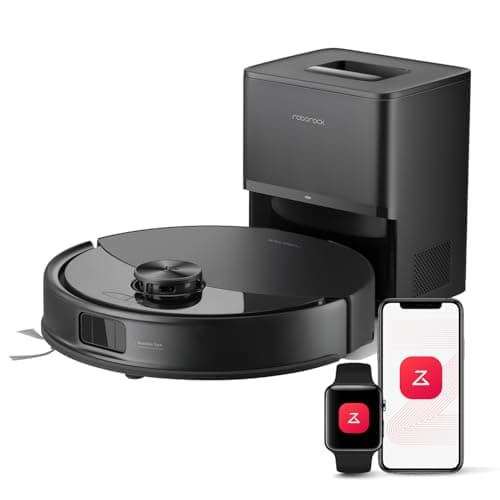
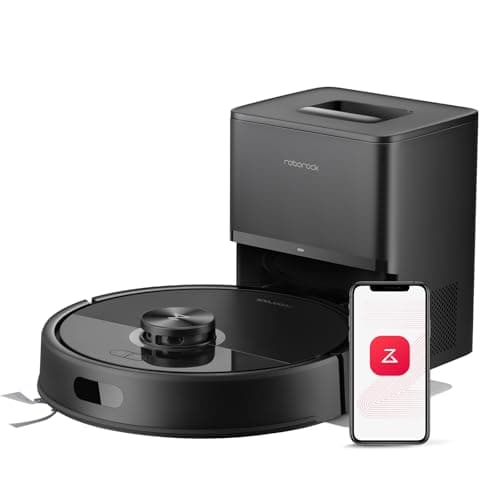
10,000Pa, a self-emptying dock, and the only anti-tangle system here that treats the side brush as part of the problem.
Published specifications
Suction
10,000Pa HyperForceSource: Manufacturer listing
Navigation
PreciSense LiDAR with real-time mappingSource: Manufacturer listing
Self-emptying
2.7 L sealed bag, manufacturer states 7 to 9 weeksSource: Manufacturer listing
Anti-tangle
JawScrapers main brush plus a stated 0% hair-tangling side brushSource: Manufacturer listing
Mopping
Vacuum and mop in one pass, 3 water flow settingsSource: Manufacturer listing
What it gets right
Both brushes are designed against tangling. Every other anti-tangle claim here covers only the main brush, and the side brush is where long hair actually wraps
10,000Pa published, matching machines at three times the price
Roborock's app is the most capable in this group after iRobot's, and its maps survive furniture moves
Vacuums and mops in a single pass rather than two runs
What it gives up
2.7 L and 7 to 9 weeks is a shorter interval than the Tikom L8000 Plus manages
No structured-light obstacle avoidance at this price - that is the Q10's feature
Sealed bags are a recurring cost
The mop still cannot be washed by the dock
Our scoring
Suction9.0
Navigation8.5
Pet hair8.5
Running cost6.5
Setup8.0
Weights and the arithmetic behind the total are published on How we pick so you can recompute this yourself.
Who it is for: A shedding dog or a long-haired cat, on any floor type.
Skip it if: your home is cluttered at floor level. LiDAR maps walls, not socks and charging cables, and without obstacle avoidance this machine will eventually eat one.
Questions people actually ask
+−Do robot vacuums work on carpet?
On low-pile carpet, yes, for maintenance cleaning that lifts surface dust, crumbs and hair before they get ground in. On medium and high pile they skim rather than clean, because a battery-powered machine of four to eight pounds cannot generate the airflow or downforce required.
+−Do robot vacuums work on thick carpet?
Not well. Above roughly medium pile the machine struggles to drive across the surface and the brush cannot reach the base of the pile. High-pile and shag rugs are best set as no-go zones and vacuumed by hand.
+−Do robot vacuums work on rugs with fringes?
No, and this is the case that causes damage. A tasselled edge is exactly the right shape to be drawn into a spinning brushroll, and the machine will keep pulling. Set fringed rugs as no-go zones regardless of their pile height.
+−Will a more expensive robot vacuum clean carpet better?
Barely. The constraints are a battery that must last two hours and a machine weighing a few pounds, and both apply identically at $200 and at $1,200. More money buys better sensors and a better dock, not more downforce.
+−Do robot vacuums work on washable rugs?
The same pile-height rule applies. The additional consideration is thickness and edge type - a thin washable rug with a bound edge is usually fine on low pile, while anything with a loose or fringed edge should be a no-go zone.
Sources
Every specification quoted above was read off one of these documents on the date shown. Where a manufacturer does not publish a figure, this site says "Not published" rather than estimating it.