Four sensor types, and the crucial thing nobody tells you: the one that maps your house is not the one that sees the sock on your floor.
By Scooter M., Enthusiast - published September 2, 2026
We have not tested these machines. Everything here comes from published specifications, manufacturer manuals and retailer listings, all cited below. Prices last verified October 17, 2026.
How this is funded: if you buy through a link here we may earn a commission, at no extra cost to you. It does not change which machines we recommend or what we say about them. Full disclosure.
LiDAR spins a laser to measure distance in every direction and build a floor plan - it maps your house. Structured light projects a pattern onto the floor ahead and reads the distortion - it sees objects lying on the floor. These are different sensors doing different jobs, which is why a machine with excellent LiDAR mapping will still drive straight over a charging cable, and why the obstacle avoidance ranking is a separate page from the mapping one.
Confusing those two is the single commonest misunderstanding in this category, and it is why people are surprised when an expensive mapping machine eats a sock.
The four sensor types
Bump and infrared
Infrared emitters detect a surface just before contact and slow the machine; a physical bumper absorbs the rest. Cliff sensors point downwards and stop it falling down stairs. The machine follows a fixed pattern - zigzag, spiral, edge-following, random - until the battery runs out.
What it cannot do: remember anything. There is no map, so no coverage tracking, no no-go zones, no room selection, and no resuming where it stopped. On a small open hard floor this is adequate. Past roughly 800 square feet, coverage becomes genuinely poor and the machine has no way of knowing.
Gyroscope-assisted patterns
A step up that is often described as 'smart mapping' and is not mapping. A gyroscope tracks the machine's own rotation, so it can drive genuinely straight rows and turn accurately at the end of each one, instead of drifting. The result looks systematic on the floor.
What it cannot do: build a model of your home. It knows how it has turned; it does not know where the walls are. This is the tier where listing language is least trustworthy - if a listing says 'intelligent path planning' or 'systematic cleaning' and never names a sensor, this is almost always what it means.
LiDAR
A laser on a spinning turret, taking distance readings in every direction several times a second. From those readings the machine builds a genuine floor plan and localizes itself within it.
What it unlocks: systematic row cleaning with coverage tracking, no-go zones drawn in an app, room selection, recharge-and-resume at the exact spot, and multi-floor maps. This is the tier worth paying for and it now starts around $149.
What it cannot do: see the floor. The turret sits about three inches up and scans horizontally. It maps walls, table legs and doorways superbly and it is completely blind to anything lying flat - cables, socks, toys, pet bowls. This is not a defect and no firmware update fixes it. It is a sensor pointed in a different direction.
dToF LiDAR
Direct time-of-flight: instead of inferring distance from the strength or phase of a returned signal, the sensor times individual light pulses. It is more precise and, more usefully, less easily confused by bright sunlight or by dark matte surfaces that absorb rather than reflect. The Lefant N3 publishes dToF detection to 10 meters.
What it cannot do: anything about floor-level objects. It is better LiDAR, not a different category.
Structured light
A pattern of light projected onto the floor ahead of the machine, with a camera watching how the pattern deforms. A flat floor returns a regular pattern; a cable, a sock or a dog bowl distorts it, and the machine steers around it.
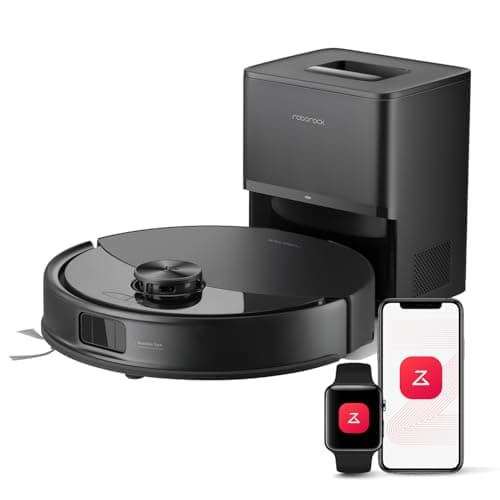
This is the sensor that decides whether the machine finishes a run. LiDAR determines how well it covers a clear floor; structured light determines whether the floor stays clear enough to cover. Exactly one machine in this class publishes it, the Roborock Q10 S5+, and its live price moves in and out of this site's ceiling - so check the price on the page rather than counting on a figure written in an article.
What each sensor actually detects
Sensor
Maps the room
Sees floor objects
Starts at (live)
Bump and infrared
No
On contact
About $90
Gyroscope patterns
No - straighter rows only
On contact
About $108
LiDAR
Yes
No
About $149
dToF LiDAR
Yes, in any lighting
No
About $200
Structured light
With LiDAR alongside
Yes
Above the ceiling today
Starting prices are the lowest live price on this site for a machine publishing that sensor, re-checked daily.
What none of them can do under $300
Recognize objects. The machines above roughly $500 that identify a specific item and name it in the app use camera-based recognition trained on a database of images. Structured light knows something is there and avoids it; it does not know what it is. Nothing under $300 does object recognition, and any listing implying otherwise is overstating.
Handle glass and mirrors reliably. Any of these sensors can be confused by a transparent or highly reflective surface at floor level - a glass door, a full-length mirror, a dark gloss plinth. If your home has a lot of that, plan on drawing a no-go zone rather than expecting the sensor to cope.
Climb stairs. No robot vacuum does. On a multi-level home you carry it, or you buy one per floor.
2.7 L bag, manufacturer states up to 70 daysSource: Manufacturer listing
Mopping
Sonic vibration mopping, up to 3,000 scrubs per minute, lifts up to 8 mm on carpetSource: Manufacturer listing
Carpet handling
Ultrasonic detection, raises the mop and increases suctionSource: Manufacturer listing
Anti-tangle
JawScrapers main brush plus anti-tangle side brushSource: Manufacturer listing
What it gets right
Structured-light obstacle avoidance is the single feature that separates a machine that finishes from one you rescue. Nothing else under $300 has it
A mop that lifts 8 mm means it can do hard floors and carpet in one run without wetting a rug
3,000 scrubs a minute is an actual scrubbing mechanism, not a damp pad
10,000Pa, dual anti-tangle brushes, multi-level maps - it gives up almost nothing to a $600 machine
What it gives up
The most expensive machine on this site, and it sits close to the ceiling
2.7 L bags are a recurring cost, and 70 days is mid-pack
The dock does not wash the mop - you rinse the pad yourself
2.4 GHz Wi-Fi only, which is an annoyance on a mesh network
Our scoring
Suction9.0
Navigation9.0
Pet hair8.5
Running cost6.5
Setup8.0
Weights and the arithmetic behind the total are published on How we pick so you can recompute this yourself.
Who it is for: A mixed-floor home with pets, clutter and rugs - the situation every other machine here handles by giving something up.
Skip it if: your floors are entirely hard and entirely tidy. Structured-light avoidance and an 8 mm mop lift are what you are paying the premium for, and a bare hard-floor flat uses neither.
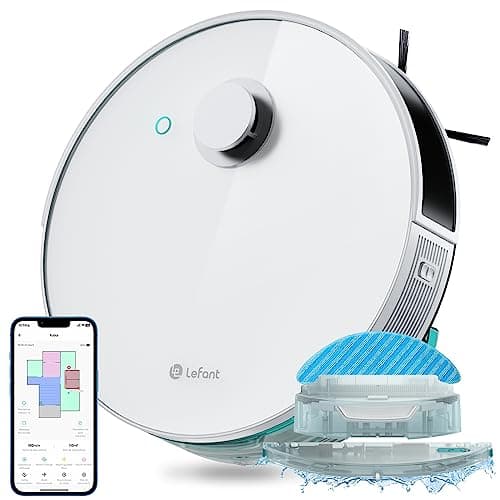
A sonic mop that vibrates 12,000 times a minute, which is a genuinely different mechanism from the damp cloth every other machine at this price drags around.
Published specifications
Suction
Up to 4,000Pa, 4 levelsSource: Manufacturer listing
Navigation
LiDAR plus dToF sensors, detection to 10 m, real-time mappingSource: Manufacturer listing
Mopping
Sonic scrubbing at 12,000 vibrations per minuteSource: Manufacturer listing
Water tank
160 ml electronic, 3 levelsSource: Manufacturer listing
Runtime
Up to 200 minutes; manufacturer states 3,200 sq ftSource: Manufacturer listing
Carpet detection
Ultrasonic, raises suction and changes direction in mop modeSource: Manufacturer listing
What it gets right
Sonic scrubbing actually agitates dried-on marks instead of spreading them, which a passive pad cannot do
dToF is a better sensor than the bare LiDAR most machines at this price use - it is unaffected by ambient light
200 minutes and a claimed 3,200 sq ft covers a whole house in one run
Ultrasonic carpet detection means it stops wetting rugs without you drawing zones
What it gives up
4,000Pa is the lowest published figure of any LiDAR machine here
A 160 ml tank is small - a large hard-floor area will need a refill mid-run
No self-emptying dock
Sonic mopping consumes battery faster than a passive pad, so 200 minutes is the vacuum-only figure
Our scoring
Suction6.5
Navigation8.0
Pet hair6.0
Running cost8.0
Setup7.5
Weights and the arithmetic behind the total are published on How we pick so you can recompute this yourself.
Who it is for: Hard floors that actually get dirty - a kitchen, a hallway, a house with children.
Skip it if: your floors are mostly carpet. You would be paying for a mopping mechanism you cannot use and taking the weakest suction figure in the LiDAR group to get it.
Charging only - no self-emptyingSource: Manufacturer listing
Recharge and resume
YesSource: Manufacturer listing
Wi-Fi
2.4 GHz required for setup and operationSource: Manufacturer listing
What it gets right
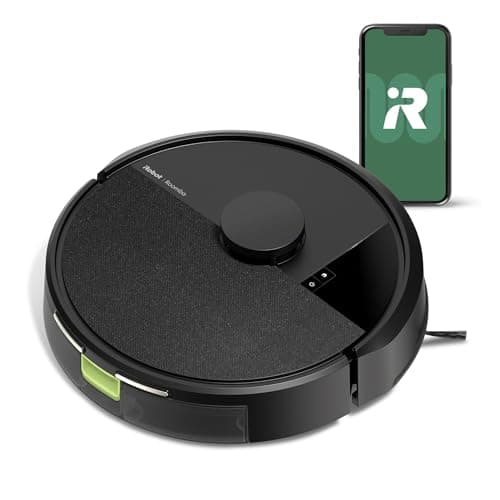
Real LiDAR mapping at $149 - two years ago this feature started around $400
Keep-out zones you draw in the app, which is the single most useful thing a map buys you
The Roomba app is the most mature in the category and the least likely to lose your map
Recharges and resumes, so a large floor plan is one job rather than three
What it gives up
iRobot publishes no absolute suction number. '70x the 600 series' is a comparison to a fifteen-year-old machine, not a specification
No self-emptying dock at this price - you empty the bin yourself
iRobot consumables cost more than the generic parts the budget brands use
Vacuum only. No mop, no water tank, no pretending otherwise
Our scoring
Suction6.0
Navigation8.0
Pet hair6.0
Running cost6.5
Setup8.5
Weights and the arithmetic behind the total are published on How we pick so you can recompute this yourself.
Who it is for: Someone who wants a map, an app that works, and a brand that will still be selling filters in five years.
Skip it if: you want a suction figure you can compare against anything else. If specifications are how you shop, a machine that refuses to publish one is a machine you cannot rank.
Questions people actually ask
+−What is the difference between LiDAR and camera navigation on a robot vacuum?
LiDAR spins a laser horizontally to measure distances and build a floor plan of your home. Camera-based structured light projects a pattern onto the floor ahead and reads its distortion to detect objects lying there. They do different jobs, which is why a good LiDAR machine can still run over a charging cable.
+−Why does my LiDAR robot vacuum run over cables?
Because the LiDAR turret sits about three inches off the floor and scans horizontally. It maps walls, furniture legs and doorways precisely and is blind to anything lying flat below its scanning plane. Detecting floor objects requires structured light, which is a separate sensor.
+−Is LiDAR or gyroscope navigation better?
LiDAR, by a wide margin. A gyroscope only tracks the machine's own rotation so it can drive straighter rows - it builds no model of your home, so it cannot track coverage, accept no-go zones, or resume where it stopped.
+−What is dToF on a robot vacuum?
Direct time-of-flight - a more precise form of LiDAR that times individual light pulses rather than inferring distance from a returned signal. It is less easily confused by bright sunlight and dark matte surfaces. It does nothing about floor-level objects.
+−Does any robot vacuum under $300 recognize objects?
No. Object recognition - the machine identifying a specific item and naming it in the app - uses camera-based systems trained on an image database and starts around $500. Structured light on the Roborock Q10 S5+ knows something is there and avoids it, without knowing what it is.
Sources
Every specification quoted above was read off one of these documents on the date shown. Where a manufacturer does not publish a figure, this site says "Not published" rather than estimating it.