The Best Budget Robot Vacuums With Obstacle Avoidance
Almost every listing under $300 claims it. Almost none of them means the thing you are worried about, so this page starts by separating the five mechanisms that share the name.
By Scooter M., Enthusiast - published September 9, 2026
We have not tested these machines. Everything here comes from published specifications, manufacturer manuals and retailer listings, all cited below. Prices last verified September 21, 2026.
How this is funded: if you buy through a link here we may earn a commission, at no extra cost to you. It does not change which machines we recommend or what we say about them. Full disclosure.
The best budget robot vacuum with obstacle avoidance is the Lefant M3: it is the only machine currently buyable under $300 that pairs LiDAR mapping with a published avoidance system its manufacturer describes as dodging cords, toys and furniture legs by name. Be clear about what that is not, though - no machine in this price band reliably sees a phone cable lying flat on the floor, because the one mechanism that does has moved above the ceiling this site works to.
That is the finding, and it is the opposite of what most pages on this query will tell you. What follows is the criteria first, then the ranking, then the honest limits.
#
Product
Best for
Score
Price
01
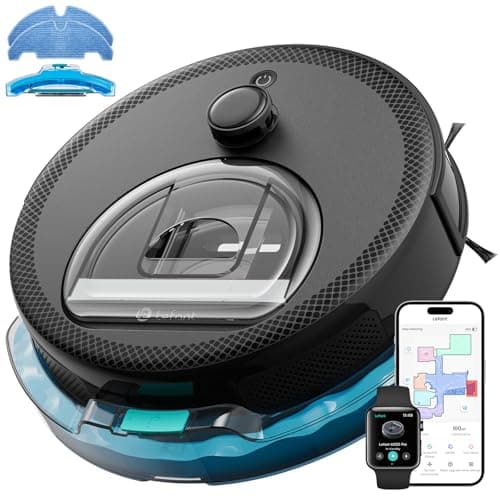
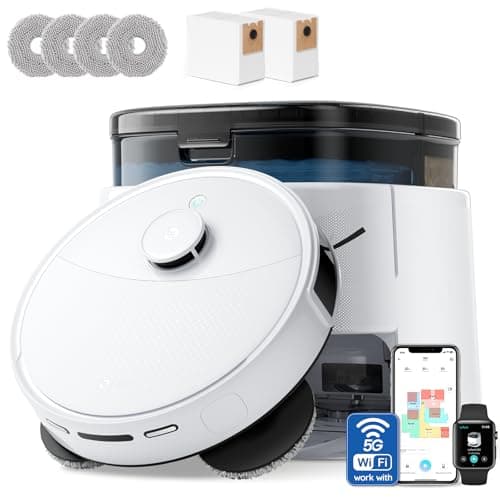
Lefant M312,000Pa and a dock that washes the mop in 45-degree water. The highest specification here by a distance, from the least established brand here.
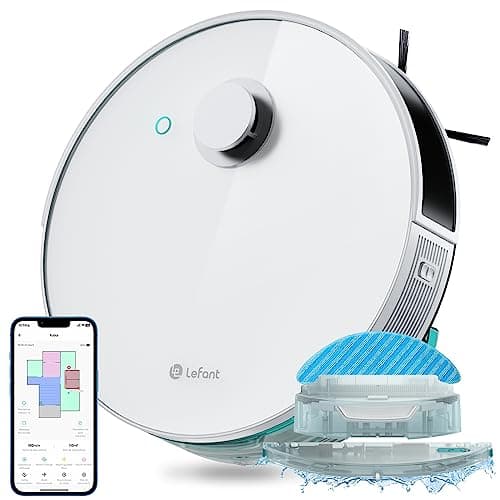
Lefant M330 ProPSD sensors that see cords and small objects, now with dToF mapping behind them. It publishes no suction figure at all, which is the trade.
Lefant N3A sonic mop that vibrates 12,000 times a minute, which is a genuinely different mechanism from the damp cloth every other machine at this price drags around.
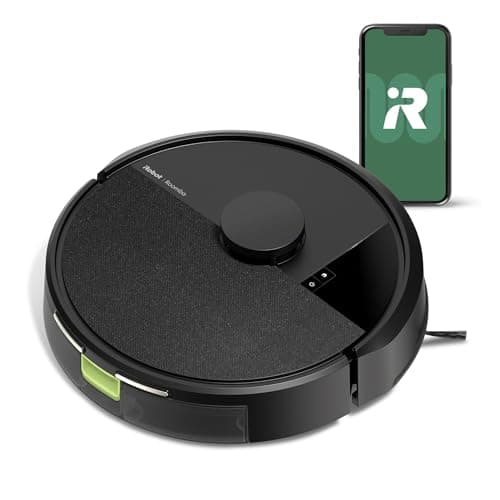
iRobot Roomba 105 VacThe lowest price at which you can buy genuine LiDAR mapping from a company that has been doing this for twenty years. It publishes no suction figure.
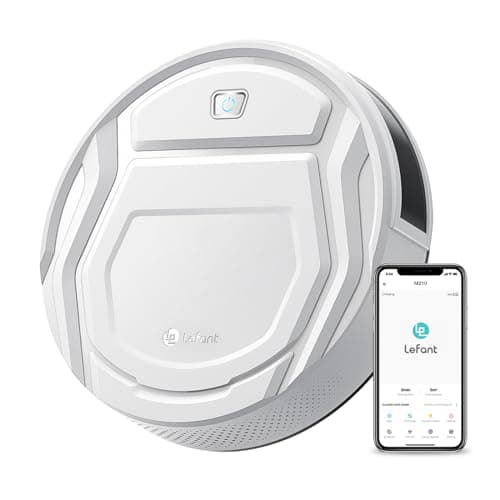
Lefant M210A brushless suction port instead of a roller brush, which is why it handles hair better than machines twice its price. It has no map and never will.
Scores come from the published rubric on How We Pick: suction 25%, navigation 25%, pet hair 20%, running cost 20%, setup 10%. They are editorial judgments about published specifications, not test results.
Five mechanisms share the name obstacle avoidance
This is the whole problem with the search term. A listing that says obstacle avoidance may be describing any of five different pieces of hardware, and the gap between the cheapest and the dearest is the difference between a machine that stops when it touches your chair and one that drives around a sock.
The five things a listing can mean by obstacle avoidance
Tier
Mechanism
What it can actually detect
On this site
1
Bump and turn
Nothing. It hits the object, then changes direction
The floor of the category
2
Infrared anti-collision
Large vertical surfaces - a wall, a sofa, a chair leg - before contact
Lefant M210, eufy 11S MAX, Tikom G8000 Max
3
LiDAR mapping
Everything at turret height, remembered as a map. Nothing lying flat
Roomba 105 Vac, Tikom L8000 Plus, Tapo, Roborock
4
Named-object sensing
Furniture, legs and, per the manufacturer, cords and toys
Lefant M3, N3 (FreeMove Tech), M330 Pro (PSD)
5
Structured light
Objects lying flat on the floor - cables, socks, pet bowls
Roborock Q10 S5+ only, and it is over the ceiling
Every mechanism above is named from the manufacturer's own listing for the machines cited. Where a manufacturer publishes no avoidance language at all, this site records that rather than assuming a tier.
The tier that matters for the thing people actually worry about - a charging cable, a phone charger, a sock, a dog toy - is tier five. Everything below it is measuring vertical surfaces, and a cable has almost no vertical surface to measure.
The mechanism that sees a cable is currently above this ceiling
ReactiveTech structured light works by projecting a pattern onto the floor ahead of the machine and reading its distortion with a camera. A flat object breaks the pattern, so the machine knows something is there even though nothing rises to turret height. Under $300 exactly one machine has ever published it: the Roborock Q10 S5+.
At the time of writing that machine's live price has risen well clear of this site's ceiling, so it is not ranked on this page and there is no buy control for it here. We would rather say that than quietly rank a machine at a price the site does not cover. If it comes back under the ceiling it will reappear in these rankings automatically, because the price layer is re-checked daily - and our cheap versus expensive comparison is where the argument for spending above the ceiling is made.
The tier-four machine to know about is the Lefant M330 Pro, which replaced the M310 after that listing went to Currently unavailable. Lefant publishes a 190-degree PSD field for it and names what it detects - furniture, cords and small objects - and unlike the M310 it also maps, with dToF. It is live and ranked below.
What actually works under $300: draw the zone yourself
Here is the practical answer, and it is the reason the ranking below is ordered the way it is. A keep-out zone drawn in an app is more reliable than any avoidance sensor at this price, because it does not depend on the machine detecting anything. You tell it the corner behind the television is off limits, and it treats that corner as a wall on every run, forever.
That is a mapping feature rather than a sensing feature, which is why every serious pick on this page also has a map. It handles the fixed hazards - the cable nest, the pet bowls, the rug with tassels, the pile of shoes by the door - which in most homes is the great majority of the problem. What it cannot handle is the sock that was not there yesterday, and no machine under this ceiling handles that. Our mapping ranking covers what else a map buys you.
How each pick handles a cluttered floor
Lefant M3 - the most complete published answer. Lefant states FreeMove Tech 3.0 dodges furniture, cords, toys and furniture legs, and pairs it with 360-degree LiDAR and multi-floor mapping, so you get the sensing claim and the zone-drawing fallback in one machine. The honest caveat is that Lefant publishes no detection distance or success rate for FreeMove, unlike the 190-degree field it publishes for its own M330 Pro - so the claim is broad where the cheaper machine's is specific. It is also the most expensive machine here and the dock is large. The full review is here.
Lefant M330 Pro - the most specific claim at the lowest price. It is the only machine here whose avoidance sensor is named and scoped: a PSD array with a published 190-degree field, and a listing that says what it detects - furniture, cords and small objects. It maps too, with dToF scanning to 15 m and multi-floor maps, so the zone-drawing fallback is there as well. What it does not publish is a suction figure of any kind, which on a specification-led site costs it real points, and at 95 mm it is taller than the slimmest machines here.
Lefant N3 - the same sensing, meaningfully cheaper. The N3's listing describes all-round body detection that adjusts the machine's path in real time, on top of dToF LiDAR that is unaffected by ambient light. It gives up the M3's washing dock, its self-emptying and about two-thirds of its published suction figure, and its 160 ml water tank is small. For a cluttered hard-floor home where mopping matters, it is the value pick.
iRobot Roomba 105 Vac - the zone-drawing answer, for the least money. iRobot publishes no avoidance mechanism beyond ClearView LiDAR steering around obstacles and cliff sensors, so on the tier table it sits at three rather than four. It earns its place because its app is the most mature here and keep-out zones are the thing you will actually use every day. What it will not do is see anything lying flat, and it has no dock at this price, so you empty the bin yourself. Its full review is here.
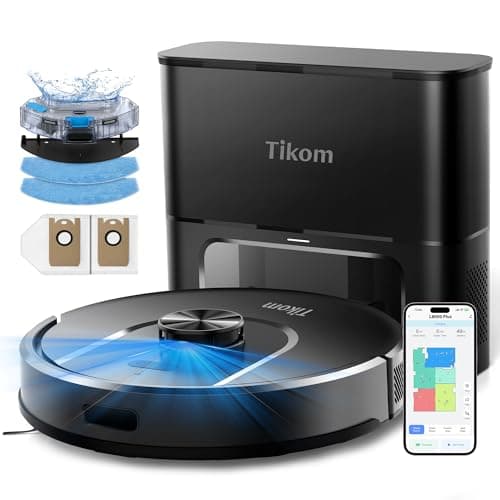
Tikom L8000 Plus - map-based avoidance with the longest leash. Tikom publishes no-go zones, no-mop zones, virtual walls and up to five saved floor maps, so a three-story house can be fenced off room by room, and its dock is stated at up to 90 days. Its avoidance language is map-based - it states that it avoids walls and stairs - so treat it as tier three. It also names no anti-tangle mechanism, which in a cluttered home with pets is a second maintenance problem.
Lefant M210 - the honest floor of the ladder. Six built-in anti-collision infrared sensors that detect probable stuck areas and adjust the path. That is tier two: it will slow before it shunts a chair leg, and it will not know a cable exists. It is here because it is the cheapest machine on the site, it is genuinely slim, and its brushless inlet means the thing it does drive over is less likely to wrap. Buy it with the floor cleared, not as a solution to clutter.
The five-minute tidy that beats every sensor at this price
This is unglamorous and it is the highest-return thing on the page. Every machine under $300 performs dramatically better on a floor that has been given thirty seconds of attention, and the specific hazards are predictable:
Cables are the first cause of a stopped run. Route charger cables behind furniture or clip them up. A cable is the one object that both hides from LiDAR and wraps a brushroll.
Socks, underwear and small soft toys get pulled into the inlet and jam the impeller. They are also the hardest object for any sensor here to distinguish from floor.
Rug tassels and long fringes wrap the side brush. Fold them under or draw a no-go zone around the rug rather than banning the room.
Pet bowls are worth a permanent zone. A machine that clips a full water bowl turns one chore into two.
Loose floor lamps and drying racks are top-heavy and light. LiDAR sees the base, not the tripod above it.
Scheduling helps too. Running the machine at a time the floor is normally clear - mid-morning on a weekday rather than after the children are home - does more for completion rates than any sensor in this price range. Our how often to run it guide works through the cadence.
What owners consistently report
The recurring complaint across this whole band is not that machines fail to avoid obstacles; it is that they get stuck under or on something - a low sofa lip, a floor vent, a threshold that is a fraction too high - rather than tangled in something. That is a body-height and drive-wheel problem rather than a sensing one, and it is worth checking the published height and threshold-climb figures for the machine you are considering. Two of the machines here publish a threshold figure and most do not. We link owner discussions where we cite them; we do not paraphrase them into our own voice.
What we could not verify on this page
We have not handled any of these machines and we have not run a detection test. Every mechanism named above is read from the manufacturer's own listing and cited at the foot of the page. Specifically: we cannot tell you how often FreeMove Tech actually dodges a cord, because Lefant publishes no detection rate or distance for it; we cannot tell you how the tiers compare in a real room; and where a manufacturer publishes no avoidance language at all - Roborock's Q7 M5+ and Shark's Matrix Plus, both strong machines in other respects - we record the absence rather than assuming the feature is missing or present. How we pick sets out the weights behind every score here.
3.2 L bag, manufacturer states up to 90 daysSource: Manufacturer listing
Mop care
45C hot water wash with cool-air dryingSource: Manufacturer listing
Battery / runtime
5,200 mAh, up to 220 minutesSource: Manufacturer listing
Mopping coverage
Manufacturer states 2,368 sq ft (220 m2) per tankSource: Manufacturer listing
Wi-Fi
Dual band, 2.4 GHz and 5 GHzSource: Manufacturer listing
What it gets right
12,000Pa is a flagship-tier published figure at a sub-$250 price
A mop-washing dock at this price is genuinely unusual - most stop at self-emptying
Cool-air drying rather than heat, which is what stops a pad going stiff and smelling
Dual-band Wi-Fi, which sounds trivial until you own a mesh network that keeps handing it to the 5 GHz radio
What it gives up
A washing dock is plumbing. Two tanks, a tray and a pad to keep clean, and more to go wrong
Pa figures are not comparable between manufacturers - there is no shared test standard, and a big number is not automatically better cleaning
Still buying 3.2 L bags
The least established brand here for warranty and spare parts
Our scoring
Suction9.0
Navigation8.0
Pet hair7.0
Running cost6.0
Setup7.0
Weights and the arithmetic behind the total are published on How we pick so you can recompute this yourself.
Who it is for: A hard-floor home where mopping is the actual point and the dock has somewhere to live.
Skip it if: you want fewer chores rather than better ones. A self-washing dock removes the worst job and adds three small ones, and plenty of people would rather rinse a pad in the sink.
#2 - Best obstacle avoidance under $150Score 7.5/10
PSD sensors that see cords and small objects, now with dToF mapping behind them. It publishes no suction figure at all, which is the trade.
Published specifications
Suction
Not published as Pa. Three modes: Quiet, Standard, MaxSource: Manufacturer listing
Navigation
dToF navigation scanning to 15 m, with multi-floor mapping and route planningSource: Manufacturer listing
Obstacle avoidance
PSD (position sensitive device) detection of furniture, cords and small objectsSource: Manufacturer listing
Runtime
Up to 150 minutesSource: Manufacturer listing
Dustbin / water tank
450 ml visible dustbin, 200 ml refillable tank with a washable padSource: Manufacturer listing
Height
95 mm (3.7 in)Source: Manufacturer listing
Carpet handling
Avoids carpet in mop mode, boosts suction when vacuuming itSource: Manufacturer listing
Wi-Fi
Dual band, 2.4 GHz and 5 GHzSource: Manufacturer listing
What it gets right
PSD avoidance is named for the objects it detects - furniture, cords and small items - which almost nothing else at this price claims
dToF mapping with multi-floor maps, at a price where most machines still have no map at all
An anti-tangle suction port rather than a roller, so there is nothing for hair to wrap around
A 450 ml visible bin, so you can see when it needs emptying instead of guessing
What it gives up
No published Pascal figure anywhere on the listing, so its headline capability cannot be compared with anything
At 95 mm it is taller than the slimmest machines here and will not clear the lowest furniture
The mop is a washable pad on a 200 ml tank - maintenance mopping, not scrubbing
No self-emptying dock, so the bin is yours to empty
Our scoring
Suction5.5
Navigation8.5
Pet hair7.5
Running cost8.5
Setup8.0
Weights and the arithmetic behind the total are published on How we pick so you can recompute this yourself.
Who it is for: A cluttered hard-floor home where cords and toys stop the machine more often than dirt does.
Skip it if: you shop on suction figures. Lefant publishes none for this machine, so on a specification-led ranking it is unverifiable exactly where you would want a number.
A sonic mop that vibrates 12,000 times a minute, which is a genuinely different mechanism from the damp cloth every other machine at this price drags around.
Published specifications
Suction
Up to 4,000Pa, 4 levelsSource: Manufacturer listing
Navigation
LiDAR plus dToF sensors, detection to 10 m, real-time mappingSource: Manufacturer listing
Mopping
Sonic scrubbing at 12,000 vibrations per minuteSource: Manufacturer listing
Water tank
160 ml electronic, 3 levelsSource: Manufacturer listing
Runtime
Up to 200 minutes; manufacturer states 3,200 sq ftSource: Manufacturer listing
Carpet detection
Ultrasonic, raises suction and changes direction in mop modeSource: Manufacturer listing
What it gets right
Sonic scrubbing actually agitates dried-on marks instead of spreading them, which a passive pad cannot do
dToF is a better sensor than the bare LiDAR most machines at this price use - it is unaffected by ambient light
200 minutes and a claimed 3,200 sq ft covers a whole house in one run
Ultrasonic carpet detection means it stops wetting rugs without you drawing zones
What it gives up
4,000Pa is the lowest published figure of any LiDAR machine here
A 160 ml tank is small - a large hard-floor area will need a refill mid-run
No self-emptying dock
Sonic mopping consumes battery faster than a passive pad, so 200 minutes is the vacuum-only figure
Our scoring
Suction6.5
Navigation8.0
Pet hair6.0
Running cost8.0
Setup7.5
Weights and the arithmetic behind the total are published on How we pick so you can recompute this yourself.
Who it is for: Hard floors that actually get dirty - a kitchen, a hallway, a house with children.
Skip it if: your floors are mostly carpet. You would be paying for a mopping mechanism you cannot use and taking the weakest suction figure in the LiDAR group to get it.
Charging only - no self-emptyingSource: Manufacturer listing
Recharge and resume
YesSource: Manufacturer listing
Wi-Fi
2.4 GHz required for setup and operationSource: Manufacturer listing
What it gets right
Real LiDAR mapping at $149 - two years ago this feature started around $400
Keep-out zones you draw in the app, which is the single most useful thing a map buys you
The Roomba app is the most mature in the category and the least likely to lose your map
Recharges and resumes, so a large floor plan is one job rather than three
What it gives up
iRobot publishes no absolute suction number. '70x the 600 series' is a comparison to a fifteen-year-old machine, not a specification
No self-emptying dock at this price - you empty the bin yourself
iRobot consumables cost more than the generic parts the budget brands use
Vacuum only. No mop, no water tank, no pretending otherwise
Our scoring
Suction6.0
Navigation8.0
Pet hair6.0
Running cost6.5
Setup8.5
Weights and the arithmetic behind the total are published on How we pick so you can recompute this yourself.
Who it is for: Someone who wants a map, an app that works, and a brand that will still be selling filters in five years.
Skip it if: you want a suction figure you can compare against anything else. If specifications are how you shop, a machine that refuses to publish one is a machine you cannot rank.
3 suction levels, 3 water flow settingsSource: Manufacturer listing
What it gets right
Ninety days between bag changes is 50% longer than the Tapo docks and beats most flagships
Five saved maps handles a three-story house, which is unusual under $250
Separate no-mop zones, so you can keep it off a rug without banning it from the room
6,000Pa published, with automatic carpet boost
What it gives up
Bags are still a recurring cost, just a less frequent one
150 minutes is mid-pack, and a big home will need the resume feature to finish
A conventional main brush - no anti-tangle geometry is claimed
Tikom is a small brand; spare-part availability in three years is a genuine unknown
Our scoring
Suction8.0
Navigation8.0
Pet hair6.5
Running cost6.5
Setup7.5
Weights and the arithmetic behind the total are published on How we pick so you can recompute this yourself.
Who it is for: A multi-floor home where the dock is somewhere inconvenient and you want to visit it as rarely as possible.
Skip it if: you have long-haired pets. Nothing in this machine's published specification addresses hair wrap, and at a similar price the Roborock Q7 M5+ and the Ecovacs N20 Plus both name an anti-tangle mechanism.
The brushless inlet has nothing for hair to wrap around, so there is no brushroll to cut free every fortnight
2.99 inches tall clears most sofa and bed frames that stop taller machines
Lithium iron phosphate cells, a chemistry that tolerates daily full cycles better than the usual lithium-ion
Nothing to subscribe to and no dust bags to buy
What it gives up
No published suction rating at all, which for a machine sold on suction is a strange omission
No mapping. It covers a room by bouncing around it, so a large floor plan takes several passes
The manufacturer says not to use zigzag mode on carpet, which rules out its most efficient pattern on rugs
Brushless inlets are weaker on embedded carpet grit than a beater bar
Our scoring
Suction5.0
Navigation3.5
Pet hair7.5
Running cost8.5
Setup8.0
Weights and the arithmetic behind the total are published on How we pick so you can recompute this yourself.
Who it is for: A one-bedroom apartment with hard floors, a shedding pet, and a hard budget ceiling under $100.
Skip it if: you have more than about 800 square feet of open floor, or any medium-pile carpet you actually want cleaned rather than skimmed. Without a map it will miss areas, and without a brushroll it will not dig.
Questions people actually ask
+−What is the best budget robot vacuum with obstacle avoidance?
The Lefant M3. It is the only machine currently buyable under $300 that combines LiDAR mapping with an avoidance system its manufacturer describes as dodging cords, toys and furniture legs by name. No machine at this price reliably detects a cable lying flat on the floor.
+−Do cheap robot vacuums have obstacle avoidance?
They have something the listing calls obstacle avoidance, which usually means infrared anti-collision sensors that detect a wall or a chair leg before contact. That is a different thing from the structured-light and camera systems that recognize objects lying flat, and those still sit above the $300 ceiling.
+−Will a budget robot vacuum avoid cables?
Assume it will not. A cable has almost no vertical surface, so infrared sensors and LiDAR both miss it. The reliable answer at this price is a keep-out zone drawn in the app around the place cables live, plus thirty seconds of tidying before a run.
+−What is the difference between LiDAR and obstacle avoidance?
LiDAR is a spinning laser that measures distances at turret height and builds a map, which is what lets you draw keep-out zones. Obstacle avoidance describes sensors pointed forward and down at the floor ahead. A machine can have an excellent map and still drive straight into a sock.
+−Is obstacle avoidance worth paying extra for under $300?
Not on its own, at this price. The upgrade worth paying for is a map, because a drawn keep-out zone handles the fixed hazards - the cable nest, the pet bowls, the tasselled rug - without depending on any sensor detecting anything.
+−Have you tested these obstacle avoidance systems?
No. Every mechanism on this page is read from the manufacturer's own listing and cited below, and the page states plainly which claims we could not check - including how often Lefant's FreeMove Tech dodges a cord, for which no detection rate is published.
Sources
Every specification quoted above was read off one of these documents on the date shown. Where a manufacturer does not publish a figure, this site says "Not published" rather than estimating it.
Live price layerAvailability and prices on this page are read from the retailer daily and stamped with the date they were last verified. The Roborock Q10 S5+ is named but not ranked because, on the day of writing, one is above the ceiling and the other is out of stock.