The best-value band in the category. Two years ago, everything on this page would have cost you $400.
By Scooter M., Enthusiast - published September 2, 2026
We have not tested these machines. Everything here comes from published specifications, manufacturer manuals and retailer listings, all cited below. Prices last verified October 17, 2026.
How this is funded: if you buy through a link here we may earn a commission, at no extra cost to you. It does not change which machines we recommend or what we say about them. Full disclosure.
Under $200, buy the Lefant N3: dToF LiDAR mapping that works in any light, a sonic mop pad that vibrates 12,000 times a minute instead of being dragged, and up to 200 minutes of runtime. If mapping alone is what you are after and you want to spend less, the iRobot Roomba 105 Vac is the cheapest genuine LiDAR machine on this site and has the most mature app in the category.
This is the most important price band on the site. It is where LiDAR mapping stops being a premium feature and where a self-emptying dock becomes possible at all - and both of those cost around $400 as recently as two years ago. If you want the largest capability increase per dollar in this category, it is here.
#
Product
Best for
Score
Price
01
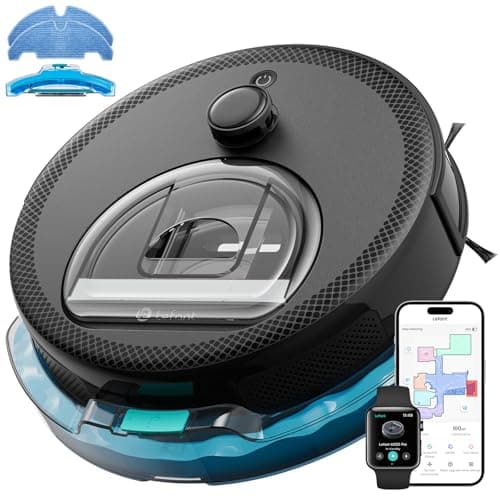
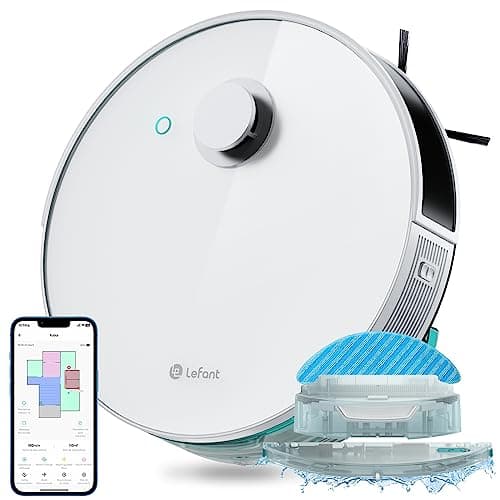
Lefant N3A sonic mop that vibrates 12,000 times a minute, which is a genuinely different mechanism from the damp cloth every other machine at this price drags around.
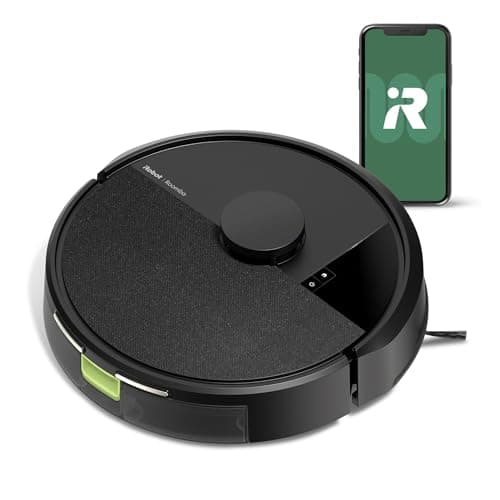
iRobot Roomba 105 VacThe lowest price at which you can buy genuine LiDAR mapping from a company that has been doing this for twenty years. It publishes no suction figure.
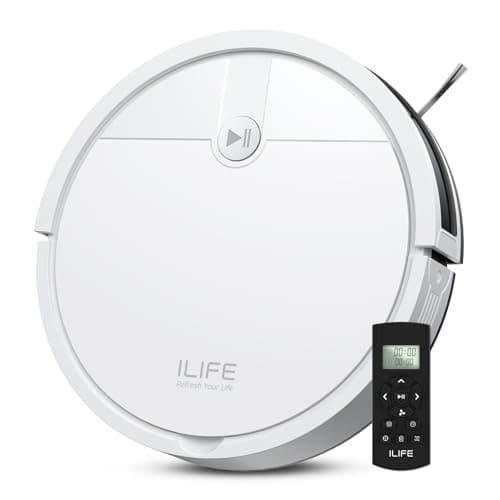
ILIFE V2A physical remote, a tangle-free suction port and no network connection of any kind. It is the cheapest machine we rank and the only one left that runs without Wi-Fi.
Lefant M330 ProPSD sensors that see cords and small objects, now with dToF mapping behind them. It publishes no suction figure at all, which is the trade.
Scores come from the published rubric on How We Pick: suction 25%, navigation 25%, pet hair 20%, running cost 20%, setup 10%. They are editorial judgments about published specifications, not test results.
Where the self-emptying dock went
For most of this year the cheapest self-emptying LiDAR machines sat inside this band, and Tapo's ultra-slim RV20 pair was the reason. Both of those listings now read Currently unavailable, and Tapo's slim line has moved on to the RV30. What that leaves is a band where LiDAR mapping is cheap and a dock is not: the cheapest self-emptying machine we can currently verify is the Tikom L8000 Plus, just above this ceiling on the under $250 page.
That is not brand favouritism, it is what the live prices say this week. It is also worth being clear about what the Tapo machines are not: their published 5,300Pa is a peak Ultra-mode figure rather than a running one, the 97% dust-pickup claim has no published test standard behind it, and the mop is a damp pad like almost everything else at this price. They win this band on capability per dollar, not on being the best machines in the category.
What you give up by staying under $200
A dock, and it is the only thing in this band worth regretting. Every machine on this page has an onboard bin of roughly 300 to 550 ml that you empty by hand - with a shedding pet, twice a week.
Two things make that easier to live with than it sounds. A dock is a piece of furniture: roughly the size of a kitchen bin, needing clearance on three sides, which in 500 square feet is a real cost of its own. And a dock is a consumable habit: the sealed bags never stop, and over three years they add up to real money, which our running costs guide works through.
The machine to buy if mopping is the point
The Lefant N3 at around $200 is the only machine in this band whose mop does something mechanically different from dragging a wet cloth. Its sonic pad vibrates 12,000 times a minute, which agitates dried-on marks rather than smearing them, and its ultrasonic carpet detection changes direction when it meets a rug in mop mode instead of soaking it.
It pays for that with the lowest published suction figure of any LiDAR machine here (4,000Pa), a small 160 ml tank, and no self-emptying dock. That is a coherent trade if your floors are hard and actually get dirty - a kitchen, a hallway, a house with children. It is a bad trade if your floors are mostly carpet, in which case you would be buying a mopping mechanism you cannot use.
What the last $50 to $250 would buy you
Higher published suction - 8,000 to 12,000Pa rather than 4,000 to 5,300Pa, though the standardization caveat still applies.
Named anti-tangle brush geometry, which matters enormously with a shedding pet and is absent from everything in this band.
A dock at all - the cheapest self-emptying machine we can currently verify is the Tikom L8000 Plus, one band up.
A bagless dock - the Ecovacs DEEBOT N20 Plus removes the bag consumable entirely, which changes the three-year cost.
What it would not buy you is obstacle avoidance. That still starts around $280. The under-$250 band covers the step up in full.
A sonic mop that vibrates 12,000 times a minute, which is a genuinely different mechanism from the damp cloth every other machine at this price drags around.
Published specifications
Suction
Up to 4,000Pa, 4 levelsSource: Manufacturer listing
Navigation
LiDAR plus dToF sensors, detection to 10 m, real-time mappingSource: Manufacturer listing
Mopping
Sonic scrubbing at 12,000 vibrations per minuteSource: Manufacturer listing
Water tank
160 ml electronic, 3 levelsSource: Manufacturer listing
Runtime
Up to 200 minutes; manufacturer states 3,200 sq ftSource: Manufacturer listing
Carpet detection
Ultrasonic, raises suction and changes direction in mop modeSource: Manufacturer listing
What it gets right
Sonic scrubbing actually agitates dried-on marks instead of spreading them, which a passive pad cannot do
dToF is a better sensor than the bare LiDAR most machines at this price use - it is unaffected by ambient light
200 minutes and a claimed 3,200 sq ft covers a whole house in one run
Ultrasonic carpet detection means it stops wetting rugs without you drawing zones
What it gives up
4,000Pa is the lowest published figure of any LiDAR machine here
A 160 ml tank is small - a large hard-floor area will need a refill mid-run
No self-emptying dock
Sonic mopping consumes battery faster than a passive pad, so 200 minutes is the vacuum-only figure
Our scoring
Suction6.5
Navigation8.0
Pet hair6.0
Running cost8.0
Setup7.5
Weights and the arithmetic behind the total are published on How we pick so you can recompute this yourself.
Who it is for: Hard floors that actually get dirty - a kitchen, a hallway, a house with children.
Skip it if: your floors are mostly carpet. You would be paying for a mopping mechanism you cannot use and taking the weakest suction figure in the LiDAR group to get it.
Charging only - no self-emptyingSource: Manufacturer listing
Recharge and resume
YesSource: Manufacturer listing
Wi-Fi
2.4 GHz required for setup and operationSource: Manufacturer listing
What it gets right
Real LiDAR mapping at $149 - two years ago this feature started around $400
Keep-out zones you draw in the app, which is the single most useful thing a map buys you
The Roomba app is the most mature in the category and the least likely to lose your map
Recharges and resumes, so a large floor plan is one job rather than three
What it gives up
iRobot publishes no absolute suction number. '70x the 600 series' is a comparison to a fifteen-year-old machine, not a specification
No self-emptying dock at this price - you empty the bin yourself
iRobot consumables cost more than the generic parts the budget brands use
Vacuum only. No mop, no water tank, no pretending otherwise
Our scoring
Suction6.0
Navigation8.0
Pet hair6.0
Running cost6.5
Setup8.5
Weights and the arithmetic behind the total are published on How we pick so you can recompute this yourself.
Who it is for: Someone who wants a map, an app that works, and a brand that will still be selling filters in five years.
Skip it if: you want a suction figure you can compare against anything else. If specifications are how you shop, a machine that refuses to publish one is a machine you cannot rank.
A physical remote, a tangle-free suction port and no network connection of any kind. It is the cheapest machine we rank and the only one left that runs without Wi-Fi.
Published specifications
Suction
Not publishedSource: ILIFE states no Pa figure on this listing
Connectivity
None required - ILIFE states no Wi-Fi connection is needed for operationSource: Manufacturer listing
Control
Physical remote control and a one-touch button on the machineSource: Manufacturer listing
Navigation
No mapping. Auto, spot and edge cleaning modesSource: Manufacturer listing
Brush
Tangle-free suction port - no roller brush fittedSource: Manufacturer listing
Height
2.99 inSource: Manufacturer listing
Runtime
Up to 120 minutes per charge, returns to the dock automaticallySource: Manufacturer listing
Scheduling
Runs on a preset schedule without an appSource: Manufacturer listing
What it gets right
No Wi-Fi needed at all - ILIFE states it plainly, so there is no account, no cloud service and nothing to be orphaned by a firmware update
A tangle-free suction port rather than a roller brush, so long hair has nothing to wrap around
2.99 inches tall, which clears furniture most mapping machines cannot
Scheduling without an app, which the other no-network options do not offer
The cheapest machine on this site by a clear margin
What it gives up
ILIFE publishes no Pa figure, so its headline capability cannot be ranked against anything
No mapping of any kind - it covers a room by moving until it meets something, which is slow in a large space
No zones, no room selection and no cleaning history, because there is no app to hold them
A tangle-free port has nothing to agitate carpet pile with, so this is a hard-floor machine
No mopping, and no dock beyond charging
Our scoring
Suction5.0
Navigation3.0
Pet hair7.0
Running cost8.5
Setup9.0
Weights and the arithmetic behind the total are published on How we pick so you can recompute this yourself.
Who it is for: Somebody buying for a household that will never open an app, or who actively does not want another connected device on the network.
Skip it if: your home is carpeted or larger than a small flat. With no brush and no map it is the wrong tool for pile, and it will not cover a big floor plan reliably.
5,000Pa published, which is more than several machines here costing twice as much
A 450 ml bin is large for this price - most sub-$150 machines fill up mid-run
Vacuums and mops in one pass rather than making you swap modules between runs
Four ways to control it, including a physical remote, which matters if the app is a fight
What it gives up
No mapping, so no no-go zones, no room selection and no resume-where-it-left-off
A conventional roller brush, so long hair does wrap and does need cutting out
The mop is a damp cloth dragged behind the machine, not a scrubbing head
No self-emptying, so the 450 ml bin is a job you do by hand
Our scoring
Suction7.0
Navigation3.5
Pet hair5.5
Running cost7.5
Setup8.0
Weights and the arithmetic behind the total are published on How we pick so you can recompute this yourself.
Who it is for: Hard floors, a tight budget, and someone who genuinely wants mopping rather than treating it as a bullet point.
Skip it if: you were hoping to draw no-go zones around a pet bowl or a cable nest. Without a map there is nothing to draw them on, and you will be putting up physical barriers instead.
#5 - Best obstacle avoidance under $150Score 7.5/10
PSD sensors that see cords and small objects, now with dToF mapping behind them. It publishes no suction figure at all, which is the trade.
Published specifications
Suction
Not published as Pa. Three modes: Quiet, Standard, MaxSource: Manufacturer listing
Navigation
dToF navigation scanning to 15 m, with multi-floor mapping and route planningSource: Manufacturer listing
Obstacle avoidance
PSD (position sensitive device) detection of furniture, cords and small objectsSource: Manufacturer listing
Runtime
Up to 150 minutesSource: Manufacturer listing
Dustbin / water tank
450 ml visible dustbin, 200 ml refillable tank with a washable padSource: Manufacturer listing
Height
95 mm (3.7 in)Source: Manufacturer listing
Carpet handling
Avoids carpet in mop mode, boosts suction when vacuuming itSource: Manufacturer listing
Wi-Fi
Dual band, 2.4 GHz and 5 GHzSource: Manufacturer listing
What it gets right
PSD avoidance is named for the objects it detects - furniture, cords and small items - which almost nothing else at this price claims
dToF mapping with multi-floor maps, at a price where most machines still have no map at all
An anti-tangle suction port rather than a roller, so there is nothing for hair to wrap around
A 450 ml visible bin, so you can see when it needs emptying instead of guessing
What it gives up
No published Pascal figure anywhere on the listing, so its headline capability cannot be compared with anything
At 95 mm it is taller than the slimmest machines here and will not clear the lowest furniture
The mop is a washable pad on a 200 ml tank - maintenance mopping, not scrubbing
No self-emptying dock, so the bin is yours to empty
Our scoring
Suction5.5
Navigation8.5
Pet hair7.5
Running cost8.5
Setup8.0
Weights and the arithmetic behind the total are published on How we pick so you can recompute this yourself.
Who it is for: A cluttered hard-floor home where cords and toys stop the machine more often than dirt does.
Skip it if: you shop on suction figures. Lefant publishes none for this machine, so on a specification-led ranking it is unverifiable exactly where you would want a number.
Questions people actually ask
+−What is the best robot vacuum under $200?
The Lefant N3. It maps with dToF LiDAR, which is unaffected by ambient light, and its sonic mop pad vibrates 12,000 times a minute rather than being dragged - the only mop in this band that uses a published mechanism.
+−Is a robot vacuum under $200 worth buying?
This is the best-value band in the category. Under $200 you can now get LiDAR mapping and app-drawn no-go zones, which cost around $400 two years ago. A self-emptying dock is the one thing that has moved just above this ceiling.
+−What is the cheapest self-emptying robot vacuum?
The cheapest one we can currently verify as buyable is the Tikom L8000 Plus, which sits just above this band and uses a 3-liter sealed bag rated for up to 90 days. Tapo's ultra-slim RV20 Max Plus used to hold that spot and its listing now reads Currently unavailable.
+−Is a self-emptying dock worth stretching the budget for?
If you have a pet, yes - not emptying a bin twice a week is the biggest quality-of-life difference in the category, and the cheapest verified one sits one band up. If you live somewhere small where a tower has nowhere to go, or you object to buying bags indefinitely, staying under $200 costs you very little.
+−Do any robot vacuums under $200 mop properly?
The Lefant N3 comes closest. Its sonic pad vibrates 12,000 times a minute, which agitates dried-on marks rather than spreading them. Every other machine in this band drags a damp cloth, which removes a film of dust and nothing more.
Sources
Every specification quoted above was read off one of these documents on the date shown. Where a manufacturer does not publish a figure, this site says "Not published" rather than estimating it.
eufy RoboVac 11S MAX - manufacturer listing on Amazon (read before discontinuation)Specifications quoted from eufy's own listing while it was live. The listing now reads 'Currently unavailable', so it is cited here without a link.