Almost every machine at this price advertises mopping. Two of them actually mop. Here is how to tell which is which before you buy.
By Scooter M., Enthusiast - published September 2, 2026
We have not tested these machines. Everything here comes from published specifications, manufacturer manuals and retailer listings, all cited below. Prices last verified October 18, 2026.
How this is funded: if you buy through a link here we may earn a commission, at no extra cost to you. It does not change which machines we recommend or what we say about them. Full disclosure.
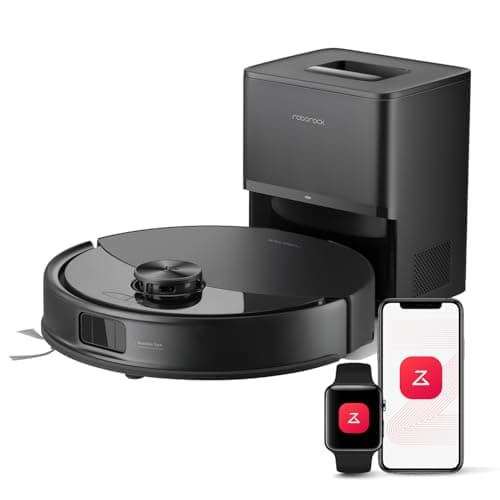
The best budget robot vacuum and mop is the Roborock Q10 S5+: its sonic vibration pad scrubs at 3,000 cycles a minute and lifts 8 mm clear when it detects carpet, so it can do a hard-floor kitchen and a carpeted lounge in one run. Under $200, the Lefant N3 is the only other machine here whose mop uses a mechanism rather than a dragged cloth.
This is the most oversold feature in the category, so this page starts with the distinction rather than the ranking. If you have not yet decided whether you want a mop at all, is a robot mop worth it answers that first.
#
Product
Best for
Score
Price
01
Roborock Q10 S5+The only machine under $300 that maps with LiDAR and sees obstacles with structured light. Everything else here is navigating half-blind.
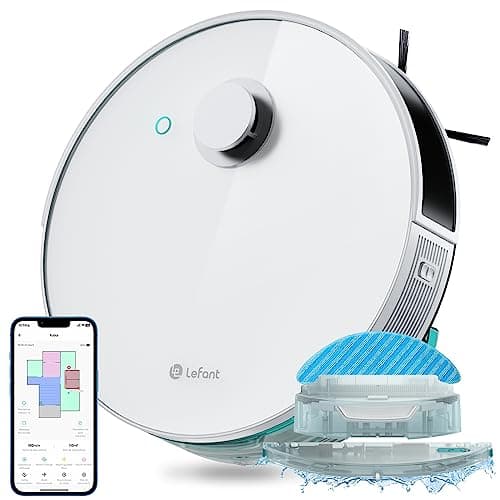
Lefant N3A sonic mop that vibrates 12,000 times a minute, which is a genuinely different mechanism from the damp cloth every other machine at this price drags around.
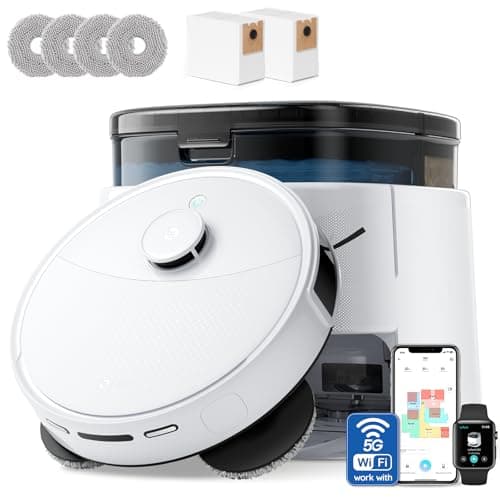
Lefant M312,000Pa and a dock that washes the mop in 45-degree water. The highest specification here by a distance, from the least established brand here.
Scores come from the published rubric on How We Pick: suction 25%, navigation 25%, pet hair 20%, running cost 20%, setup 10%. They are editorial judgments about published specifications, not test results.
Two kinds of mop, and only one of them is mopping
A passive pad. A microfiber cloth clipped to the underside of the machine, kept damp by a small tank that drips onto it. The machine drives, the cloth is dragged across the floor. This lifts a film of dust off a sealed hard floor and leaves it slightly damp. It does not touch anything dried on, it does not reach into grout, and on a real spill it spreads more than it removes. This is what almost every 'vacuum and mop' machine under $300 has.
An active pad. The same cloth, driven by a small motor so it oscillates against the floor - 3,000 times a minute on the Roborock, 12,000 on the Lefant N3's sonic system. Because the pad moves relative to the floor rather than gliding over it, it agitates dried marks and reaches into shallow recesses like grout lines. This is mopping in the sense you would use the word.
The listing language will not distinguish these for you. Both are described as 'vacuum and mop', both photograph the same way. The tell is a stated oscillation or vibration rate. If a listing does not quote one, the pad is passive.
How each machine's mop actually works
Machine
Mop type
Rate
Carpet handling
Roborock Q10 S5+
Active - sonic vibration
3,000 scrubs/min
Lifts pad 8 mm automatically
Lefant N3
Active - sonic
12,000 vibrations/min
Ultrasonic detection, changes direction
Lefant M3
Passive, self-washing dock
Not applicable
No-mop zones in app
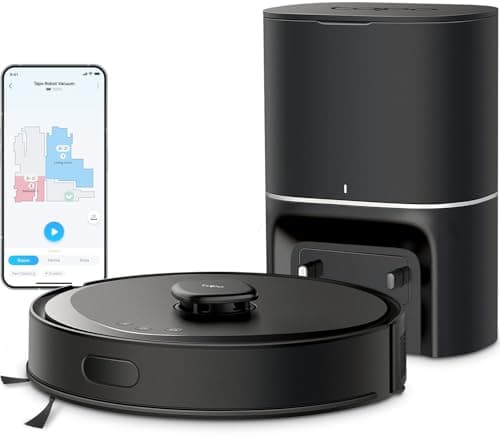
Tapo RV30 Max Plus
Passive, 3 flow levels
Not applicable
Avoids carpet in mop mode
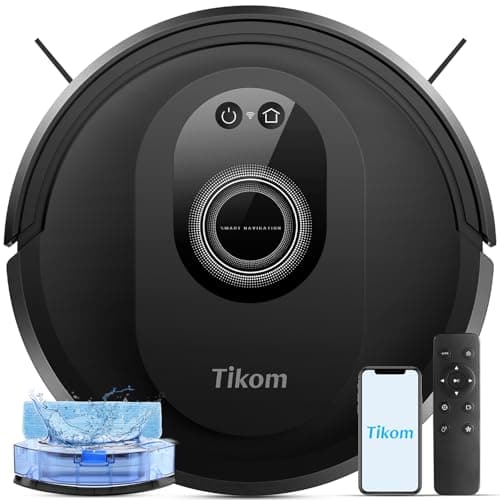
Tikom G8000 Max
Passive, simultaneous
Not applicable
None - use a physical barrier
All figures read from each manufacturer's own listing. Where a rate is not published, the mechanism is passive.
The Lefant M3 is a different kind of answer
It is worth understanding why the Lefant M3 ranks third rather than second despite having the most impressive dock on this page. Its 45-degree hot-water wash and cool-air drying are genuinely unusual under $250 - almost nothing else at this price washes its own mop pad.
But washing the pad is a maintenance feature, not a cleaning one. It solves the problem of a dirty pad going back on the floor next run, which is real and unpleasant. It does not change what happens while the machine is mopping, because the pad is still being dragged. If your problem is 'the mop pad gets disgusting and I forget to rinse it', the M3 is the answer. If your problem is 'the mop does not actually clean anything', it is not.
The water tank sizes, and why they matter differently by floor
The tanks here run from 160 ml on the Lefant N3 to 300 ml on the Tapo and Tikom machines. On a large hard-floor area, a 160 ml tank means a mid-run refill, which defeats the point of an unattended machine.
But bigger is not automatically better, because tank size interacts with floor type. On sealed hardwood you want a drier pass - standing water and wood are a bad pairing, and a machine that lays down a lot of water is a machine you have to think about. On tile you want a wetter one, because tile does not care and more water cleans better. Match the flow setting to the floor rather than assuming the biggest tank wins.
How to schedule a mop combo properly
Almost nobody does this and it makes a real difference. Machines that mop and vacuum in the same pass are laying water onto a floor they are simultaneously trying to lift dry debris from, which turns crumbs into paste.
Every app-controlled machine here can run two scheduled jobs. Set a vacuum-only pass in the morning and a mop pass in the afternoon, and the mop is working on a floor that is already clear of solids. It takes two minutes to configure and it is the single biggest improvement you can make to a budget mop's results.
2.7 L bag, manufacturer states up to 70 daysSource: Manufacturer listing
Mopping
Sonic vibration mopping, up to 3,000 scrubs per minute, lifts up to 8 mm on carpetSource: Manufacturer listing
Carpet handling
Ultrasonic detection, raises the mop and increases suctionSource: Manufacturer listing
Anti-tangle
JawScrapers main brush plus anti-tangle side brushSource: Manufacturer listing
What it gets right
Structured-light obstacle avoidance is the single feature that separates a machine that finishes from one you rescue. Nothing else under $300 has it
A mop that lifts 8 mm means it can do hard floors and carpet in one run without wetting a rug
3,000 scrubs a minute is an actual scrubbing mechanism, not a damp pad
10,000Pa, dual anti-tangle brushes, multi-level maps - it gives up almost nothing to a $600 machine
What it gives up
The most expensive machine on this site, and it sits close to the ceiling
2.7 L bags are a recurring cost, and 70 days is mid-pack
The dock does not wash the mop - you rinse the pad yourself
2.4 GHz Wi-Fi only, which is an annoyance on a mesh network
Our scoring
Suction9.0
Navigation9.0
Pet hair8.5
Running cost6.5
Setup8.0
Weights and the arithmetic behind the total are published on How we pick so you can recompute this yourself.
Who it is for: A mixed-floor home with pets, clutter and rugs - the situation every other machine here handles by giving something up.
Skip it if: your floors are entirely hard and entirely tidy. Structured-light avoidance and an 8 mm mop lift are what you are paying the premium for, and a bare hard-floor flat uses neither.
A sonic mop that vibrates 12,000 times a minute, which is a genuinely different mechanism from the damp cloth every other machine at this price drags around.
Published specifications
Suction
Up to 4,000Pa, 4 levelsSource: Manufacturer listing
Navigation
LiDAR plus dToF sensors, detection to 10 m, real-time mappingSource: Manufacturer listing
Mopping
Sonic scrubbing at 12,000 vibrations per minuteSource: Manufacturer listing
Water tank
160 ml electronic, 3 levelsSource: Manufacturer listing
Runtime
Up to 200 minutes; manufacturer states 3,200 sq ftSource: Manufacturer listing
Carpet detection
Ultrasonic, raises suction and changes direction in mop modeSource: Manufacturer listing
What it gets right
Sonic scrubbing actually agitates dried-on marks instead of spreading them, which a passive pad cannot do
dToF is a better sensor than the bare LiDAR most machines at this price use - it is unaffected by ambient light
200 minutes and a claimed 3,200 sq ft covers a whole house in one run
Ultrasonic carpet detection means it stops wetting rugs without you drawing zones
What it gives up
4,000Pa is the lowest published figure of any LiDAR machine here
A 160 ml tank is small - a large hard-floor area will need a refill mid-run
No self-emptying dock
Sonic mopping consumes battery faster than a passive pad, so 200 minutes is the vacuum-only figure
Our scoring
Suction6.5
Navigation8.0
Pet hair6.0
Running cost8.0
Setup7.5
Weights and the arithmetic behind the total are published on How we pick so you can recompute this yourself.
Who it is for: Hard floors that actually get dirty - a kitchen, a hallway, a house with children.
Skip it if: your floors are mostly carpet. You would be paying for a mopping mechanism you cannot use and taking the weakest suction figure in the LiDAR group to get it.
3.2 L bag, manufacturer states up to 90 daysSource: Manufacturer listing
Mop care
45C hot water wash with cool-air dryingSource: Manufacturer listing
Battery / runtime
5,200 mAh, up to 220 minutesSource: Manufacturer listing
Mopping coverage
Manufacturer states 2,368 sq ft (220 m2) per tankSource: Manufacturer listing
Wi-Fi
Dual band, 2.4 GHz and 5 GHzSource: Manufacturer listing
What it gets right
12,000Pa is a flagship-tier published figure at a sub-$250 price
A mop-washing dock at this price is genuinely unusual - most stop at self-emptying
Cool-air drying rather than heat, which is what stops a pad going stiff and smelling
Dual-band Wi-Fi, which sounds trivial until you own a mesh network that keeps handing it to the 5 GHz radio
What it gives up
A washing dock is plumbing. Two tanks, a tray and a pad to keep clean, and more to go wrong
Pa figures are not comparable between manufacturers - there is no shared test standard, and a big number is not automatically better cleaning
Still buying 3.2 L bags
The least established brand here for warranty and spare parts
Our scoring
Suction9.0
Navigation8.0
Pet hair7.0
Running cost6.0
Setup7.0
Weights and the arithmetic behind the total are published on How we pick so you can recompute this yourself.
Who it is for: A hard-floor home where mopping is the actual point and the dock has somewhere to live.
Skip it if: you want fewer chores rather than better ones. A self-washing dock removes the worst job and adds three small ones, and plenty of people would rather rinse a pad in the sink.
5,000Pa published, which is more than several machines here costing twice as much
A 450 ml bin is large for this price - most sub-$150 machines fill up mid-run
Vacuums and mops in one pass rather than making you swap modules between runs
Four ways to control it, including a physical remote, which matters if the app is a fight
What it gives up
No mapping, so no no-go zones, no room selection and no resume-where-it-left-off
A conventional roller brush, so long hair does wrap and does need cutting out
The mop is a damp cloth dragged behind the machine, not a scrubbing head
No self-emptying, so the 450 ml bin is a job you do by hand
Our scoring
Suction7.0
Navigation3.5
Pet hair5.5
Running cost7.5
Setup8.0
Weights and the arithmetic behind the total are published on How we pick so you can recompute this yourself.
Who it is for: Hard floors, a tight budget, and someone who genuinely wants mopping rather than treating it as a bullet point.
Skip it if: you were hoping to draw no-go zones around a pet bowl or a cable nest. Without a map there is nothing to draw them on, and you will be putting up physical barriers instead.
Questions people actually ask
+−What is the best budget robot vacuum and mop?
The Roborock Q10 S5+. Its sonic vibration pad scrubs at 3,000 cycles a minute rather than being dragged, and it lifts the pad 8 mm clear when it detects carpet, so a mixed hard-floor and carpeted home can be done in one run.
+−Do cheap robot vacuums mop well?
Mostly no. On the great majority of machines under $300 the mop is a damp microfiber pad dragged behind the machine, which lifts a film of dust from a sealed floor and does nothing to anything dried on. Only two machines in this price range use an active, oscillating mechanism.
+−How do I tell if a robot vacuum's mop actually scrubs?
Look for a published oscillation or vibration rate - 3,000 scrubs per minute, 12,000 sonic vibrations per minute. If the listing does not quote a rate, the pad is passive and is simply being dragged across the floor.
+−Which robot vacuum and mop is best under $200?
The Lefant N3. It is the only machine under $200 with an active mopping mechanism - a sonic pad vibrating 12,000 times a minute - plus ultrasonic carpet detection so it changes direction rather than wetting a rug.
+−Should I buy a mop combo if I have carpet?
Probably not. A mop adds a water tank that reduces dustbin volume, a pad to rinse and dry after every run, and a risk of a wet cloth being dragged onto a rug - only one machine under $300 lifts its pad automatically. A vacuum-only machine puts the same money into suction and navigation.
Sources
Every specification quoted above was read off one of these documents on the date shown. Where a manufacturer does not publish a figure, this site says "Not published" rather than estimating it.