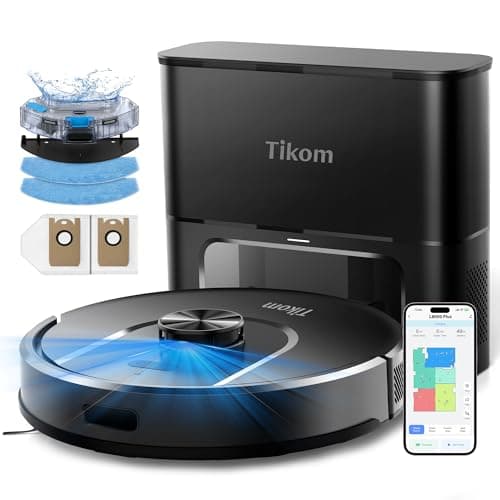
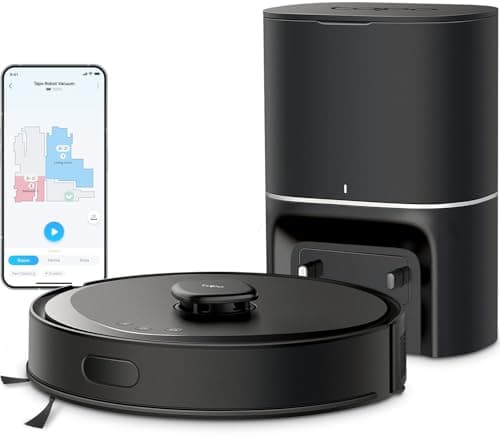
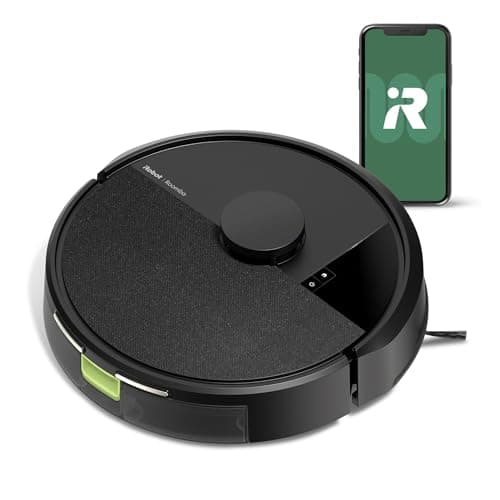
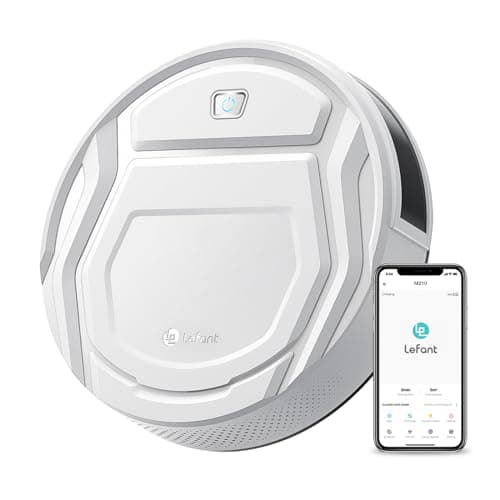
Nine machines that are actually in stock, from $90 to the $300 ceiling. Ranked on published specifications and what they cost to keep running, with the working shown.
By Scooter M., Enthusiast - published September 2, 2026
We have not tested these machines. Everything here comes from published specifications, manufacturer manuals and retailer listings, all cited below. Prices last verified October 17, 2026.
How this is funded: if you buy through a link here we may earn a commission, at no extra cost to you. It does not change which machines we recommend or what we say about them. Full disclosure.
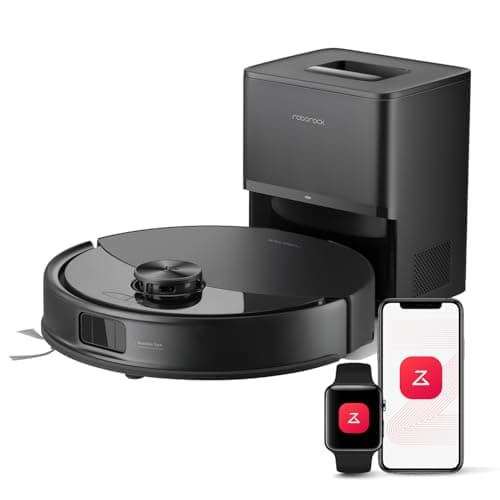
The best budget robot vacuum under $300 is the Roborock Q10 S5+: it is the only machine at this price that maps with LiDAR and also sees obstacles with structured light, so it is the only one that reliably finishes a cluttered floor. If running cost matters more than clutter, the Ecovacs DEEBOT N20 Plus empties itself into a dock with no bag in it at all, which over three years is the cheapest machine here to own.
Everything on this page is in stock and under $300 as of the date on the prices. That sounds like a low bar and it is not: when we checked the models this category's ranking pages currently recommend, several were discontinued or unavailable. A ranking of machines you cannot buy is not a ranking.
#
Product
Best for
Score
Price
01
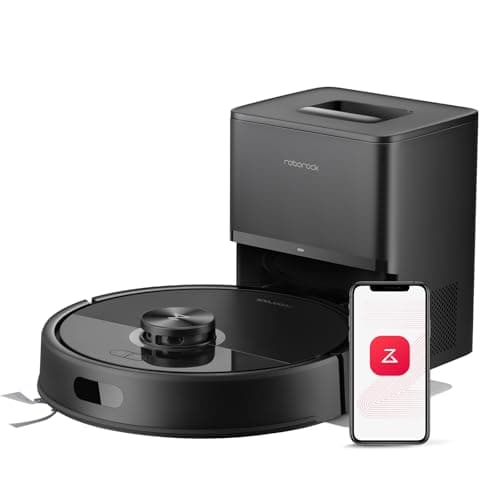
Roborock Q10 S5+The only machine under $300 that maps with LiDAR and sees obstacles with structured light. Everything else here is navigating half-blind.
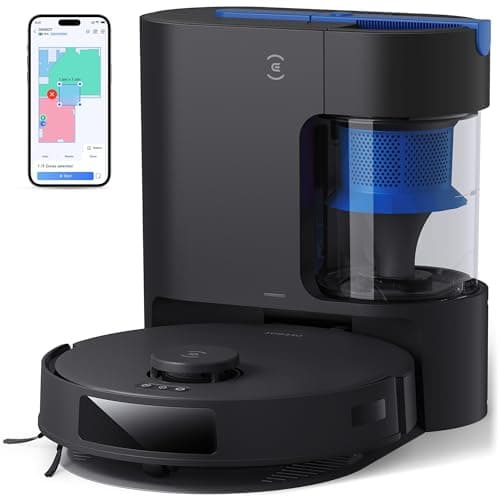
Ecovacs DEEBOT N20 PlusA self-emptying dock with no bag in it. Over three years that is the difference between this and everything else here, and it is not close.
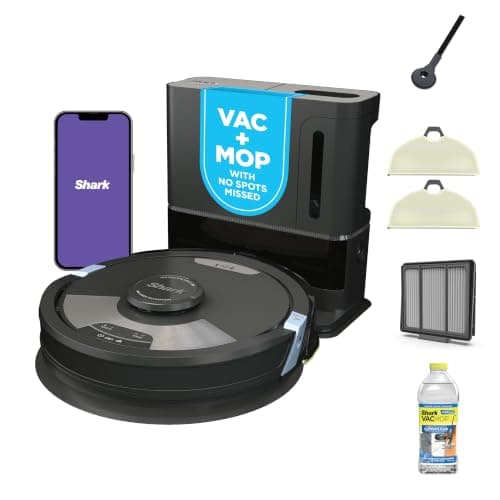
Shark Matrix Plus AV2610WAA 60-day bagless HEPA base and a self-cleaning brushroll. Shark publishes no suction figure at all, which is the reason it is not higher.
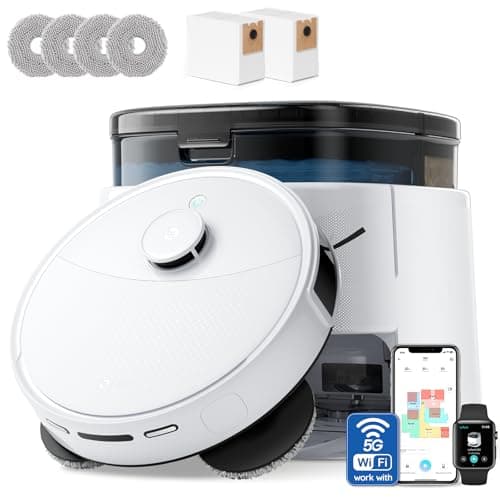
Lefant M312,000Pa and a dock that washes the mop in 45-degree water. The highest specification here by a distance, from the least established brand here.
#ad No live price for this one as of October 17, 2026. How we are funded
08
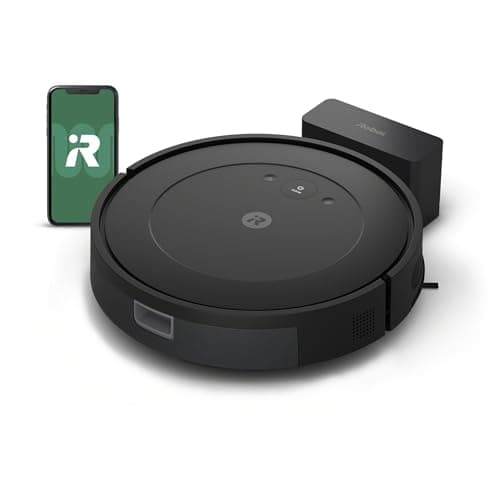
iRobot Roomba 105 VacThe lowest price at which you can buy genuine LiDAR mapping from a company that has been doing this for twenty years. It publishes no suction figure.
Lefant M210A brushless suction port instead of a roller brush, which is why it handles hair better than machines twice its price. It has no map and never will.
iRobot Roomba Vac Essential (Q0120)Roughly $100 more than iRobot's own LiDAR model and it navigates in rows without a map. You are paying for the badge.
#ad No live price for this one as of October 17, 2026. How we are funded
Scores come from the published rubric on How We Pick: suction 25%, navigation 25%, pet hair 20%, running cost 20%, setup 10%. They are editorial judgments about published specifications, not test results.
Why the Roborock Q10 S5+ wins
Because of one specification nothing else under $300 has: ReactiveTech structured-light obstacle avoidance. Every other machine on this page maps with LiDAR, which is a laser scanning at turret height. It sees walls and furniture legs beautifully. It does not see a charging cable, a sock, or a dog toy, because those are below the scanning plane.
That gap is the difference between a machine that runs while you are out and a machine you come home to find beached on a phone charger with a cable wound through its brushroll. Structured light projects a pattern onto the floor ahead and reads the distortion, which is how the Q10 S5+ sees the things that actually stop robot vacuums. Until recently that sensor started around $500.
The rest of the specification is not making up numbers either: 10,000Pa published, dual anti-tangle brushes, multi-level maps, and a sonic vibration mop that scrubs at 3,000 cycles a minute and lifts 8 mm clear when it detects carpet. That last figure matters more than it sounds - it is what lets one machine do a hard-floor kitchen and a carpeted lounge in a single run without dragging a wet pad across your rug.
Why the Ecovacs N20 Plus is the value pick
Because its dock has no bag in it. Every other self-emptying machine on this page - the Roborocks, both Tapos, the Tikom, the Lefant M3 - collects debris into a sealed disposable bag that you buy, forever. The N20 Plus uses a bagless container that you tip into the bin. Ecovacs puts the saving at up to $80 a year, and while that is the manufacturer's own figure, the direction of it is not in doubt.
Run that out over three years and the cheapest machine on the page changes. A $215 machine with no dock consumable can cost less to own than a $170 one that eats a bag every eight weeks. That is the arithmetic nobody does on a product page, and it is why running cost carries 20% of the score here. We show the full working in the running costs guide.
The N20 Plus also publishes 8,000Pa, names its anti-tangle brush geometry rather than gesturing at it, and climbs a 20 mm threshold, which clears most interior door saddles. What it does not have is obstacle avoidance, which is the whole reason it is second rather than first.
What everything here has in common
None of them will deep-clean carpet. A robot vacuum carries a battery it has to make last two hours, which caps the motor, and it weighs four to eight pounds, which caps how hard it can press a brush into pile. On low pile they maintain well. On medium and high pile they skim. This is not a budget limitation - it is true of the $1,200 machines too - but the marketing at this price is especially keen to imply otherwise.
The mop is usually a damp cloth. Two machines here have a genuinely different mechanism: the Roborock Q10 S5+ at 3,000 scrubs a minute, and the Lefant N3 at 12,000 sonic vibrations. Everything else drags a pad. It removes a film of dust and it does not touch anything dried on.
The suction figure is not a standard. Pascal ratings have no shared test method behind them, which is why three well-known brands here - iRobot, Shark, and eufy on this particular listing - decline to publish one at all. We still score on it, at 25%, because it is the only cross-brand cleaning number that exists, but a machine with no published figure is scored as unverified rather than assumed good. Full explanation here.
How the field breaks down by price
The one-line answer at each budget
If your ceiling is
Take
Because
$100
Lefant M210
Brushless inlet, 2.99 in tall, nothing to subscribe to
$150
iRobot Roomba 105 Vac
The cheapest genuine LiDAR mapping in the category
$200
Lefant N3
dToF mapping and a mop that scrubs instead of dragging
$250
Ecovacs DEEBOT N20 Plus
8,000Pa and a dock with no consumable in it
$300
Roborock Q10 S5+
The only obstacle avoidance under the ceiling
Each row links to a full band page with the runners-up and the reasoning. Prices move daily; the band pages check themselves against the live price.
What owners complain about
We do not have owner data of our own and we are not going to paraphrase forum threads into our own voice as though we did. What we can tell you is what the manufacturers' own listings quietly concede, because those admissions are the most reliable negative information available.
Lefant states plainly on the M210 listing: do not use zigzag mode on carpet. That is the machine's most efficient pattern, ruled out on the surface where efficiency matters most.
Ecovacs quotes the N20 Plus's 550 m2 coverage figure for silent or vacuum-only mode, not for a normal mopping run. The real number with the mop attached is lower and is not published.
Tapo's 97% dust pickup is described as a DeepVac result with no published test standard behind it, which makes it a marketing figure rather than a specification.
Shark quotes its two headline improvements - 30% better carpet cleaning, 50% better edge cleaning - against its own previous model with the feature switched off, not against any competitor.
2.7 L bag, manufacturer states up to 70 daysSource: Manufacturer listing
Mopping
Sonic vibration mopping, up to 3,000 scrubs per minute, lifts up to 8 mm on carpetSource: Manufacturer listing
Carpet handling
Ultrasonic detection, raises the mop and increases suctionSource: Manufacturer listing
Anti-tangle
JawScrapers main brush plus anti-tangle side brushSource: Manufacturer listing
What it gets right
Structured-light obstacle avoidance is the single feature that separates a machine that finishes from one you rescue. Nothing else under $300 has it
A mop that lifts 8 mm means it can do hard floors and carpet in one run without wetting a rug
3,000 scrubs a minute is an actual scrubbing mechanism, not a damp pad
10,000Pa, dual anti-tangle brushes, multi-level maps - it gives up almost nothing to a $600 machine
What it gives up
The most expensive machine on this site, and it sits close to the ceiling
2.7 L bags are a recurring cost, and 70 days is mid-pack
The dock does not wash the mop - you rinse the pad yourself
2.4 GHz Wi-Fi only, which is an annoyance on a mesh network
Our scoring
Suction9.0
Navigation9.0
Pet hair8.5
Running cost6.5
Setup8.0
Weights and the arithmetic behind the total are published on How we pick so you can recompute this yourself.
Who it is for: A mixed-floor home with pets, clutter and rugs - the situation every other machine here handles by giving something up.
Skip it if: your floors are entirely hard and entirely tidy. Structured-light avoidance and an 8 mm mop lift are what you are paying the premium for, and a bare hard-floor flat uses neither.
10,000Pa, a self-emptying dock, and the only anti-tangle system here that treats the side brush as part of the problem.
Published specifications
Suction
10,000Pa HyperForceSource: Manufacturer listing
Navigation
PreciSense LiDAR with real-time mappingSource: Manufacturer listing
Self-emptying
2.7 L sealed bag, manufacturer states 7 to 9 weeksSource: Manufacturer listing
Anti-tangle
JawScrapers main brush plus a stated 0% hair-tangling side brushSource: Manufacturer listing
Mopping
Vacuum and mop in one pass, 3 water flow settingsSource: Manufacturer listing
What it gets right
Both brushes are designed against tangling. Every other anti-tangle claim here covers only the main brush, and the side brush is where long hair actually wraps
10,000Pa published, matching machines at three times the price
Roborock's app is the most capable in this group after iRobot's, and its maps survive furniture moves
Vacuums and mops in a single pass rather than two runs
What it gives up
2.7 L and 7 to 9 weeks is a shorter interval than the Tikom L8000 Plus manages
No structured-light obstacle avoidance at this price - that is the Q10's feature
Sealed bags are a recurring cost
The mop still cannot be washed by the dock
Our scoring
Suction9.0
Navigation8.5
Pet hair8.5
Running cost6.5
Setup8.0
Weights and the arithmetic behind the total are published on How we pick so you can recompute this yourself.
Who it is for: A shedding dog or a long-haired cat, on any floor type.
Skip it if: your home is cluttered at floor level. LiDAR maps walls, not socks and charging cables, and without obstacle avoidance this machine will eventually eat one.
A 60-day bagless HEPA base and a self-cleaning brushroll. Shark publishes no suction figure at all, which is the reason it is not higher.
Published specifications
Suction
Not published. Shark states no Pa or airwatt figure for this modelSource: Manufacturer listing
Navigation
360-degree LiDAR mapping with Matrix Clean grid patternSource: Manufacturer listing
Self-emptying
Bagless HEPA base, up to 60 days, no bags to buySource: Manufacturer listing
Filtration
True HEPA, 99.97% of particles down to 0.3 microns (manufacturer-reported)Source: Manufacturer listing
Edge cleaning
CleanEdge Detect, 50% better edge cleaning versus the same model with CleanEdge off (manufacturer-reported)Source: Manufacturer listing
Brushroll
Self-cleaningSource: Manufacturer listing
Mopping
Sonic mopping on hard floorsSource: Manufacturer listing
What it gets right
Bagless and HEPA together - it is the only machine here that empties itself, filters to 0.3 microns, and costs nothing to keep running
A self-cleaning brushroll is the strongest hair-wrap answer in this field
Matrix Clean makes multiple passes over one area, which is a real answer to the single-pass problem
0.3 microns at 99.97% is the strictest published filtration figure here
What it gives up
No published suction rating of any kind, which on a specification-led site costs it real points
Both headline improvements are quoted against Shark's own previous model, not against the field
It sits at the very top of the $300 ceiling, so a small price rise takes it off this site
The heaviest, bulkiest dock here
Our scoring
Suction6.5
Navigation8.0
Pet hair8.0
Running cost8.5
Setup7.5
Weights and the arithmetic behind the total are published on How we pick so you can recompute this yourself.
Who it is for: An allergy household that also refuses to buy consumables - the one combination only this machine covers.
Skip it if: you compare machines on numbers. Shark asks you to take its word for the cleaning performance, and at this price several competitors publish a figure and let you check.
3.2 L bag, manufacturer states up to 90 daysSource: Manufacturer listing
Mop care
45C hot water wash with cool-air dryingSource: Manufacturer listing
Battery / runtime
5,200 mAh, up to 220 minutesSource: Manufacturer listing
Mopping coverage
Manufacturer states 2,368 sq ft (220 m2) per tankSource: Manufacturer listing
Wi-Fi
Dual band, 2.4 GHz and 5 GHzSource: Manufacturer listing
What it gets right
12,000Pa is a flagship-tier published figure at a sub-$250 price
A mop-washing dock at this price is genuinely unusual - most stop at self-emptying
Cool-air drying rather than heat, which is what stops a pad going stiff and smelling
Dual-band Wi-Fi, which sounds trivial until you own a mesh network that keeps handing it to the 5 GHz radio
What it gives up
A washing dock is plumbing. Two tanks, a tray and a pad to keep clean, and more to go wrong
Pa figures are not comparable between manufacturers - there is no shared test standard, and a big number is not automatically better cleaning
Still buying 3.2 L bags
The least established brand here for warranty and spare parts
Our scoring
Suction9.0
Navigation8.0
Pet hair7.0
Running cost6.0
Setup7.0
Weights and the arithmetic behind the total are published on How we pick so you can recompute this yourself.
Who it is for: A hard-floor home where mopping is the actual point and the dock has somewhere to live.
Skip it if: you want fewer chores rather than better ones. A self-washing dock removes the worst job and adds three small ones, and plenty of people would rather rinse a pad in the sink.
3 suction levels, 3 water flow settingsSource: Manufacturer listing
What it gets right
Ninety days between bag changes is 50% longer than the Tapo docks and beats most flagships
Five saved maps handles a three-story house, which is unusual under $250
Separate no-mop zones, so you can keep it off a rug without banning it from the room
6,000Pa published, with automatic carpet boost
What it gives up
Bags are still a recurring cost, just a less frequent one
150 minutes is mid-pack, and a big home will need the resume feature to finish
A conventional main brush - no anti-tangle geometry is claimed
Tikom is a small brand; spare-part availability in three years is a genuine unknown
Our scoring
Suction8.0
Navigation8.0
Pet hair6.5
Running cost6.5
Setup7.5
Weights and the arithmetic behind the total are published on How we pick so you can recompute this yourself.
Who it is for: A multi-floor home where the dock is somewhere inconvenient and you want to visit it as rarely as possible.
Skip it if: you have long-haired pets. Nothing in this machine's published specification addresses hair wrap, and at a similar price the Roborock Q7 M5+ and the Ecovacs N20 Plus both name an anti-tangle mechanism.
Charging only - no self-emptyingSource: Manufacturer listing
Recharge and resume
YesSource: Manufacturer listing
Wi-Fi
2.4 GHz required for setup and operationSource: Manufacturer listing
What it gets right
Real LiDAR mapping at $149 - two years ago this feature started around $400
Keep-out zones you draw in the app, which is the single most useful thing a map buys you
The Roomba app is the most mature in the category and the least likely to lose your map
Recharges and resumes, so a large floor plan is one job rather than three
What it gives up
iRobot publishes no absolute suction number. '70x the 600 series' is a comparison to a fifteen-year-old machine, not a specification
No self-emptying dock at this price - you empty the bin yourself
iRobot consumables cost more than the generic parts the budget brands use
Vacuum only. No mop, no water tank, no pretending otherwise
Our scoring
Suction6.0
Navigation8.0
Pet hair6.0
Running cost6.5
Setup8.5
Weights and the arithmetic behind the total are published on How we pick so you can recompute this yourself.
Who it is for: Someone who wants a map, an app that works, and a brand that will still be selling filters in five years.
Skip it if: you want a suction figure you can compare against anything else. If specifications are how you shop, a machine that refuses to publish one is a machine you cannot rank.
The brushless inlet has nothing for hair to wrap around, so there is no brushroll to cut free every fortnight
2.99 inches tall clears most sofa and bed frames that stop taller machines
Lithium iron phosphate cells, a chemistry that tolerates daily full cycles better than the usual lithium-ion
Nothing to subscribe to and no dust bags to buy
What it gives up
No published suction rating at all, which for a machine sold on suction is a strange omission
No mapping. It covers a room by bouncing around it, so a large floor plan takes several passes
The manufacturer says not to use zigzag mode on carpet, which rules out its most efficient pattern on rugs
Brushless inlets are weaker on embedded carpet grit than a beater bar
Our scoring
Suction5.0
Navigation3.5
Pet hair7.5
Running cost8.5
Setup8.0
Weights and the arithmetic behind the total are published on How we pick so you can recompute this yourself.
Who it is for: A one-bedroom apartment with hard floors, a shedding pet, and a hard budget ceiling under $100.
Skip it if: you have more than about 800 square feet of open floor, or any medium-pile carpet you actually want cleaned rather than skimmed. Without a map it will miss areas, and without a brushroll it will not dig.
#ad No live price for this one as of October 17, 2026. How we are funded
Roughly $100 more than iRobot's own LiDAR model and it navigates in rows without a map. You are paying for the badge.
Published specifications
Suction
Not published as Pa. iRobot states 3 power levelsSource: Manufacturer listing
Navigation
Cleans in neat rows with obstacle and cliff sensors. No LiDAR, no mappingSource: Manufacturer listing
Runtime
Up to 120 minutesSource: Manufacturer listing
Dock
Charging onlySource: Manufacturer listing
Cleaning system
3-stage with edge-sweeping brushSource: Manufacturer listing
What it gets right
The iRobot app and its Clean Map report are the best in the category
Row-based navigation is more systematic than the random bouncing on the cheapest machines
iRobot will still be selling filters for this in five years
Genuinely easy to set up
What it gives up
No LiDAR and no map at a price where LiDAR is now standard
No published suction figure
No self-emptying dock
iRobot's own Roomba 105 Vac has LiDAR mapping for about $100 less
Our scoring
Suction6.0
Navigation5.0
Pet hair6.0
Running cost6.5
Setup8.5
Weights and the arithmetic behind the total are published on How we pick so you can recompute this yourself.
Who it is for: Nobody we can think of, at this price, while the Roomba 105 Vac exists.
Skip it if: you are looking at it at all. This is the pick we would actively steer you away from: the same manufacturer sells a mapping machine for less money, and every other brand here gives you more specification per dollar. It is on this site so the comparison is visible, not because we recommend it.
Questions people actually ask
+−What is the best budget robot vacuum overall?
The Roborock Q10 S5+, because it is the only machine under $300 that combines LiDAR mapping with structured-light obstacle avoidance. That combination is what determines whether the machine finishes a run on a normal, slightly cluttered floor rather than getting stuck on a cable.
+−Is a robot vacuum under $300 actually worth buying?
For hard floors and daily maintenance, yes. The sub-$300 tier now includes LiDAR mapping and self-emptying docks that cost three times as much two years ago. For deep-cleaning medium or high-pile carpet, no - and no machine at any price in this range will change that.
+−Which budget robot vacuum is cheapest to own over three years?
The Ecovacs DEEBOT N20 Plus, because its self-emptying dock uses a bagless container rather than disposable bags. Every other self-emptying machine here bills you for bags indefinitely, and over three years that gap is larger than the price difference between most of these machines.
+−Do any of these robot vacuums avoid obstacles?
Only the Roborock Q10 S5+, using structured light. Every other machine here maps with LiDAR, which scans at turret height and sees walls and furniture but not cables, socks or toys on the floor.
+−What is the cheapest robot vacuum with a real map?
The iRobot Roomba 105 Vac at around $149 is the cheapest machine here with genuine LiDAR mapping. Below roughly $150 the machines follow fixed patterns and change direction on contact, with no memory of the room.
+−Should I wait for a sale on a more expensive model?
Sometimes, and it is worth checking. Machines in the $400 to $600 tier discount heavily and occasionally land under $300, at which point they are usually the better buy. Prices on this site are re-checked daily, so a step-up model that has fallen into range will appear here with its real price.
+−Have you tested these robot vacuums?
No. Everything here comes from published specifications, manufacturer documentation and retailer listings, every one of them cited at the bottom of this page. Units we claim to have tested: zero. The scoring method is published in full so you can recompute any number on this page yourself.
Sources
Every specification quoted above was read off one of these documents on the date shown. Where a manufacturer does not publish a figure, this site says "Not published" rather than estimating it.