Neither brand will tell you how hard its machine pulls. So this comparison is decided on the specifications they do publish, and those turn out to be enough.
By Scooter M., Enthusiast - published September 6, 2026
We have not tested these machines. Everything here comes from published specifications, manufacturer manuals and retailer listings, all cited below. Prices last verified September 21, 2026.
How this is funded: if you buy through a link here we may earn a commission, at no extra cost to you. It does not change which machines we recommend or what we say about them. Full disclosure.
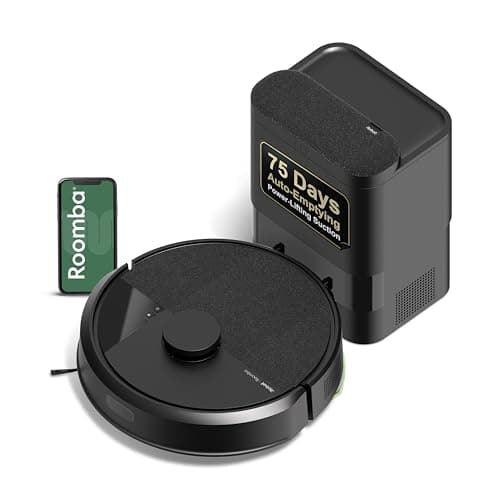
Under $300, buy the Shark Matrix Plus if you do not want to buy consumables - its self-emptying base is bagless and filters to true HEPA, 99.97% down to 0.3 microns. Buy the Roomba 105 Vac if you want the cheapest genuine map, or its AutoEmpty version if you want a sealed bag rated to trap 99% of allergens down to 0.7 microns for up to 75 days. Neither brand publishes a suction figure, so nobody can rank these on cleaning power - including us.
That missing number is the honest starting point for this page. Between them, iRobot and Shark are the two most recognized names in the category, they sell at the top of this ceiling, and neither will print a Pascal or airwatt rating. Every ranking you read that puts one above the other on raw cleaning power is either measuring it independently or making it up.
#
Product
Best for
Score
Price
01
No imageShark Matrix Plus RV2610WAA 60-day bagless HEPA base and a self-cleaning brushroll. Shark publishes no suction figure at all, which is the reason it is not higher.
#ad No live price for this one as of September 21, 2026. How we are funded
02
iRobot Roomba 105 Vac with AutoEmpty DockThe 105 Vac plus a sealed-bag dock that traps particles down to 0.7 microns. The only machine here that publishes a filtration figure that small.
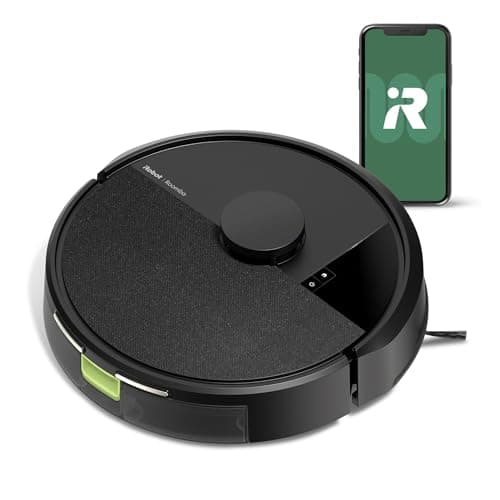
iRobot Roomba 105 VacThe lowest price at which you can buy genuine LiDAR mapping from a company that has been doing this for twenty years. It publishes no suction figure.
Both machines scored on the published rubric from How We Pick: suction 25%, navigation 25%, pet hair 20%, running cost 20%, setup 10%. Editorial judgments about published specifications, not test results.
What each brand does publish
What the two brands are willing to state
Shark Matrix Plus
Roomba 105 + AutoEmpty
Roomba 105 Vac
Published suction
Not published
Not published
Not published
Navigation
360-degree LiDAR, Matrix Clean grid
ClearView LiDAR, keep-out zones
ClearView LiDAR, keep-out zones
Self-emptying
Bagless base, up to 60 days
Sealed bag, up to 75 days
None - charging dock only
Filtration
True HEPA, 99.97% to 0.3 microns
Bag traps 99% of allergens to 0.7 microns
Not published
Consumable cost
None
Dock bags
None
Hair handling
Self-cleaning brushroll
Multi-surface brush
Multi-surface brush
Mopping
Sonic mopping on hard floors
None
None
Every entry is read from the manufacturer's own listing. Both filtration figures are manufacturer-reported.
The interesting row is filtration, because it is the one place both brands do commit to a number - and the numbers are not the same kind. Shark's is a true HEPA claim, measured at the 0.3-micron particle size that HEPA testing is defined around. iRobot's is a bag claim: 99% of allergens down to 0.7 microns. Both are manufacturer-reported. The Shark figure is the stricter of the two on paper; the iRobot approach means the dust is inside a sealed bag you never open.
Where Shark wins
Running cost, and it is not close. The bagless base means there is no consumable at all. iRobot's AutoEmpty dock takes bags, and iRobot's bags cost more than the generic equivalents the budget brands use. Over three years that is a real difference, and it is the reason the Shark scores higher than the Roomba on running cost in our rubric despite costing more up front.
Hair. A self-cleaning brushroll is a mechanism; iRobot's multi-surface brush is a good brush that still wraps. In a house with a long-haired animal, that difference shows up weekly.
Mopping, such as it is. The Shark sonic mops hard floors on the same pass. Neither Roomba here mops at all. Set expectations from our mop combo ranking before treating that as a deciding factor.
Where Roomba wins
Price of entry to a map. The plain Roomba 105 Vac is the cheapest machine on this site with genuine LiDAR mapping - roughly half the Shark's price for the same core capability of drawing keep-out zones and cleaning in rows. If a map is what you want and a dock is not, this is the efficient purchase.
Sealed-bag emptying, if allergies are the reason you are buying. A bagless base has to be tipped out, and tipping out is exactly the moment a sealed bag exists to avoid. The AutoEmpty dock's 0.7-micron bag claim is the better answer for a household where somebody reacts to dust when the bin is opened - even though the Shark's filter figure is stricter.
The app. iRobot's is the most mature in the category, and the Clean Map report - a picture of where the machine actually went - is a feature nobody else matches at this price. If this is a first robot vacuum, that maturity is worth real money, which is why it heads our beginners ranking.
Longevity of support. iRobot has been selling these for two decades and will still be selling filters for this model in five years. Shark is a large, established brand too, but the parts trail is shorter.
Where neither of them does well
Neither publishes a suction figure. This is the second time this page has said it, because it deserves the repetition: at this price the machines from Roborock, Ecovacs, Lefant, Tikom and Tapo all print a Pascal rating and invite the comparison. Shark and iRobot ask for trust instead. Both brands have earned some, and that is still a worse deal for a buyer than a number.
Neither publishes a runtime. Not for the Matrix Plus, not for the 105 Vac. In a large home that is the specification that decides whether a job finishes in one pass or three, and both machines rely on recharge-and-resume to paper over it.
Neither sees obstacles. LiDAR maps at turret height on both. A cable or a sock lying flat is invisible to both, and the feature that fixes it is the most expensive thing in this class. What you give up under $300 covers where that line currently sits.
How to decide in one step
Ask what you want the dock to do. Nothing, and cheaply: the Roomba 105 Vac, which is a map and no more. Empty the robot with no ongoing cost: the Shark, whose bagless HEPA base is the only one of its kind here. Empty the robot into something sealed you never breathe: the Roomba 105 with AutoEmpty. Those three answers cover almost everyone, and the self-emptying ranking puts the rest of the field against the same question.
#ad No live price for this one as of September 21, 2026. How we are funded
A 60-day bagless HEPA base and a self-cleaning brushroll. Shark publishes no suction figure at all, which is the reason it is not higher.
Published specifications
Suction
Not published. Shark states no Pa or airwatt figure for this modelSource: Manufacturer listing
Navigation
360-degree LiDAR mapping with Matrix Clean grid patternSource: Manufacturer listing
Self-emptying
Bagless HEPA base, up to 60 days, no bags to buySource: Manufacturer listing
Filtration
True HEPA, 99.97% of particles down to 0.3 microns (manufacturer-reported)Source: Manufacturer listing
Edge cleaning
CleanEdge Detect, 50% better edge cleaning versus the same model with CleanEdge off (manufacturer-reported)Source: Manufacturer listing
Brushroll
Self-cleaningSource: Manufacturer listing
Mopping
Sonic mopping on hard floorsSource: Manufacturer listing
What it gets right
Bagless and HEPA together - it is the only machine here that empties itself, filters to 0.3 microns, and costs nothing to keep running
A self-cleaning brushroll is the strongest hair-wrap answer in this field
Matrix Clean makes multiple passes over one area, which is a real answer to the single-pass problem
0.3 microns at 99.97% is the strictest published filtration figure here
What it gives up
No published suction rating of any kind, which on a specification-led site costs it real points
Both headline improvements are quoted against Shark's own previous model, not against the field
It sits at the very top of the $300 ceiling, so a small price rise takes it off this site
The heaviest, bulkiest dock here
Our scoring
Suction6.5
Navigation8.0
Pet hair8.0
Running cost8.5
Setup7.5
Weights and the arithmetic behind the total are published on How we pick so you can recompute this yourself.
Who it is for: An allergy household that also refuses to buy consumables - the one combination only this machine covers.
Skip it if: you compare machines on numbers. Shark asks you to take its word for the cleaning performance, and at this price several competitors publish a figure and let you check.
The 105 Vac plus a sealed-bag dock that traps particles down to 0.7 microns. The only machine here that publishes a filtration figure that small.
Published specifications
Suction
Not published as PaSource: Manufacturer listing
Navigation
ClearView LiDAR mapping with keep-out zonesSource: Manufacturer listing
Self-emptying
AutoEmpty dock, manufacturer states up to 75 daysSource: Manufacturer listing
Dock filtration
Bag traps 99% of allergens as small as 0.7 microns (manufacturer-reported)Source: Manufacturer listing
Recharge and resume
YesSource: Manufacturer listing
What it gets right
0.7 microns is a finer published figure than the 'HEPA-style' language most of this field uses
A sealed bag means emptying never releases a dust cloud, which is the whole point for an allergy household
75 days between bag changes
Mature LiDAR mapping and the best app here
What it gives up
Still no published suction rating
iRobot dock bags cost more than the generic-brand equivalents
Vacuum only - no mop
About $100 more than the same robot without the dock
Our scoring
Suction6.0
Navigation8.0
Pet hair6.5
Running cost6.0
Setup8.5
Weights and the arithmetic behind the total are published on How we pick so you can recompute this yourself.
Who it is for: A household where somebody reacts to dust, and emptying a bin by hand is the problem rather than the chore.
Skip it if: nobody in the house has allergies. Without that, the sealed bag is the more expensive way to do what the Ecovacs N20 Plus does with no consumable at all.
Charging only - no self-emptyingSource: Manufacturer listing
Recharge and resume
YesSource: Manufacturer listing
Wi-Fi
2.4 GHz required for setup and operationSource: Manufacturer listing
What it gets right
Real LiDAR mapping at $149 - two years ago this feature started around $400
Keep-out zones you draw in the app, which is the single most useful thing a map buys you
The Roomba app is the most mature in the category and the least likely to lose your map
Recharges and resumes, so a large floor plan is one job rather than three
What it gives up
iRobot publishes no absolute suction number. '70x the 600 series' is a comparison to a fifteen-year-old machine, not a specification
No self-emptying dock at this price - you empty the bin yourself
iRobot consumables cost more than the generic parts the budget brands use
Vacuum only. No mop, no water tank, no pretending otherwise
Our scoring
Suction6.0
Navigation8.0
Pet hair6.0
Running cost6.5
Setup8.5
Weights and the arithmetic behind the total are published on How we pick so you can recompute this yourself.
Who it is for: Someone who wants a map, an app that works, and a brand that will still be selling filters in five years.
Skip it if: you want a suction figure you can compare against anything else. If specifications are how you shop, a machine that refuses to publish one is a machine you cannot rank.
Questions people actually ask
+−Is Shark or Roomba better under $300?
Shark, if you want a self-emptying dock with no consumable cost and the strictest published filtration figure here. Roomba, if you want the cheapest genuine LiDAR map, the most mature app in the category, or a sealed bag rather than a bin you tip out.
+−Which has more suction, Shark or Roomba?
Nobody can tell you. Neither brand publishes a Pascal or airwatt rating for these models. Any ranking that claims one out-cleans the other is either measuring it independently or asserting it without evidence.
+−Does the Shark Matrix Plus need bags?
No. Its self-emptying base is bagless, which is the main running-cost advantage it holds over the Roomba AutoEmpty dock. iRobot's dock uses bags, and iRobot bags cost more than generic ones.
+−Which is better for allergies, Shark or Roomba?
It depends on which part of the problem you mean. Shark publishes the stricter filter figure - true HEPA, 99.97% down to 0.3 microns. iRobot's AutoEmpty bag traps 99% of allergens down to 0.7 microns and is sealed, so emptying never releases a cloud. For a reactive household, the sealed bag is usually the more useful of the two.
+−Is the cheaper Roomba 105 Vac enough on its own?
For a hard-floor home without heavy shedding, yes - it is the cheapest real LiDAR map on this site and its app is the best here. With a shedding pet, the onboard bin becomes a twice-weekly job, and that is what the AutoEmpty dock or the Shark's base is for.
Sources
Every specification quoted above was read off one of these documents on the date shown. Where a manufacturer does not publish a figure, this site says "Not published" rather than estimating it.