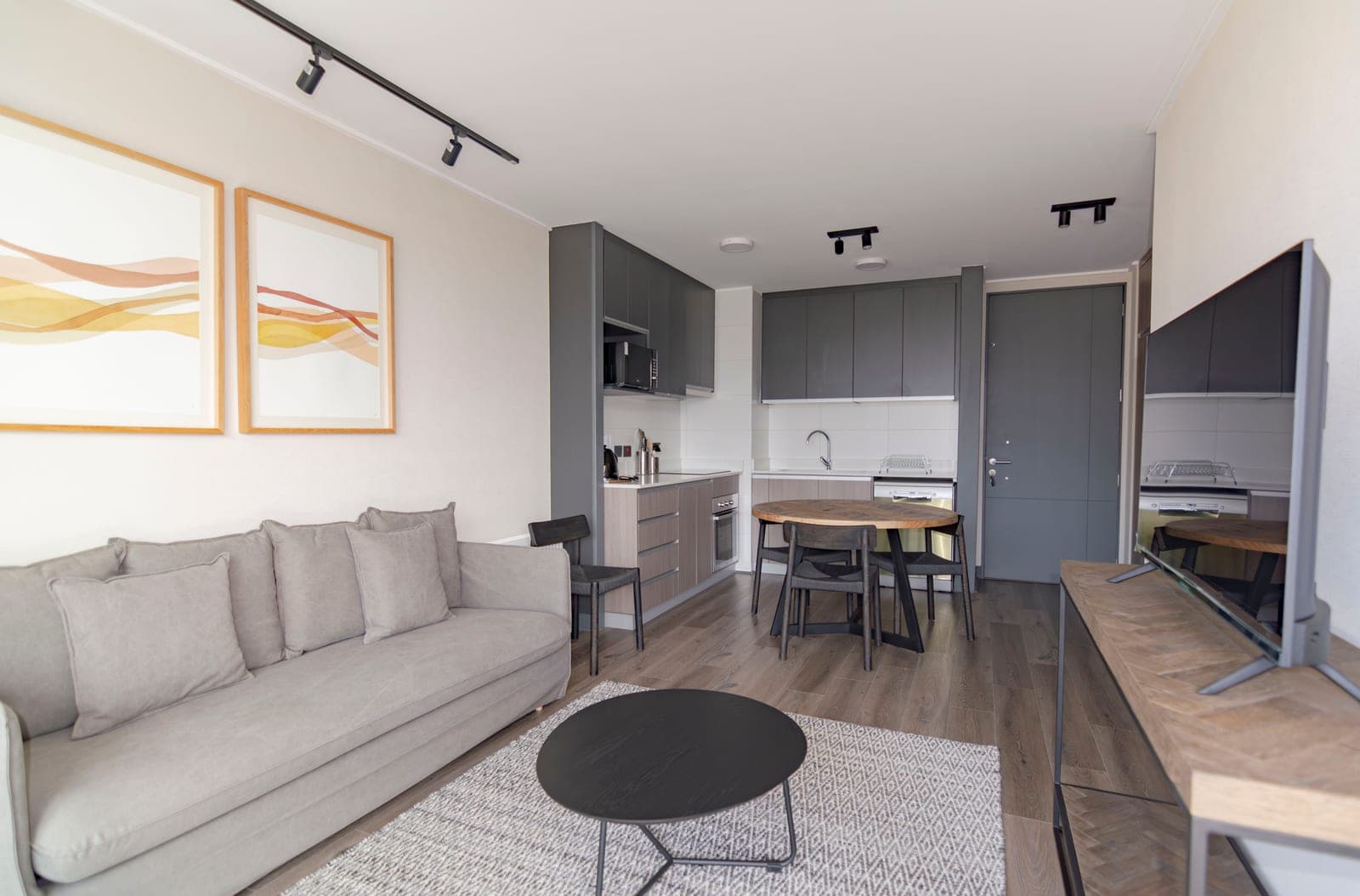
In 500 square feet, the question is not whether the machine can clean your floor. It is where the dock is going to live.
By Scooter M., Enthusiast - published September 2, 2026
We have not tested these machines. Everything here comes from published specifications, manufacturer manuals and retailer listings, all cited below. Prices last verified October 18, 2026.
How this is funded: if you buy through a link here we may earn a commission, at no extra cost to you. It does not change which machines we recommend or what we say about them. Full disclosure.
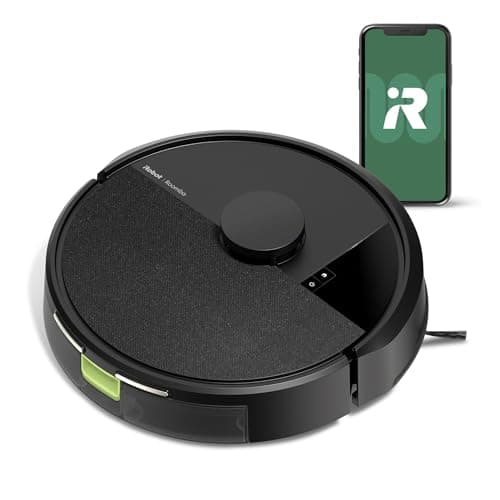
For a small apartment, buy the iRobot Roomba 105 Vac. It maps with LiDAR so it covers an awkward flat properly, its keep-out zones handle the one corner you need it to leave alone, and its dock is a small charging pad rather than a bin-sized tower - which in 500 square feet is the difference between a good purchase and a resented one.
Small-space buying inverts the usual advice. The self-emptying dock that we recommend everywhere else on this site is the feature to think hardest about here, because a dock is furniture.
#
Product
Best for
Score
Price
01
iRobot Roomba 105 VacThe lowest price at which you can buy genuine LiDAR mapping from a company that has been doing this for twenty years. It publishes no suction figure.
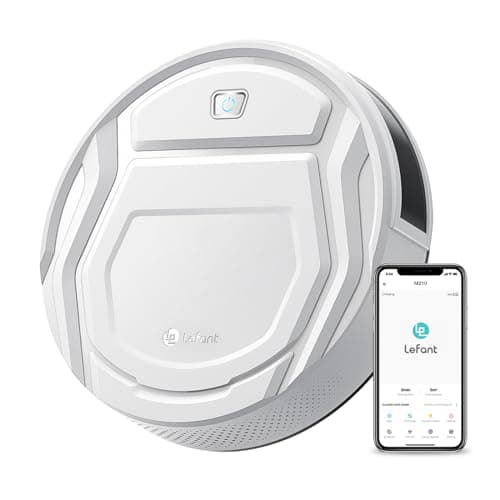
Lefant M210A brushless suction port instead of a roller brush, which is why it handles hair better than machines twice its price. It has no map and never will.
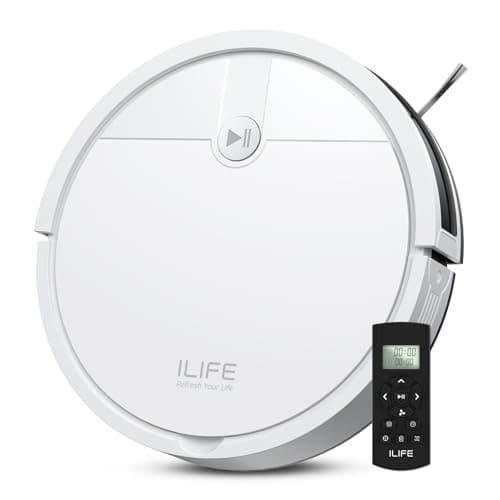
ILIFE V2A physical remote, a tangle-free suction port and no network connection of any kind. It is the cheapest machine we rank and the only one left that runs without Wi-Fi.
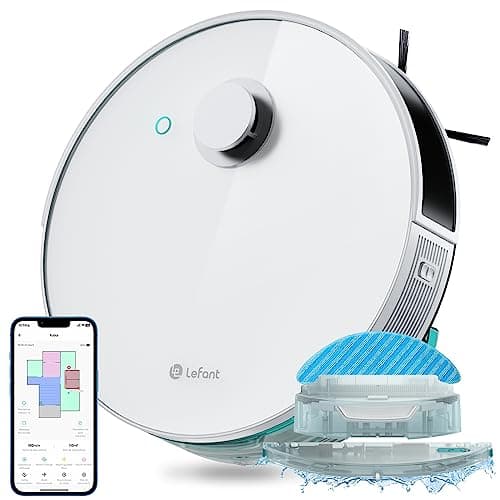
Lefant N3A sonic mop that vibrates 12,000 times a minute, which is a genuinely different mechanism from the damp cloth every other machine at this price drags around.
Scores come from the published rubric on How We Pick: suction 25%, navigation 25%, pet hair 20%, running cost 20%, setup 10%. They are editorial judgments about published specifications, not test results.
The dock is bigger than you are picturing
A self-emptying base station is roughly the size of a small kitchen bin, and it does not simply need floor space - it needs clearance in front and on both sides so the robot can dock accurately, and a power socket it can sit permanently beside. In a house that is a corner of a hallway nobody uses. In a studio flat it is a visible piece of your living space.
The argument for accepting that cost is weaker in a small home anyway. A dock's value is proportional to how often you would otherwise empty the bin, and in 500 square feet a 300 to 550 ml bin fills slowly. A dock that saves you a job twice a week in a house might save it once a fortnight in a flat.
So the recommendation here leans towards machines with a plain charging pad: you keep the LiDAR mapping, which a small awkward floor plan genuinely needs, and you surrender no floor space to get it.
Small flats need mapping more than large houses do
This is counter-intuitive and it is the second thing this page exists to say. A large open-plan room is easy for a dumb machine - a zigzag pattern across a big rectangle covers it eventually. A small flat is the opposite: it is a series of small irregular spaces connected by doorways, with furniture in most of them.
A machine without a map, dropped into a one-bedroom flat, will spend most of its battery in whichever room it started and may never find the other one. A mapped machine goes room by room, finishes, and comes back. The map is worth more in 500 square feet than in 1,500.
Noise, which nobody mentions until they live with it
In a house you can run a robot vacuum in the lounge while you are in the kitchen. In a studio there is no other room. If you plan to run the machine while you are home - and in a small flat you probably will, because you are home more of the time in a smaller share of it - then noise is a real specification.
Very few manufacturers in this price range publish a decibel figure, which is itself informative. eufy describes the 11S MAX as running at 'a noise level similar to a microwave' without stating a number. Where a figure is not published, we do not estimate one - but be aware that the machines with the highest suction ratings are the ones running the largest fans, and 'quiet mode' on any of these means substantially reduced suction.
If you are renting
Two practical points. Thresholds between rooms in older rental buildings are often higher than modern ones - the published threshold-climbing figures here run from unstated up to 20 mm on the Ecovacs N20 Plus and 0.87 inches on the Tapo machines. If your flat has raised door saddles, that number decides whether the machine can reach your bedroom.
And no-go zones need a map. If your flat has a cable nest behind a desk or a cat litter tray, the ability to draw a rectangle the machine will not enter is worth the price of mapping on its own. A machine without one needs a physical barrier, which in a small flat is another object you have to live with.
Charging only - no self-emptyingSource: Manufacturer listing
Recharge and resume
YesSource: Manufacturer listing
Wi-Fi
2.4 GHz required for setup and operationSource: Manufacturer listing
What it gets right
Real LiDAR mapping at $149 - two years ago this feature started around $400
Keep-out zones you draw in the app, which is the single most useful thing a map buys you
The Roomba app is the most mature in the category and the least likely to lose your map
Recharges and resumes, so a large floor plan is one job rather than three
What it gives up
iRobot publishes no absolute suction number. '70x the 600 series' is a comparison to a fifteen-year-old machine, not a specification
No self-emptying dock at this price - you empty the bin yourself
iRobot consumables cost more than the generic parts the budget brands use
Vacuum only. No mop, no water tank, no pretending otherwise
Our scoring
Suction6.0
Navigation8.0
Pet hair6.0
Running cost6.5
Setup8.5
Weights and the arithmetic behind the total are published on How we pick so you can recompute this yourself.
Who it is for: Someone who wants a map, an app that works, and a brand that will still be selling filters in five years.
Skip it if: you want a suction figure you can compare against anything else. If specifications are how you shop, a machine that refuses to publish one is a machine you cannot rank.
The brushless inlet has nothing for hair to wrap around, so there is no brushroll to cut free every fortnight
2.99 inches tall clears most sofa and bed frames that stop taller machines
Lithium iron phosphate cells, a chemistry that tolerates daily full cycles better than the usual lithium-ion
Nothing to subscribe to and no dust bags to buy
What it gives up
No published suction rating at all, which for a machine sold on suction is a strange omission
No mapping. It covers a room by bouncing around it, so a large floor plan takes several passes
The manufacturer says not to use zigzag mode on carpet, which rules out its most efficient pattern on rugs
Brushless inlets are weaker on embedded carpet grit than a beater bar
Our scoring
Suction5.0
Navigation3.5
Pet hair7.5
Running cost8.5
Setup8.0
Weights and the arithmetic behind the total are published on How we pick so you can recompute this yourself.
Who it is for: A one-bedroom apartment with hard floors, a shedding pet, and a hard budget ceiling under $100.
Skip it if: you have more than about 800 square feet of open floor, or any medium-pile carpet you actually want cleaned rather than skimmed. Without a map it will miss areas, and without a brushroll it will not dig.
A physical remote, a tangle-free suction port and no network connection of any kind. It is the cheapest machine we rank and the only one left that runs without Wi-Fi.
Published specifications
Suction
Not publishedSource: ILIFE states no Pa figure on this listing
Connectivity
None required - ILIFE states no Wi-Fi connection is needed for operationSource: Manufacturer listing
Control
Physical remote control and a one-touch button on the machineSource: Manufacturer listing
Navigation
No mapping. Auto, spot and edge cleaning modesSource: Manufacturer listing
Brush
Tangle-free suction port - no roller brush fittedSource: Manufacturer listing
Height
2.99 inSource: Manufacturer listing
Runtime
Up to 120 minutes per charge, returns to the dock automaticallySource: Manufacturer listing
Scheduling
Runs on a preset schedule without an appSource: Manufacturer listing
What it gets right
No Wi-Fi needed at all - ILIFE states it plainly, so there is no account, no cloud service and nothing to be orphaned by a firmware update
A tangle-free suction port rather than a roller brush, so long hair has nothing to wrap around
2.99 inches tall, which clears furniture most mapping machines cannot
Scheduling without an app, which the other no-network options do not offer
The cheapest machine on this site by a clear margin
What it gives up
ILIFE publishes no Pa figure, so its headline capability cannot be ranked against anything
No mapping of any kind - it covers a room by moving until it meets something, which is slow in a large space
No zones, no room selection and no cleaning history, because there is no app to hold them
A tangle-free port has nothing to agitate carpet pile with, so this is a hard-floor machine
No mopping, and no dock beyond charging
Our scoring
Suction5.0
Navigation3.0
Pet hair7.0
Running cost8.5
Setup9.0
Weights and the arithmetic behind the total are published on How we pick so you can recompute this yourself.
Who it is for: Somebody buying for a household that will never open an app, or who actively does not want another connected device on the network.
Skip it if: your home is carpeted or larger than a small flat. With no brush and no map it is the wrong tool for pile, and it will not cover a big floor plan reliably.
A sonic mop that vibrates 12,000 times a minute, which is a genuinely different mechanism from the damp cloth every other machine at this price drags around.
Published specifications
Suction
Up to 4,000Pa, 4 levelsSource: Manufacturer listing
Navigation
LiDAR plus dToF sensors, detection to 10 m, real-time mappingSource: Manufacturer listing
Mopping
Sonic scrubbing at 12,000 vibrations per minuteSource: Manufacturer listing
Water tank
160 ml electronic, 3 levelsSource: Manufacturer listing
Runtime
Up to 200 minutes; manufacturer states 3,200 sq ftSource: Manufacturer listing
Carpet detection
Ultrasonic, raises suction and changes direction in mop modeSource: Manufacturer listing
What it gets right
Sonic scrubbing actually agitates dried-on marks instead of spreading them, which a passive pad cannot do
dToF is a better sensor than the bare LiDAR most machines at this price use - it is unaffected by ambient light
200 minutes and a claimed 3,200 sq ft covers a whole house in one run
Ultrasonic carpet detection means it stops wetting rugs without you drawing zones
What it gives up
4,000Pa is the lowest published figure of any LiDAR machine here
A 160 ml tank is small - a large hard-floor area will need a refill mid-run
No self-emptying dock
Sonic mopping consumes battery faster than a passive pad, so 200 minutes is the vacuum-only figure
Our scoring
Suction6.5
Navigation8.0
Pet hair6.0
Running cost8.0
Setup7.5
Weights and the arithmetic behind the total are published on How we pick so you can recompute this yourself.
Who it is for: Hard floors that actually get dirty - a kitchen, a hallway, a house with children.
Skip it if: your floors are mostly carpet. You would be paying for a mopping mechanism you cannot use and taking the weakest suction figure in the LiDAR group to get it.
Questions people actually ask
+−What is the best cheap robot vacuum for a small apartment?
The iRobot Roomba 105 Vac. It maps with LiDAR, which matters more in a small awkward flat than in a large open room, and its dock is a compact charging pad rather than a self-emptying tower that would take real floor space.
+−Do I need a self-emptying dock in a small apartment?
Probably not. A dock is roughly the size of a small kitchen bin and needs clearance on three sides, and in a small flat the onboard bin fills slowly enough that you would only be emptying it every couple of weeks anyway.
+−Does a small apartment need mapping?
More than a large house does, counter-intuitively. A big open room is easy to cover with a simple pattern; a flat is several small irregular spaces joined by doorways, and an unmapped machine can spend a whole battery in the room it started in.
+−Are robot vacuums loud enough to be a problem in a studio?
They can be, and very few manufacturers in this price range publish a decibel figure. As a rule the machines with the highest suction ratings run the largest fans, and every quiet mode on the market works by substantially reducing suction.
+−Will a robot vacuum get over the thresholds in an older flat?
Check the published climbing figure. Among the machines here it runs from unstated up to 20 mm for the Ecovacs N20 Plus and 0.87 inches for the Tapo models. In older buildings with raised door saddles, that number decides whether the machine can reach every room.
Sources
Every specification quoted above was read off one of these documents on the date shown. Where a manufacturer does not publish a figure, this site says "Not published" rather than estimating it.