The feature that changes your relationship with the machine. It starts at about $168 now, and the bagged-versus-bagless question decides what it really costs.
By Scooter M., Enthusiast - published September 2, 2026
We have not tested these machines. Everything here comes from published specifications, manufacturer manuals and retailer listings, all cited below. Prices last verified October 18, 2026.
How this is funded: if you buy through a link here we may earn a commission, at no extra cost to you. It does not change which machines we recommend or what we say about them. Full disclosure.
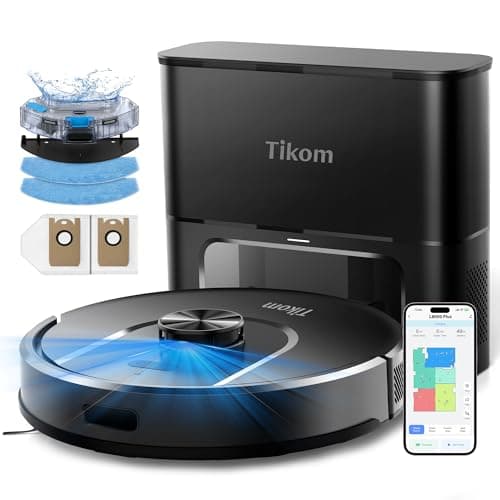
The best self-emptying robot vacuum under $300 is the Ecovacs DEEBOT N20 Plus, because its dock has no bag in it at all - Ecovacs puts the saving against bagged docks at up to $80 a year. The cheapest self-emptying machine we can currently verify as buyable is the Tikom L8000 Plus, which also holds the longest published interval here at up to 90 days.
If you buy one feature above the basic machine, buy this one. It is the difference between owning a robot vacuum and thinking about a robot vacuum.
#
Product
Best for
Score
Price
01
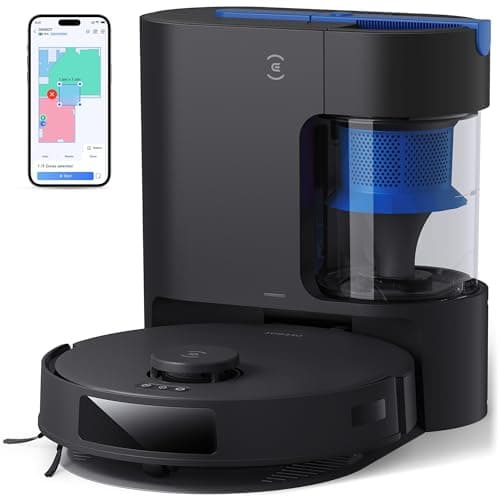
Ecovacs DEEBOT N20 PlusA self-emptying dock with no bag in it. Over three years that is the difference between this and everything else here, and it is not close.
#ad No live price for this one as of October 18, 2026. How we are funded
02
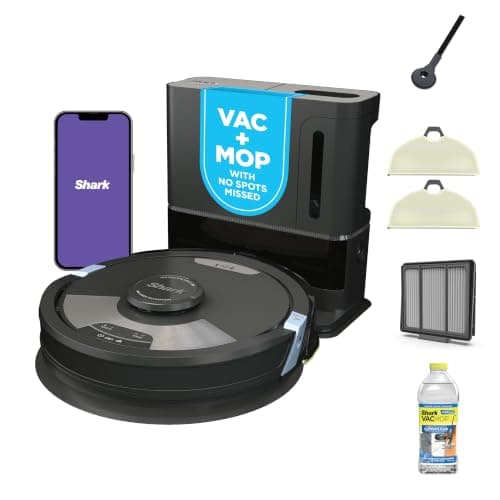
Shark Matrix Plus AV2610WAA 60-day bagless HEPA base and a self-cleaning brushroll. Shark publishes no suction figure at all, which is the reason it is not higher.
#ad No live price for this one as of October 18, 2026. How we are funded
Scores come from the published rubric on How We Pick: suction 25%, navigation 25%, pet hair 20%, running cost 20%, setup 10%. They are editorial judgments about published specifications, not test results.
Why the dock matters more than any cleaning specification
The onboard bins on these machines hold 300 to 550 ml. That sounds adequate and it is not. A shedding dog, a house with carpet, or a family will fill a bin like that in two or three runs.
What happens next is the interesting part, and it is the reason this feature outranks suction. Emptying the bin is a small, slightly unpleasant job that you have to remember. You do it diligently for a month. Then you do it when you notice. Then the machine runs with a full bin, collects nothing, and you conclude it has stopped working well. The commonest failure mode of a budget robot vacuum is not mechanical, it is that the owner stopped emptying it.
A dock removes the job. Change a bag, or tip out a container, every two to three months. That is a scale of maintenance people actually sustain.
Bagged versus bagless: the real cost difference
Three of the five picks here use a sealed disposable bag. Two - the Ecovacs N20 Plus and the Shark Matrix Plus - use a bagless container you tip into the bin. This is the most consequential distinction on the page and it is invisible on any product listing.
What each dock costs you after the purchase
Machine
Dock type
Interval
Ongoing cost
Ecovacs N20 Plus
Bagless container
Not bag-limited
None - manufacturer claims up to $80/yr saved
Shark Matrix Plus
Bagless, true HEPA
60 days
None
Tikom L8000 Plus
3 L sealed bag
Up to 90 days
Bags, roughly 4/year
Roborock Q7 M5+
2.7 L sealed bag
7 to 9 weeks
Bags, roughly 6-7/year
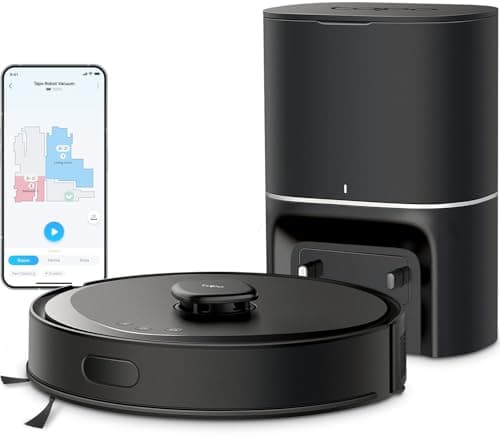
Tapo RV30 Max Plus
3 L sealed bag
Up to 60 days
Bags, roughly 6/year
Intervals are the manufacturers' own published figures and assume typical use. Bag counts are derived from those intervals, not from a manufacturer claim.
Over three years, a machine getting through six bags a year is buying eighteen bags. Depending on brand and whether you accept generics, that is somewhere between $90 and $180 - which is a meaningful fraction of the machine's price and larger than the gap between most machines on this page. The full arithmetic, with the assumptions written out, is on the running costs guide.
The case for bags, which is a real one
A bagless bin has to be tipped out, and tipping a container of fine dust and pet hair into a kitchen bin releases exactly the cloud you were trying to avoid. If anyone in the household has a dust allergy or asthma, that moment is the whole problem.
A sealed bag is removed with the dust inside it, and the good ones publish a filtration figure - the Roomba AutoEmpty dock states 99% of allergens down to 0.7 microns. In an allergy household, pay for the bags. It is the correct trade and it is the reason this page does not simply tell everyone to buy bagless.
A 60-day bagless HEPA base and a self-cleaning brushroll. Shark publishes no suction figure at all, which is the reason it is not higher.
Published specifications
Suction
Not published. Shark states no Pa or airwatt figure for this modelSource: Manufacturer listing
Navigation
360-degree LiDAR mapping with Matrix Clean grid patternSource: Manufacturer listing
Self-emptying
Bagless HEPA base, up to 60 days, no bags to buySource: Manufacturer listing
Filtration
True HEPA, 99.97% of particles down to 0.3 microns (manufacturer-reported)Source: Manufacturer listing
Edge cleaning
CleanEdge Detect, 50% better edge cleaning versus the same model with CleanEdge off (manufacturer-reported)Source: Manufacturer listing
Brushroll
Self-cleaningSource: Manufacturer listing
Mopping
Sonic mopping on hard floorsSource: Manufacturer listing
What it gets right
Bagless and HEPA together - it is the only machine here that empties itself, filters to 0.3 microns, and costs nothing to keep running
A self-cleaning brushroll is the strongest hair-wrap answer in this field
Matrix Clean makes multiple passes over one area, which is a real answer to the single-pass problem
0.3 microns at 99.97% is the strictest published filtration figure here
What it gives up
No published suction rating of any kind, which on a specification-led site costs it real points
Both headline improvements are quoted against Shark's own previous model, not against the field
It sits at the very top of the $300 ceiling, so a small price rise takes it off this site
The heaviest, bulkiest dock here
Our scoring
Suction6.5
Navigation8.0
Pet hair8.0
Running cost8.5
Setup7.5
Weights and the arithmetic behind the total are published on How we pick so you can recompute this yourself.
Who it is for: An allergy household that also refuses to buy consumables - the one combination only this machine covers.
Skip it if: you compare machines on numbers. Shark asks you to take its word for the cleaning performance, and at this price several competitors publish a figure and let you check.
3 suction levels, 3 water flow settingsSource: Manufacturer listing
What it gets right
Ninety days between bag changes is 50% longer than the Tapo docks and beats most flagships
Five saved maps handles a three-story house, which is unusual under $250
Separate no-mop zones, so you can keep it off a rug without banning it from the room
6,000Pa published, with automatic carpet boost
What it gives up
Bags are still a recurring cost, just a less frequent one
150 minutes is mid-pack, and a big home will need the resume feature to finish
A conventional main brush - no anti-tangle geometry is claimed
Tikom is a small brand; spare-part availability in three years is a genuine unknown
Our scoring
Suction8.0
Navigation8.0
Pet hair6.5
Running cost6.5
Setup7.5
Weights and the arithmetic behind the total are published on How we pick so you can recompute this yourself.
Who it is for: A multi-floor home where the dock is somewhere inconvenient and you want to visit it as rarely as possible.
Skip it if: you have long-haired pets. Nothing in this machine's published specification addresses hair wrap, and at a similar price the Roborock Q7 M5+ and the Ecovacs N20 Plus both name an anti-tangle mechanism.
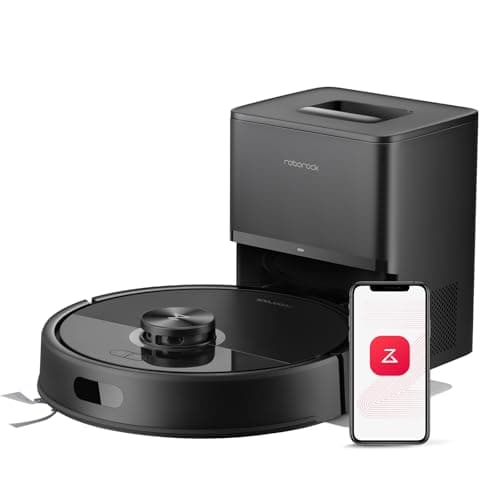
10,000Pa, a self-emptying dock, and the only anti-tangle system here that treats the side brush as part of the problem.
Published specifications
Suction
10,000Pa HyperForceSource: Manufacturer listing
Navigation
PreciSense LiDAR with real-time mappingSource: Manufacturer listing
Self-emptying
2.7 L sealed bag, manufacturer states 7 to 9 weeksSource: Manufacturer listing
Anti-tangle
JawScrapers main brush plus a stated 0% hair-tangling side brushSource: Manufacturer listing
Mopping
Vacuum and mop in one pass, 3 water flow settingsSource: Manufacturer listing
What it gets right
Both brushes are designed against tangling. Every other anti-tangle claim here covers only the main brush, and the side brush is where long hair actually wraps
10,000Pa published, matching machines at three times the price
Roborock's app is the most capable in this group after iRobot's, and its maps survive furniture moves
Vacuums and mops in a single pass rather than two runs
What it gives up
2.7 L and 7 to 9 weeks is a shorter interval than the Tikom L8000 Plus manages
No structured-light obstacle avoidance at this price - that is the Q10's feature
Sealed bags are a recurring cost
The mop still cannot be washed by the dock
Our scoring
Suction9.0
Navigation8.5
Pet hair8.5
Running cost6.5
Setup8.0
Weights and the arithmetic behind the total are published on How we pick so you can recompute this yourself.
Who it is for: A shedding dog or a long-haired cat, on any floor type.
Skip it if: your home is cluttered at floor level. LiDAR maps walls, not socks and charging cables, and without obstacle avoidance this machine will eventually eat one.
#ad No live price for this one as of October 18, 2026. How we are funded
Tapo's better-navigating sibling with the same 3-liter self-emptying dock. If it is within $30 of the RV20 Max Plus, take this one.
Published specifications
Suction
Up to 5,300Pa in Ultra modeSource: Manufacturer listing
Navigation
LiDAR with route planning; dual LiDAR and IMU navigation per the manufacturer's listingSource: Manufacturer listing
Self-emptying
3 L sealed disposable bag, typically up to 60 daysSource: Manufacturer listing
Carpet handling
Raises suction on low pile, avoids carpet in mop modeSource: Manufacturer listing
Dust pickup
Over 97% (manufacturer-reported, DeepVac)Source: Manufacturer listing
What it gets right
Adds inertial measurement to the LiDAR, which is what keeps a map straight when a wheel slips on a rug edge
Self-emptying at under $200, which almost nothing else manages
Same 5,300Pa and same automatic carpet handling as the rest of the Tapo line
Tapo is TP-Link, so the app is a mainstream product rather than a two-person side project
What it gives up
Not the ultra-slim body - it will not go under the furniture the RV20 clears
Same recurring 3 L bag cost
The 97% figure is again manufacturer-reported with no published method
The mop is a pad, not a scrubber
Our scoring
Suction7.5
Navigation8.5
Pet hair6.5
Running cost6.0
Setup8.0
Weights and the arithmetic behind the total are published on How we pick so you can recompute this yourself.
Who it is for: A multi-room home with rugs, where the map staying accurate matters more than the machine being slim.
Skip it if: you need the 3.27-inch profile. If your sofa clearance is the constraint, the RV20 Max Plus is the same idea in a body that fits.
Questions people actually ask
+−What is the cheapest self-emptying robot vacuum?
The Tikom L8000 Plus is the cheapest one we can currently verify as buyable, and its 3-liter sealed bag carries the longest published interval here at up to 90 days. Tapo's ultra-slim RV20 Max Plus used to hold that spot; its listing now reads Currently unavailable.
+−Is a self-emptying dock worth it?
It is the feature we would buy first above the basic machine. Onboard bins hold 300 to 550 ml, which a shedding pet fills in two or three runs - and the commonest failure of a budget robot vacuum is not mechanical, it is that the owner stopped emptying the bin.
+−Is a bagless self-emptying dock better than a bagged one?
It is cheaper - there is no consumable at all, and Ecovacs puts the saving at up to $80 a year. A bagged dock is better if anyone in the house has a dust allergy, because a sealed bag is removed with the dust inside it rather than being tipped out.
+−How often do you have to change the bag?
Manufacturers here publish 60 to 90 days. The Tikom L8000 Plus claims the longest interval at up to 90 days on a 3-liter bag; the Roborock docks are 2.7 liters and quote seven to nine weeks. Real intervals depend heavily on pets and floor type.
+−How much space does a self-emptying dock need?
Roughly the footprint of a small kitchen bin, plus clearance in front and on both sides so the robot can dock accurately, plus a permanent power socket. In a small flat that is a significant cost and often not worth paying.
Sources
Every specification quoted above was read off one of these documents on the date shown. Where a manufacturer does not publish a figure, this site says "Not published" rather than estimating it.