The bill that arrives after the sticker price. Over three years the consumables gap between two machines can exceed the price gap between them.
By Scooter M., Enthusiast - published September 2, 2026
We have not tested these machines. Everything here comes from published specifications, manufacturer manuals and retailer listings, all cited below. Prices last verified October 17, 2026.
How this is funded: if you buy through a link here we may earn a commission, at no extra cost to you. It does not change which machines we recommend or what we say about them. Full disclosure.
Over three years, a self-emptying robot vacuum using disposable bags will cost you roughly $90 to $180 in bags alone, plus filters and brushes. A machine with a bagless dock costs nothing in bags - Ecovacs puts the saving at up to $80 a year. That difference is larger than the price gap between most machines in this range, and it is invisible on every product page.
This page shows the arithmetic rather than asserting a conclusion, so you can substitute your own prices and disagree with a specific line.
#
Product
Best for
Score
Price
01
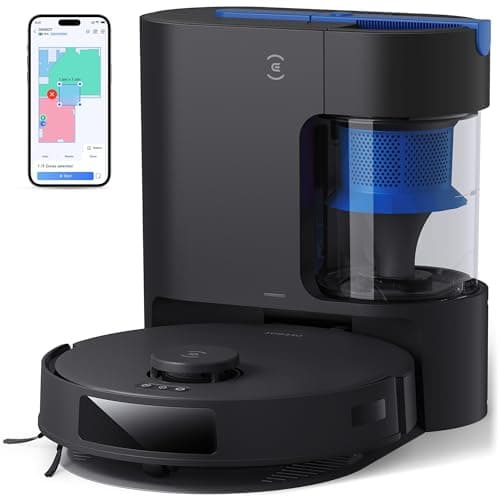
Ecovacs DEEBOT N20 PlusA self-emptying dock with no bag in it. Over three years that is the difference between this and everything else here, and it is not close.
#ad No live price for this one as of October 17, 2026. How we are funded
02
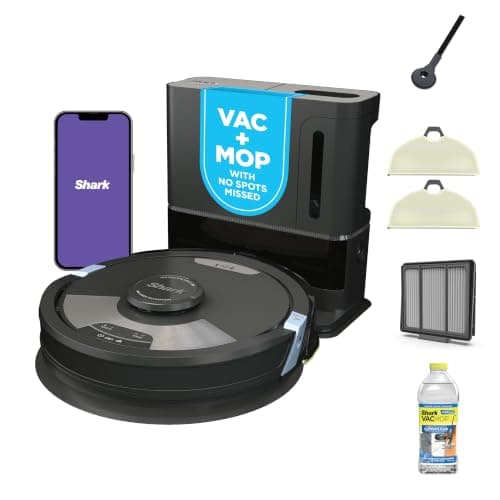
Shark Matrix Plus AV2610WAA 60-day bagless HEPA base and a self-cleaning brushroll. Shark publishes no suction figure at all, which is the reason it is not higher.
#ad No live price for this one as of October 17, 2026. How we are funded
The three machines on this site with the lowest ongoing cost - two bagless docks and one machine with no dock at all. Scores from the published rubric on How We Pick.
The assumptions, stated up front
We are not quoting consumable prices, because they vary by brand, by retailer and by whether you accept generic parts, and a price typed into a sentence is out of date the day after it is written. What this page does is establish how many of each item you will buy, from the manufacturers' own published intervals. Multiply by whatever the parts actually cost when you shop.
Three-year ownership. The battery is the limiting component in these machines and manufacturers in this price range do not publish a cycle count, so three years is a planning assumption rather than a measured lifespan. Where a figure is not published we say so.
Daily running. Fewer runs means proportionally fewer consumables and a longer dock interval.
Manufacturer intervals taken at face value. A dock rated for 60 days is counted as 60 days. Real intervals with a shedding pet will be shorter.
The four things you will buy
Consumable count over a three-year ownership, daily running
Item
Typical interval
Units over 3 years
Applies to
Dock dust bags
60 to 90 days (published)
12 to 18
Bagged self-emptying docks only
Filter
Every 2 to 3 months
12 to 18
Every machine
Side brush
Every 3 to 6 months
6 to 12
Every machine
Main brush / roller
Every 6 to 12 months
3 to 6
Every machine except brushless
Mop pad
Every 3 to 6 months
6 to 12
Mopping machines only
Bag intervals are the manufacturers' published figures. Filter and brush intervals are the general service guidance these products ship with; they are not a manufacturer-specific claim, and where a manufacturer publishes its own schedule you should use that instead.
Where the machines actually differ
Filters and brushes are broadly similar across the field - every machine needs them, at broadly comparable intervals. The dock is where the divergence is.
Bag consumption by machine, from published intervals
Machine
Dock
Bags over 3 years
Ecovacs DEEBOT N20 Plus
Bagless container
Zero
Shark Matrix Plus
Bagless, true HEPA
Zero
Tikom L8000 Plus
3 L bag, up to 90 days
About 12
Tapo RV30 Max Plus
3 L bag, up to 60 days
About 18
Roborock Q7 M5+
2.7 L bag, 7 to 9 weeks
About 18 to 22
Lefant N3
No dock
Zero (you empty the bin)
Counts are derived arithmetically from each manufacturer's published interval over three years of daily running. They are not a manufacturer claim.
So the range is zero to roughly twenty-two bags. At any plausible bag price, that is a three-figure difference in total cost of ownership - and it is enough to reverse the ranking between two machines whose sticker prices are $40 apart. This is the single most useful piece of arithmetic on this site, and no product listing does it for you.
Electricity, which is negligible
Worth addressing because people ask. A robot vacuum's battery is in the 2,600 to 5,200 mAh range at around 14 volts - roughly 40 to 75 watt-hours for a full charge. Charged daily, that is somewhere around 15 to 27 kilowatt-hours a year, before charging losses.
At any residential electricity rate in the United States, that is a small number of dollars annually. The dock's standby draw adds a little. Electricity is not a factor in this decision and any page presenting it as one is padding.
How to redo this with your own numbers
Look up the current price of the specific machine's dock bags, filter and brush kit at your retailer.
Take the unit counts from the table above - or better, from that machine's own published maintenance schedule.
Multiply and add. That is your three-year consumable cost.
Add it to the purchase price, and compare that total between machines rather than the sticker prices.
Do that once and the ranking on the main roundup will often change for your circumstances, which is exactly what it should do. Our weighting gives running cost 20% of the score; if bags matter more to you than that, weight it higher and recompute.
A 60-day bagless HEPA base and a self-cleaning brushroll. Shark publishes no suction figure at all, which is the reason it is not higher.
Published specifications
Suction
Not published. Shark states no Pa or airwatt figure for this modelSource: Manufacturer listing
Navigation
360-degree LiDAR mapping with Matrix Clean grid patternSource: Manufacturer listing
Self-emptying
Bagless HEPA base, up to 60 days, no bags to buySource: Manufacturer listing
Filtration
True HEPA, 99.97% of particles down to 0.3 microns (manufacturer-reported)Source: Manufacturer listing
Edge cleaning
CleanEdge Detect, 50% better edge cleaning versus the same model with CleanEdge off (manufacturer-reported)Source: Manufacturer listing
Brushroll
Self-cleaningSource: Manufacturer listing
Mopping
Sonic mopping on hard floorsSource: Manufacturer listing
What it gets right
Bagless and HEPA together - it is the only machine here that empties itself, filters to 0.3 microns, and costs nothing to keep running
A self-cleaning brushroll is the strongest hair-wrap answer in this field
Matrix Clean makes multiple passes over one area, which is a real answer to the single-pass problem
0.3 microns at 99.97% is the strictest published filtration figure here
What it gives up
No published suction rating of any kind, which on a specification-led site costs it real points
Both headline improvements are quoted against Shark's own previous model, not against the field
It sits at the very top of the $300 ceiling, so a small price rise takes it off this site
The heaviest, bulkiest dock here
Our scoring
Suction6.5
Navigation8.0
Pet hair8.0
Running cost8.5
Setup7.5
Weights and the arithmetic behind the total are published on How we pick so you can recompute this yourself.
Who it is for: An allergy household that also refuses to buy consumables - the one combination only this machine covers.
Skip it if: you compare machines on numbers. Shark asks you to take its word for the cleaning performance, and at this price several competitors publish a figure and let you check.
#ad No live price for this one as of October 17, 2026. How we are funded
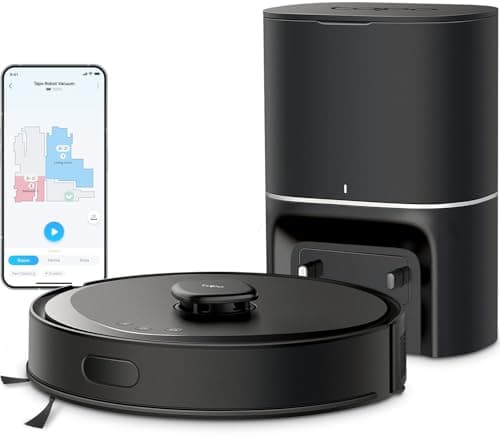
Tapo's better-navigating sibling with the same 3-liter self-emptying dock. If it is within $30 of the RV20 Max Plus, take this one.
Published specifications
Suction
Up to 5,300Pa in Ultra modeSource: Manufacturer listing
Navigation
LiDAR with route planning; dual LiDAR and IMU navigation per the manufacturer's listingSource: Manufacturer listing
Self-emptying
3 L sealed disposable bag, typically up to 60 daysSource: Manufacturer listing
Carpet handling
Raises suction on low pile, avoids carpet in mop modeSource: Manufacturer listing
Dust pickup
Over 97% (manufacturer-reported, DeepVac)Source: Manufacturer listing
What it gets right
Adds inertial measurement to the LiDAR, which is what keeps a map straight when a wheel slips on a rug edge
Self-emptying at under $200, which almost nothing else manages
Same 5,300Pa and same automatic carpet handling as the rest of the Tapo line
Tapo is TP-Link, so the app is a mainstream product rather than a two-person side project
What it gives up
Not the ultra-slim body - it will not go under the furniture the RV20 clears
Same recurring 3 L bag cost
The 97% figure is again manufacturer-reported with no published method
The mop is a pad, not a scrubber
Our scoring
Suction7.5
Navigation8.5
Pet hair6.5
Running cost6.0
Setup8.0
Weights and the arithmetic behind the total are published on How we pick so you can recompute this yourself.
Who it is for: A multi-room home with rugs, where the map staying accurate matters more than the machine being slim.
Skip it if: you need the 3.27-inch profile. If your sofa clearance is the constraint, the RV20 Max Plus is the same idea in a body that fits.
Questions people actually ask
+−How much does a robot vacuum cost to run?
Electricity is negligible - roughly 15 to 27 kilowatt-hours a year, a few dollars. The real cost is consumables: filters, brushes, mop pads and, on bagged self-emptying machines, dust bags, which come to 12 to 22 bags over three years of daily running.
+−Are robot vacuum dust bags expensive?
Individually no, cumulatively yes. A machine on a 60-day interval buys about 18 bags over three years; one on a 90-day interval buys about 12. At any plausible price that is a three-figure difference against a bagless dock, which is enough to reverse the ranking between two machines $40 apart.
+−Is a bagless robot vacuum dock cheaper?
Yes - there is no consumable at all, and Ecovacs puts the saving at up to $80 a year against bagged docks. The trade is that you tip the container out by hand, which releases dust that a sealed bag would contain.
+−How much electricity does a robot vacuum use?
Very little. A full charge is roughly 40 to 75 watt-hours, so daily charging comes to about 15 to 27 kilowatt-hours a year before losses. At United States residential rates that is a few dollars annually and should not influence your choice.
+−How often do you replace robot vacuum filters and brushes?
General service guidance for these products is a filter every two to three months, a side brush every three to six, and a main brush every six to twelve. Where a manufacturer publishes its own schedule, use that instead - it is specific to the machine you bought.
Sources
Every specification quoted above was read off one of these documents on the date shown. Where a manufacturer does not publish a figure, this site says "Not published" rather than estimating it.