The vacuum is the cheap part. What you are paying for is the sensing and the software - which is exactly why this whole price tier got good so quickly.
By Scooter M., Enthusiast - published September 2, 2026
We have not tested these machines. Everything here comes from published specifications, manufacturer manuals and retailer listings, all cited below. Prices last verified October 17, 2026.
How this is funded: if you buy through a link here we may earn a commission, at no extra cost to you. It does not change which machines we recommend or what we say about them. Full disclosure.
The vacuuming hardware in a robot vacuum - motor, fan, brushes, bin - is genuinely cheap, which is why complete machines exist at $90. The money goes on sensing and software: the LiDAR turret, the obstacle-avoidance camera, the processor that maps a house in real time, and the app and cloud service that has to keep running for years afterwards.
Where the money actually goes
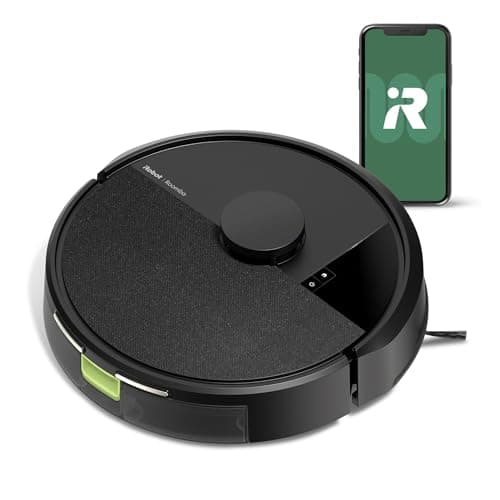
The LiDAR turret. A small spinning laser rangefinder with a precision-machined bearing that has to survive several years of continuous rotation, plus the optics and timing electronics behind it. This is the single most expensive component in a mapping robot vacuum, and it is the reason the $149 mapping machine is a genuinely notable product.
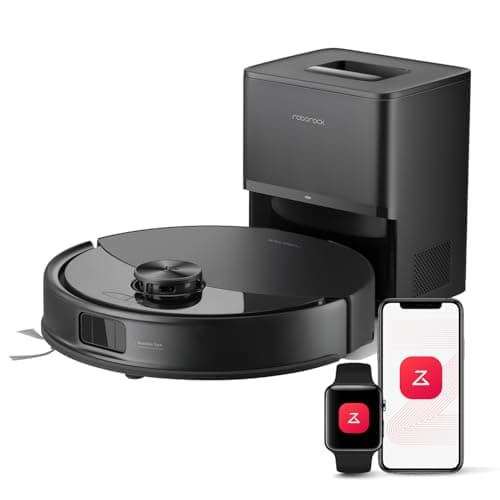
The obstacle-avoidance sensor. A structured-light projector and camera, plus the processing to interpret the distortion in real time while the machine is driving. This is why obstacle avoidance sat above $500 until recently and still starts around $280.
The processor. Building and maintaining a map, localizing within it, planning a route and running sensor fusion is real computation. A mapping robot vacuum is a small computer that happens to have a fan attached.
The battery. A 5,200 mAh lithium pack that has to survive several hundred full cycles is not a trivial cost, and it is the component that ultimately ends the machine's life.
The software, forever. This is the cost nobody sees. Somebody has to maintain the app on two mobile platforms, run the cloud service it talks to, and keep both working through operating-system updates for the life of the product. That is an ongoing engineering cost funded entirely out of the purchase price.
Why the budget tier improved so fast
Because every expensive component on that list is a commodity electronics part, and commodity electronics parts get cheaper on a schedule. LiDAR modules got cheaper because the automotive and robotics industries drove volume. Image sensors got cheaper because of phones. Processing got cheaper because everything does.
None of that happens to the vacuuming hardware, because a fan and a brush are mature mechanical products that were already cheap. So the whole improvement in this category over the last few years has come from the sensing side falling in price, which is exactly what you would predict.
What is getting cheaper inside a robot vacuum
Component
Cost trend
Consequence
LiDAR module
Falling fast
Mapping went from $400+ to about $149
Structured-light sensor
Falling
Obstacle avoidance from $500+ to about $280
Processor
Falling
Real-time mapping now viable at budget prices
Battery cells
Roughly flat
Runtimes have improved slowly
Motor, fan, brushes
Flat and already cheap
Suction figures rose without much cost
Software maintenance
Rising
The hidden cost, and the brand risk
This is an account of the component economics, not a manufacturer's cost breakdown. No manufacturer publishes one.
What you are also paying for at the top of the market
Mop-washing and drying stations. A dock that washes a mop pad with heated water and dries it with hot air contains a pump, two tanks, a heater and a fan. It is a small appliance in its own right, and it is most of the price difference between a $300 machine and a $900 one.
Object recognition. A camera plus a trained model that identifies specific objects. Genuinely expensive to develop and, as the navigation guide explains, unavailable under about $500.
Brand and support. iRobot's parts availability and app maturity are real and they are funded by margin. That is a legitimate thing to pay for, and it is worth being clear that is what you are buying rather than better cleaning.
So is the expensive one a rip-off?
No - the components are real and the software cost is real. But the price does not scale with cleaning performance, it scales with sensing. Once you have bought the sensors that matter for your home, additional money buys convenience features rather than a cleaner floor. Cheap versus expensive works through where that line falls, including one case where the more expensive machine publishes a worse specification than its cheaper sibling.
2.7 L bag, manufacturer states up to 70 daysSource: Manufacturer listing
Mopping
Sonic vibration mopping, up to 3,000 scrubs per minute, lifts up to 8 mm on carpetSource: Manufacturer listing
Carpet handling
Ultrasonic detection, raises the mop and increases suctionSource: Manufacturer listing
Anti-tangle
JawScrapers main brush plus anti-tangle side brushSource: Manufacturer listing
What it gets right
Structured-light obstacle avoidance is the single feature that separates a machine that finishes from one you rescue. Nothing else under $300 has it
A mop that lifts 8 mm means it can do hard floors and carpet in one run without wetting a rug
3,000 scrubs a minute is an actual scrubbing mechanism, not a damp pad
10,000Pa, dual anti-tangle brushes, multi-level maps - it gives up almost nothing to a $600 machine
What it gives up
The most expensive machine on this site, and it sits close to the ceiling
2.7 L bags are a recurring cost, and 70 days is mid-pack
The dock does not wash the mop - you rinse the pad yourself
2.4 GHz Wi-Fi only, which is an annoyance on a mesh network
Our scoring
Suction9.0
Navigation9.0
Pet hair8.5
Running cost6.5
Setup8.0
Weights and the arithmetic behind the total are published on How we pick so you can recompute this yourself.
Who it is for: A mixed-floor home with pets, clutter and rugs - the situation every other machine here handles by giving something up.
Skip it if: your floors are entirely hard and entirely tidy. Structured-light avoidance and an 8 mm mop lift are what you are paying the premium for, and a bare hard-floor flat uses neither.
Charging only - no self-emptyingSource: Manufacturer listing
Recharge and resume
YesSource: Manufacturer listing
Wi-Fi
2.4 GHz required for setup and operationSource: Manufacturer listing
What it gets right
Real LiDAR mapping at $149 - two years ago this feature started around $400
Keep-out zones you draw in the app, which is the single most useful thing a map buys you
The Roomba app is the most mature in the category and the least likely to lose your map
Recharges and resumes, so a large floor plan is one job rather than three
What it gives up
iRobot publishes no absolute suction number. '70x the 600 series' is a comparison to a fifteen-year-old machine, not a specification
No self-emptying dock at this price - you empty the bin yourself
iRobot consumables cost more than the generic parts the budget brands use
Vacuum only. No mop, no water tank, no pretending otherwise
Our scoring
Suction6.0
Navigation8.0
Pet hair6.0
Running cost6.5
Setup8.5
Weights and the arithmetic behind the total are published on How we pick so you can recompute this yourself.
Who it is for: Someone who wants a map, an app that works, and a brand that will still be selling filters in five years.
Skip it if: you want a suction figure you can compare against anything else. If specifications are how you shop, a machine that refuses to publish one is a machine you cannot rank.
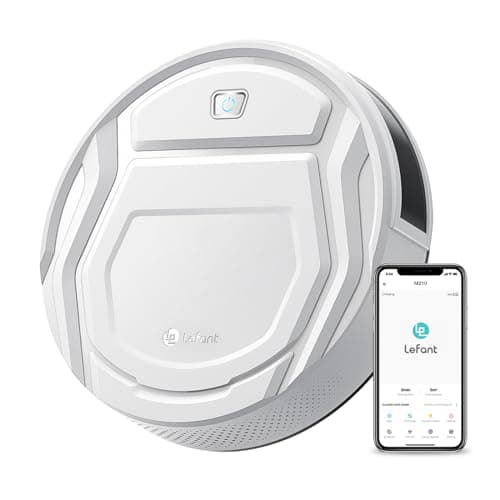
The brushless inlet has nothing for hair to wrap around, so there is no brushroll to cut free every fortnight
2.99 inches tall clears most sofa and bed frames that stop taller machines
Lithium iron phosphate cells, a chemistry that tolerates daily full cycles better than the usual lithium-ion
Nothing to subscribe to and no dust bags to buy
What it gives up
No published suction rating at all, which for a machine sold on suction is a strange omission
No mapping. It covers a room by bouncing around it, so a large floor plan takes several passes
The manufacturer says not to use zigzag mode on carpet, which rules out its most efficient pattern on rugs
Brushless inlets are weaker on embedded carpet grit than a beater bar
Our scoring
Suction5.0
Navigation3.5
Pet hair7.5
Running cost8.5
Setup8.0
Weights and the arithmetic behind the total are published on How we pick so you can recompute this yourself.
Who it is for: A one-bedroom apartment with hard floors, a shedding pet, and a hard budget ceiling under $100.
Skip it if: you have more than about 800 square feet of open floor, or any medium-pile carpet you actually want cleaned rather than skimmed. Without a map it will miss areas, and without a brushroll it will not dig.
Questions people actually ask
+−Why are robot vacuums so expensive?
The vacuuming hardware is cheap - complete machines exist at $90. The money goes on sensing and software: the LiDAR turret, the obstacle-avoidance camera, the processor that maps in real time, and the app and cloud service that must be maintained for years.
+−Why did budget robot vacuums get so much better recently?
Because every expensive component in one is commodity electronics, and commodity electronics get cheaper. LiDAR modules fell in price on the back of automotive and robotics volume, image sensors on the back of phones. The vacuuming hardware did not get better - the sensing got affordable.
+−What is the most expensive part of a robot vacuum?
The LiDAR turret in a mapping machine: a small spinning laser rangefinder with a precision bearing that has to survive years of continuous rotation, plus its optics and timing electronics. It is why a $149 machine with real mapping is a notable product.
+−Is an expensive robot vacuum better at cleaning?
Not proportionally. Price scales with sensing rather than with cleaning performance. Once you have the sensors your home needs, more money buys convenience - a mop-washing dock, object recognition - rather than a cleaner floor.
+−Why do cheap robot vacuums have such high suction numbers?
Because fans and motors are mature, cheap mechanical components, so a manufacturer can fit a capable one without much cost. The parts that are genuinely expensive are the sensors, which is exactly what the cheapest machines leave out.
Sources
Every specification quoted above was read off one of these documents on the date shown. Where a manufacturer does not publish a figure, this site says "Not published" rather than estimating it.
Live price layerEvery price threshold quoted on this page is the lowest live price on this site for a machine publishing that feature, re-checked daily.