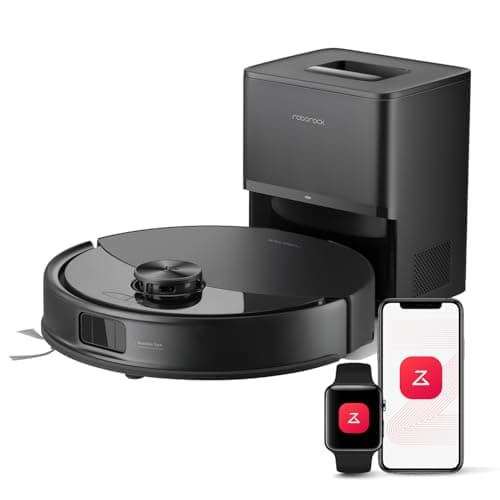
The question this whole site exists to answer. The honest version has a surprise in it: on two published specifications, the expensive machine here is worse.
By Scooter M., Enthusiast - published September 2, 2026
We have not tested these machines. Everything here comes from published specifications, manufacturer manuals and retailer listings, all cited below. Prices last verified October 17, 2026.
How this is funded: if you buy through a link here we may earn a commission, at no extra cost to you. It does not change which machines we recommend or what we say about them. Full disclosure.
Going from a $280 machine to a $400 one buys you a scrubbing mop and a longer battery. It does not buy better carpet cleaning, better obstacle avoidance or, in the specific case we examine here, a longer-lasting dock - Shark's step-up AI Ultra publishes a 30-day dock capacity against its own cheaper Matrix Plus's 60 days. Below about $500, more money frequently buys different rather than better.
This is the page this whole site is built around, so it is worth being precise. We are comparing published specifications on machines currently in stock - not a $280 machine against an imaginary flagship.
#
Product
Best for
Score
Price
01
Roborock Q10 S5+The only machine under $300 that maps with LiDAR and sees obstacles with structured light. Everything else here is navigating half-blind.
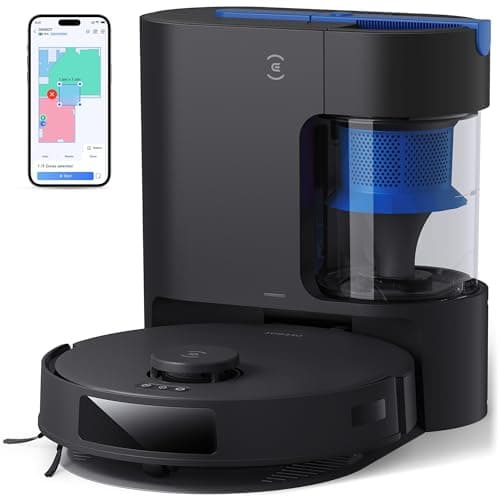
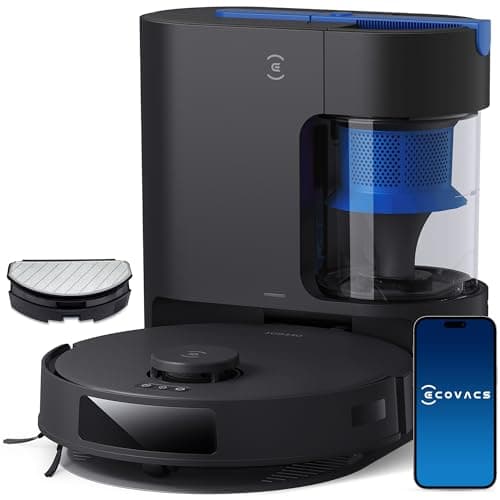
Ecovacs DEEBOT N20 PlusA self-emptying dock with no bag in it. Over three years that is the difference between this and everything else here, and it is not close.
#ad No live price for this one as of October 17, 2026. How we are funded
03
Ecovacs DEEBOT N20 PRO PlusThe N20 Plus with a vibrating mop head and a longer battery, for meaningfully more money. It is here to show what the next tier buys.
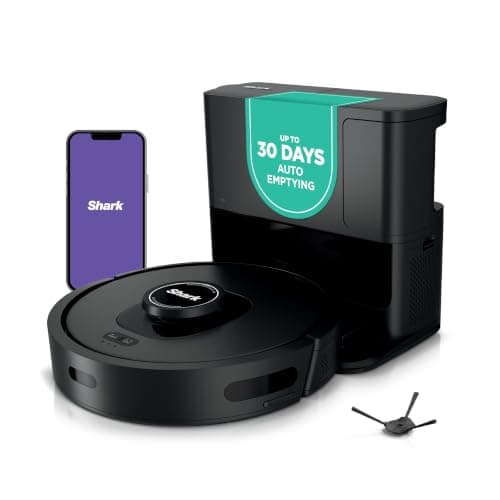
Shark AI Ultra AV2501SShark's step-up machine, discounted hard and now well under the ceiling. LiDAR mapping, a bagless HEPA dock and a self-cleaning brushroll - and still no published suction figure.
Two machines under the $300 ceiling and two above it, so the comparison is against something you can actually buy rather than against a spec sheet. Scores from the published rubric on How We Pick.
What the extra money genuinely buys
A mop that scrubs, if you did not already have one. The Ecovacs N20 PRO Plus at around $318 adds OZMO Pro 2.0 vibrating mopping to the N20 Plus. That is a real upgrade over a dragged pad - but note that the Roborock Q10 S5+ already scrubs at 3,000 cycles a minute for less money, so this is only an upgrade from a specific starting point.
A longer battery. The N20 PRO Plus publishes 300 minutes against the N20 Plus's 200. On a large house that is the difference between one run and two.
Camera-based object recognition, above roughly $500. The machines that identify a specific item and label it in the app genuinely do not exist below that, and if you want the robot to know a sock is a sock, that is what it costs.
A dock that washes and hot-air dries the mop pad. Under $300, the Lefant M3 gets closest with a 45-degree wash and cool-air drying at around $240. Full heated drying stations start higher.
What it does not buy
Better carpet cleaning. The limit is a battery-powered motor and a machine weighing a few pounds. A $1,200 robot has exactly the same constraint as a $200 one.
Obstacle avoidance you cannot already get. The Roborock Q10 S5+ has structured light at around $280. Paying $400 does not add a sensor category that is already present under the ceiling.
A published suction figure, if the brand does not publish one. Shark's step-up AI Ultra states no Pa rating, exactly like its cheaper Matrix Plus. Spending more does not buy disclosure.
Fundamentally better mapping. LiDAR is LiDAR. The expensive machines have more processing and better multi-floor handling, not a different sensor.
Where the expensive machine is measurably worse
This is the part nobody writes down. Compare Shark's own two machines on this page: the Matrix Plus and the step-up AI Ultra AV2501S, which Shark lists far higher and which has since been discounted below it.
Shark's own cheaper machine against its own step-up machine
Shark Matrix Plus (~$300)
Shark AI Ultra (step-up model)
Dock capacity
60 days
30 days
Runtime
Not published
Up to 120 minutes
Dock type
Bagless HEPA
Bagless HEPA
Published suction
Not published
Not published
Brushroll
Self-cleaning
Self-cleaning
Both figures read from Shark's own listings on the same date. The dock capacity difference is the manufacturer's own published number, not our measurement.
On the published figures, the machine costing $107 more empties itself half as often. There may be an explanation - a smaller base for a smaller footprint, a different bin geometry - and Shark does not give one. The point is not that the AI Ultra is a bad machine. The point is that price is not a proxy for specification in this category, and the assumption that it is is exactly what this site exists to test.
So when should you spend more?
Three genuine cases. A large house, where a 300-minute battery turns two runs into one. A serious mopping requirement on a big hard-floor area, where a washing dock and a scrubbing head together do meaningfully more than either alone. A cluttered floor plus a strong preference for the machine identifying what it avoided, which needs camera recognition and therefore roughly $500.
Outside those three, the honest answer is that the $250 to $300 band is where the specification curve flattens. What $300 buys you walks the ladder in the other direction and reaches the same place.
2.7 L bag, manufacturer states up to 70 daysSource: Manufacturer listing
Mopping
Sonic vibration mopping, up to 3,000 scrubs per minute, lifts up to 8 mm on carpetSource: Manufacturer listing
Carpet handling
Ultrasonic detection, raises the mop and increases suctionSource: Manufacturer listing
Anti-tangle
JawScrapers main brush plus anti-tangle side brushSource: Manufacturer listing
What it gets right
Structured-light obstacle avoidance is the single feature that separates a machine that finishes from one you rescue. Nothing else under $300 has it
A mop that lifts 8 mm means it can do hard floors and carpet in one run without wetting a rug
3,000 scrubs a minute is an actual scrubbing mechanism, not a damp pad
10,000Pa, dual anti-tangle brushes, multi-level maps - it gives up almost nothing to a $600 machine
What it gives up
The most expensive machine on this site, and it sits close to the ceiling
2.7 L bags are a recurring cost, and 70 days is mid-pack
The dock does not wash the mop - you rinse the pad yourself
2.4 GHz Wi-Fi only, which is an annoyance on a mesh network
Our scoring
Suction9.0
Navigation9.0
Pet hair8.5
Running cost6.5
Setup8.0
Weights and the arithmetic behind the total are published on How we pick so you can recompute this yourself.
Who it is for: A mixed-floor home with pets, clutter and rugs - the situation every other machine here handles by giving something up.
Skip it if: your floors are entirely hard and entirely tidy. Structured-light avoidance and an 8 mm mop lift are what you are paying the premium for, and a bare hard-floor flat uses neither.
The N20 Plus with a vibrating mop head and a longer battery, for meaningfully more money. It is here to show what the next tier buys.
Published specifications
Suction
8,000PaSource: Manufacturer listing
Mopping
OZMO Pro 2.0 vibrating mopping systemSource: Manufacturer listing
Self-emptying
Bagless station, manufacturer states 45-day capacitySource: Manufacturer listing
Runtime
Up to 300 minutesSource: Manufacturer listing
Anti-tangle
ZeroTangleSource: Manufacturer listing
What it gets right
A vibrating mop rather than a dragged pad
300 minutes is the longest runtime of any machine on this site
Same bagless dock economics as the N20 Plus
Same 8,000Pa published suction
What it gives up
Above the $300 ceiling, so it is not a pick on this site
The dock capacity drops to 45 days from the N20 Plus's longer interval
The vibrating mop is the only substantial difference for the money
Still no structured-light obstacle avoidance
Our scoring
Suction8.5
Navigation7.5
Pet hair8.0
Running cost8.5
Setup7.5
Weights and the arithmetic behind the total are published on How we pick so you can recompute this yourself.
Who it is for: Someone who has decided to break the $300 ceiling specifically to get a scrubbing mop.
Skip it if: you are shopping under $300. The plain N20 Plus keeps the suction, the bagless dock and the anti-tangle brush, and the vibration is the only thing you lose.
Shark's step-up machine, discounted hard and now well under the ceiling. LiDAR mapping, a bagless HEPA dock and a self-cleaning brushroll - and still no published suction figure.
Published specifications
Suction
Not publishedSource: Manufacturer listing
Navigation
360-degree LiDAR home mapping with Matrix CleanSource: Manufacturer listing
Shark publishes no suction figure, so its headline capability cannot be ranked against anything
30-day dock capacity is HALF what Shark's own Matrix Plus publishes
120-minute runtime is beaten by machines here costing a third as much
Still no published suction figure
Our scoring
Suction6.5
Navigation8.0
Pet hair8.0
Running cost8.0
Setup7.5
Weights and the arithmetic behind the total are published on How we pick so you can recompute this yourself.
Who it is for: Somebody who wants LiDAR mapping and a dock with no bag to buy, and who is willing to accept a brand that will not print a suction number.
Skip it if: you want a long gap between dock emptyings. On that published number this is worse than Shark's own Matrix Plus, and worse than most bagged docks at this price.
Questions people actually ask
+−Is an expensive robot vacuum worth it?
Above about $500 it buys camera-based object recognition and mop-washing docks, which are real. Between $300 and $500 it frequently buys different rather than better - and in at least one case on this page, a machine costing $107 more publishes a dock capacity half as long as its cheaper sibling.
+−What is the difference between a cheap and an expensive robot vacuum?
The expensive one has more sensing and more processing: camera object recognition, better multi-floor handling, and docks that wash and dry the mop pad. It does not clean carpet better, because that limit is the battery and the machine's weight rather than the price.
+−Do expensive robot vacuums clean carpet better?
Not meaningfully. A robot vacuum carries a battery it must make last two hours and weighs a few pounds, which caps both airflow and downforce. Those constraints apply identically at $200 and at $1,200.
+−Is a $600 robot vacuum twice as good as a $300 one?
No. The specification curve flattens sharply between $250 and $300. Above that you are buying object recognition, longer batteries and better mop docks - all real, none of them a doubling of cleaning performance.
+−Why is the more expensive Shark worse on dock capacity?
Shark does not explain it. Its Matrix Plus publishes a 60-day dock capacity and its higher-listed AI Ultra publishes 30 days, both figures from Shark's own listings. The AI Ultra has since been discounted below the machine it was positioned above, which if anything makes the point harder: price is not a reliable proxy for specification in this category, and it is not a stable one either.
Sources
Every specification quoted above was read off one of these documents on the date shown. Where a manufacturer does not publish a figure, this site says "Not published" rather than estimating it.