Every listing tells you how long the machine runs. Almost none tells you how many times it can do that before the battery is finished - and that second number is the one that ends the machine.
By Scooter M., Enthusiast - published September 6, 2026
We have not tested these machines. Everything here comes from published specifications, manufacturer manuals and retailer listings, all cited below. Prices last verified September 21, 2026.
How this is funded: if you buy through a link here we may earn a commission, at no extra cost to you. It does not change which machines we recommend or what we say about them. Full disclosure.
Published runtimes in this price range run from 100 minutes to 220 minutes on a full charge. Lifespan is a different question, and almost nobody answers it: of every machine on this site, not one manufacturer publishes a battery cycle count. The battery is the component most likely to end a budget robot vacuum's useful life, and it is the one specification you cannot look up before you buy.
That gap is worth naming plainly, because the way it is usually filled is with someone's confident guess. This page sets out what is actually published, what it means for your floor, and how to shop when the number you want does not exist.
#
Product
Best for
Score
Price
01
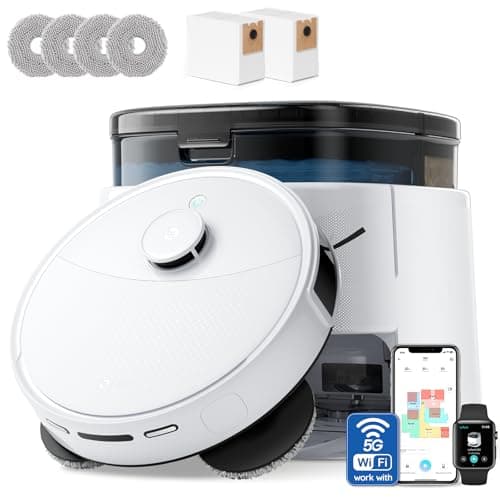
Lefant M312,000Pa and a dock that washes the mop in 45-degree water. The highest specification here by a distance, from the least established brand here.
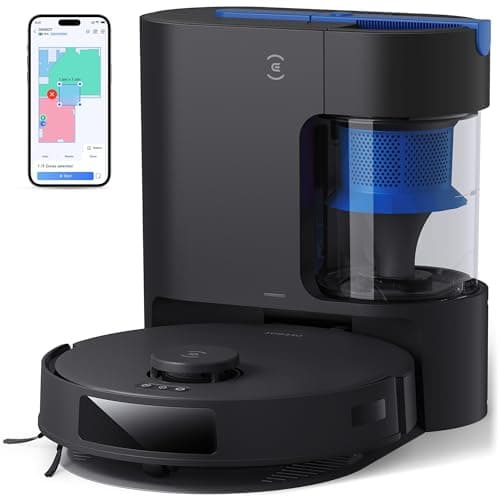
Ecovacs DEEBOT N20 PlusA self-emptying dock with no bag in it. Over three years that is the difference between this and everything else here, and it is not close.
#ad No live price for this one as of September 21, 2026. How we are funded
03
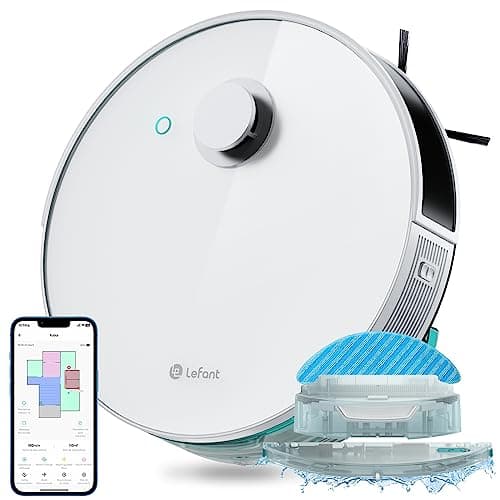
Lefant N3A sonic mop that vibrates 12,000 times a minute, which is a genuinely different mechanism from the damp cloth every other machine at this price drags around.
The three machines on this site that publish the most complete battery information. Scores from the published rubric on How We Pick.
Runtime and lifespan are two different specifications
Runtime is how long the machine runs from full to flat. It is published almost everywhere, it is easy to verify against your own floor area, and it is quoted in the machine's most flattering mode - quiet, gentle, eco, vacuum-only. Turn the suction up or start mopping and it falls.
Lifespan is how many full charge-and-discharge cycles the pack survives before it holds noticeably less. It is the number that decides whether you own this machine for two years or five, and it is the one you will not find on any listing in this price range. We looked at every product page we rank and found no cycle-count figure on any of them.
The two are related in a way that catches people out. A machine with a long runtime that you run once a day is doing one deep cycle a day. A machine with a shorter runtime that recharges and resumes mid-job is doing partial cycles, which are gentler on lithium cells. Runtime alone does not tell you which pattern you are buying.
What is actually published in this price range
Every battery figure published by the machines ranked on this site
Machine
Battery
Published runtime
Coverage claim
Lefant M3
5,200 mAh, 30% faster charging stated
Up to 220 minutes
2,368 sq ft mopping per tank
Ecovacs DEEBOT N20 Plus
5,200 mAh
Up to 200 minutes
Up to 550 m2, silent or vacuum-only
Lefant N3
Not published
Up to 200 minutes
3,200 sq ft on a full charge
Tikom L8000 Plus
Not published
Up to 150 minutes, gentle mode
Not published
Tikom G8000 Max
Not published
Up to 150 minutes, quiet mode
Not published
eufy 11S MAX
Not published
Up to 100 minutes on hardwood
Not published
Roborock Q7 M5+
Not published
Not published
Not published
Shark Matrix Plus
Not published
Not published
Not published
Read from each manufacturer's own listing. Not published means the manufacturer states no figure. No manufacturer here publishes a cycle count.
Two things stand out. First, the machines that publish a capacity in mAh - the Lefant M3 and the Ecovacs DEEBOT N20 Plus, both at 5,200 mAh - are the exception rather than the rule. Second, two of the strongest machines on this site publish no runtime at all, which for a battery-powered appliance is a striking omission.
How much runtime you actually need
Work from floor area, not from the biggest number. The published coverage claims here - 3,200 sq ft for the Lefant N3, 2,368 sq ft of mopping for the M3, 550 square meters for the Ecovacs in vacuum-only mode - are manufacturer figures measured in favorable modes, so treat them as ceilings rather than promises.
The practical rule is simpler. If your machine maps and supports recharge-and-resume, runtime stops being a purchase criterion, because a job larger than one charge simply takes two. It becomes a criterion again when the machine has no map: a wandering machine that runs out has no idea what it missed, so on those machines runtime is coverage. That is one more reason mapping is the first thing worth paying for.
What shortens a robot vacuum battery
This part is chemistry rather than a manufacturer claim, and we flag it as such. Lithium cells of the type used across this category are consumables: they lose capacity with cycles and with time, faster when hot and faster when regularly taken to empty. Practically, that means three habits matter.
Leave it on the dock. These machines are designed to sit charged. Storing one flat in a cupboard for a month is the worst thing you can do to the pack.
Run it more often on a lower setting rather than rarely on maximum. Daily light passes keep the floor in a better state anyway - see how often to run it - and they are gentler on the battery than occasional full-power marathons.
Keep the dock out of direct sun and away from radiators. Heat is the one environmental factor with a large effect on cell aging, and a dock sitting in a sunny hallway spends its life warm.
One machine in this field publishes a chemistry rather than only a capacity: the Lefant M210 states lithium iron phosphate cells, a chemistry that generally tolerates repeated full cycles better than the lithium-ion packs used elsewhere here. Whether that translates into a longer service life in this specific machine is not something we can tell you - Lefant publishes no cycle count either.
When the battery does fade, what are your options?
Replacement packs. For the established brands these are ordinary parts, and this is where a long-lived brand earns its premium: iRobot has been supplying spares for two decades. For smaller brands the honest answer is that availability in year four is unknown, and we will not pretend otherwise. Lefant publishes a one-year warranty on the M3, which is normal for this tier and tells you nothing about parts in year five.
Diagnosing it first. A machine that suddenly covers less floor is not always a failing battery. A clogged filter, a hair-bound brush or a dirty ride-height sensor all make the motor work harder and the run shorter. Work through the troubleshooting checks before ordering a pack.
Deciding not to. At this price a replacement battery plus your time can approach the cost of a much better machine two years later, because this category improves quickly - LiDAR mapping and self-emptying docks both fell into this price band within about two years. That is a legitimate answer, and it is worth going in with your eyes open: a budget robot vacuum is a machine with a service life, not an heirloom. Our running costs guide puts the whole three-year bill together.
What we could not tell you on this page
We have not measured a runtime, cycled a battery, or run any machine to failure. Every figure above is read from a manufacturer's own listing and cited at the foot of the page. Where a manufacturer publishes nothing - which for cycle counts is all of them - this page says so rather than filling the gap with an estimate that would look authoritative and mean nothing.
3.2 L bag, manufacturer states up to 90 daysSource: Manufacturer listing
Mop care
45C hot water wash with cool-air dryingSource: Manufacturer listing
Battery / runtime
5,200 mAh, up to 220 minutesSource: Manufacturer listing
Mopping coverage
Manufacturer states 2,368 sq ft (220 m2) per tankSource: Manufacturer listing
Wi-Fi
Dual band, 2.4 GHz and 5 GHzSource: Manufacturer listing
What it gets right
12,000Pa is a flagship-tier published figure at a sub-$250 price
A mop-washing dock at this price is genuinely unusual - most stop at self-emptying
Cool-air drying rather than heat, which is what stops a pad going stiff and smelling
Dual-band Wi-Fi, which sounds trivial until you own a mesh network that keeps handing it to the 5 GHz radio
What it gives up
A washing dock is plumbing. Two tanks, a tray and a pad to keep clean, and more to go wrong
Pa figures are not comparable between manufacturers - there is no shared test standard, and a big number is not automatically better cleaning
Still buying 3.2 L bags
The least established brand here for warranty and spare parts
Our scoring
Suction9.0
Navigation8.0
Pet hair7.0
Running cost6.0
Setup7.0
Weights and the arithmetic behind the total are published on How we pick so you can recompute this yourself.
Who it is for: A hard-floor home where mopping is the actual point and the dock has somewhere to live.
Skip it if: you want fewer chores rather than better ones. A self-washing dock removes the worst job and adds three small ones, and plenty of people would rather rinse a pad in the sink.
A sonic mop that vibrates 12,000 times a minute, which is a genuinely different mechanism from the damp cloth every other machine at this price drags around.
Published specifications
Suction
Up to 4,000Pa, 4 levelsSource: Manufacturer listing
Navigation
LiDAR plus dToF sensors, detection to 10 m, real-time mappingSource: Manufacturer listing
Mopping
Sonic scrubbing at 12,000 vibrations per minuteSource: Manufacturer listing
Water tank
160 ml electronic, 3 levelsSource: Manufacturer listing
Runtime
Up to 200 minutes; manufacturer states 3,200 sq ftSource: Manufacturer listing
Carpet detection
Ultrasonic, raises suction and changes direction in mop modeSource: Manufacturer listing
What it gets right
Sonic scrubbing actually agitates dried-on marks instead of spreading them, which a passive pad cannot do
dToF is a better sensor than the bare LiDAR most machines at this price use - it is unaffected by ambient light
200 minutes and a claimed 3,200 sq ft covers a whole house in one run
Ultrasonic carpet detection means it stops wetting rugs without you drawing zones
What it gives up
4,000Pa is the lowest published figure of any LiDAR machine here
A 160 ml tank is small - a large hard-floor area will need a refill mid-run
No self-emptying dock
Sonic mopping consumes battery faster than a passive pad, so 200 minutes is the vacuum-only figure
Our scoring
Suction6.5
Navigation8.0
Pet hair6.0
Running cost8.0
Setup7.5
Weights and the arithmetic behind the total are published on How we pick so you can recompute this yourself.
Who it is for: Hard floors that actually get dirty - a kitchen, a hallway, a house with children.
Skip it if: your floors are mostly carpet. You would be paying for a mopping mechanism you cannot use and taking the weakest suction figure in the LiDAR group to get it.
Questions people actually ask
+−How long do budget robot vacuum batteries last?
Nobody in this price range publishes a cycle count, so there is no honest figure to quote. What is published is runtime per charge, which runs from about 100 to 220 minutes depending on the machine and the mode. Treat the battery as a consumable with a service life rather than a permanent part.
+−What is the longest-running budget robot vacuum?
On this site, the Lefant M3 at a published 220 minutes from a 5,200 mAh battery, followed by the Ecovacs DEEBOT N20 Plus and the Lefant N3 at 200 minutes. All three figures are quoted in the manufacturer's most efficient mode.
+−Does runtime matter if the robot recharges and resumes?
Much less. A mapping machine that recharges and resumes will finish a job larger than one charge by taking two. Runtime matters most on machines with no map, where running out means coverage simply stops with no memory of what was missed.
+−Should I leave my robot vacuum on the dock?
Yes. These machines are designed to sit on charge, and storing one flat for weeks is the hardest thing you can do to a lithium pack. Keep the dock out of direct sun as well, since heat is what ages cells fastest.
+−Can you replace a robot vacuum battery?
On most machines yes, and for established brands the packs are ordinary spare parts. For smaller brands, availability a few years out is an open question - which is a real consideration at this price, and one no specification sheet answers.
+−Why does my robot vacuum suddenly run for less time?
Often it is not the battery. A clogged filter, a brush wrapped with hair, or dirty drop sensors all make the machine work harder and the run shorter. Clean those first before concluding the pack is finished.
Sources
Every specification quoted above was read off one of these documents on the date shown. Where a manufacturer does not publish a figure, this site says "Not published" rather than estimating it.