
Skip to content
Cheapbot Co

How Often Should You Run a Robot Vacuum?

Shedding and traffic decide this, not square footage. And counter-intuitively, running it more often is easier on the machine, not harder.

By Scooter M., Enthusiast - published September 2, 2026

We have not tested these machines. Everything here comes from published specifications, manufacturer manuals and retailer listings, all cited below. Prices last verified September 2, 2026.

A calendar planner on a desk

How this is funded: if you buy through a link here we may earn a commission, at no extra cost to you. It does not change which machines we recommend or what we say about them. Full disclosure.

Run it daily if you have pets or children, every other day with one low-shedding pet, and twice a week in a household with neither. Cadence is decided by shedding and foot traffic rather than by floor area - a small flat with two cats needs a daily run more than a large tidy house does.

The cadence, by household

Suggested cadence by household type
HouseholdCadenceWhy
No pets, no children, low trafficTwice a weekDust accumulates slowly; more often adds wear for little gain
One low-shedding petEvery other dayHair arrives steadily but not in volume
One heavy-shedding petDailyHair volume outpaces anything less frequent
Multiple pets, or pets plus childrenDaily, sometimes twiceKitchen and dining areas benefit from a second pass
Hard floors with outdoor accessDailyGrit tracked in is abrasive and worth removing quickly
This is reasoning from how debris accumulates, not a manufacturer recommendation or a test result. Adjust it to what your own floors look like after a few days.

Why running it more often is easier on the machine

This is the counter-intuitive part and it is worth understanding, because the instinct is that more runs means more wear.

A light load is an easier load. A machine running daily is picking up one day's dust across the whole floor. The same machine running weekly is picking up seven days' worth, which means a fuller bin, a more clogged filter, and a fan working against greater restriction for the whole run. The daily machine is doing more runs and less work per run.

A full bin is the enemy. As the bin fills, airflow drops and the machine collects progressively less while still driving the full route. The commonest failure of a budget robot vacuum is not mechanical - it is the machine running with a full bin and the owner concluding it has stopped working. Frequent short runs keep the bin below the level where this starts.

Batteries prefer partial cycles. The lithium cells in these machines are rated in full charge cycles. A daily run that uses 40% of the battery is 0.4 of a cycle; a weekly run that flattens it is a full one. Running more often does not consume battery life proportionally faster, and on some chemistries it is gentler.

When to schedule it

While you are out, which is the entire point of an unattended machine. Mid-morning on a weekday is the usual answer. It is also quieter for you, and none of these manufacturers publishes a decibel figure, so assume it is louder than you would like in the same room.

If you have a mop combo, schedule two separate jobs: a vacuum-only pass first, then a mop pass later. A machine mopping while it vacuums is laying water onto a floor it is simultaneously trying to lift dry crumbs from, which makes paste. Almost nobody does this and it is the biggest single improvement you can make to a budget mop's results.

What the schedule does not fix

Emptying the bin, unless you have a dock. Daily running on a machine with a 400 ml bin means emptying it every two or three days, and that is the job people stop doing. If you intend to run daily, a self-emptying dock stops being a luxury - which is why both picks on this page have one.

The filter. A machine running daily reaches its filter service interval sooner in calendar terms than one running weekly. Check it monthly regardless of what the app says; a clogged filter costs you more airflow than any suction figure buys you. The running costs guide has the intervals.

Carpet depth. No cadence turns maintenance cleaning into deep cleaning. Daily running on carpet keeps the surface layer permanently under control and never reaches the base of medium pile.

Every pick, in detail

#1 - Best running costScore 8.2/10

Ecovacs DEEBOT N20 Plus
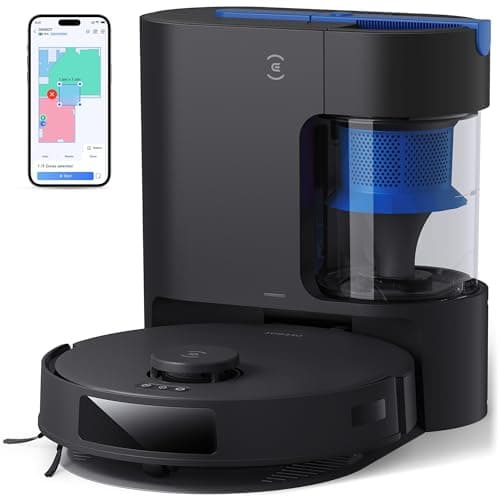
Ecovacs DEEBOT N20 Plus robot vacuum
$215.36 - View on Amazon

#ad Price last verified September 2, 2026. How we are funded

A self-emptying dock with no bag in it. Over three years that is the difference between this and everything else here, and it is not close.

Published specifications

Suction
8,000PaSource: Manufacturer listing
Navigation
TrueMapping laser radar, approximately 8-minute mapping runSource: Manufacturer listing
Self-emptying
Bagless dust container. Manufacturer states it saves up to $80 a year against bagsSource: Manufacturer listing
Anti-tangle
ZeroTangle main brushSource: Manufacturer listing
Filtration
PureCyclone with 4-stage filtration, 95% dust separation (manufacturer-reported)Source: Manufacturer listing
Battery / runtime
5,200 mAh, up to 200 minutes, up to 550 m2 per charge in silent or vacuum-only modeSource: Manufacturer listing
Threshold climbing
20 mmSource: Manufacturer listing

What it gets right

  • The dock has no consumable in it. Every other self-emptying machine here bills you every couple of months, forever
  • 8,000Pa published, the second-highest figure under $250 here
  • ZeroTangle is a named mechanism for hair wrap rather than a vague claim
  • 20 mm threshold climb clears door saddles that stop most of this field

What it gives up

  • A bagless bin means you see and smell what it collected, which the sealed-bag machines spare you
  • TrueMapping is competent but has no structured-light obstacle avoidance, so cables still catch it out
  • The 95% dust-separation figure is manufacturer-reported with no published test standard
  • The 550 m2 figure is for silent or vacuum-only mode, not for a normal mopping run

Our scoring

Suction8.5
Navigation7.5
Pet hair8.0
Running cost9.0
Setup7.5

Weights and the arithmetic behind the total are published on How we pick so you can recompute this yourself.

Who it is for: Someone doing the three-year arithmetic rather than looking only at the sticker price.

Skip it if: anyone in the house has a dust allergy. A bagless bin has to be tipped out, and that is exactly the moment a sealed bag exists to avoid.
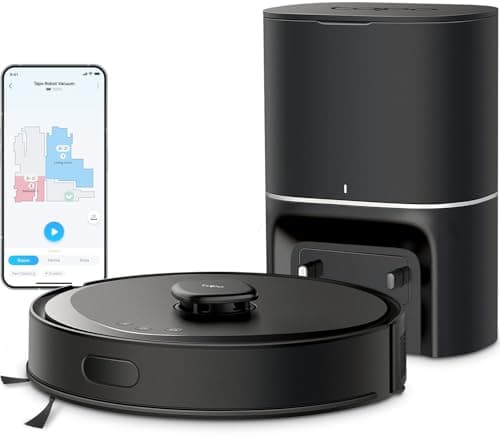
#2 - Cheapest self-emptying LiDARScore 7.2/10

Tapo RV20 Max Plus

Tapo RV20 Max Plus robot vacuum
$168.00 - View on Amazon

#ad Price last verified September 2, 2026. How we are funded

LiDAR mapping and a 3-liter self-emptying dock, together, under $170. Two years ago that combination started at three times the price.

Published specifications

Suction
Up to 5,300Pa in Ultra modeSource: Manufacturer listing
Navigation
LiDAR with route planning and 2D house mappingSource: Manufacturer listing
Self-emptying
3 L sealed disposable bag, typically up to 60 daysSource: Manufacturer listing
Water tank
300 ml, 3 flow levelsSource: Manufacturer listing
Height
3.27 inSource: Manufacturer listing
Threshold climbing
Up to 0.87 inSource: Manufacturer listing
Dust pickup
Over 97% (manufacturer-reported, DeepVac)Source: Manufacturer listing

What it gets right

  • A self-emptying dock at this price is the single biggest quality-of-life feature in the category, and almost nothing else under $200 has one
  • Carpet boost plus carpet avoidance in mop mode, both automatic
  • 0.87 inches of threshold climb clears most interior door saddles and rug edges
  • 3.27 inches is slim for a machine with a LiDAR turret on top

What it gives up

  • The 3 L bags are a recurring cost the bagless docks do not have
  • 97% dust pickup is a manufacturer-reported figure with no published test standard behind it
  • 5,300Pa is the Ultra-mode peak, not what it runs at by default
  • The mop is a damp pad, not a scrubber

Our scoring

Suction7.5
Navigation8.0
Pet hair6.5
Running cost6.0
Setup8.0

Weights and the arithmetic behind the total are published on How we pick so you can recompute this yourself.

Who it is for: Anyone who wants to stop thinking about the machine entirely, on the smallest budget that makes that possible.

Skip it if: you object to buying dust bags forever. The Ecovacs N20 Plus and the Shark Matrix Plus both empty themselves without any consumable at all, and over three years that gap is real money.

Questions people actually ask

How often should you run a robot vacuum?

Daily with pets or children, every other day with one low-shedding pet, and twice a week in a household with neither. Cadence follows shedding and foot traffic rather than floor area.

Is running a robot vacuum every day bad for it?

No - it is generally easier on the machine. A daily run collects one day's debris, so the bin stays emptier and the filter less restricted, and partial battery cycles count for less than full ones. A weekly run means a full bin, a clogged filter and a fan fighting restriction the whole way.

Should I run a robot vacuum when I am home?

Preferably not. The point of an unattended machine is that it runs while you are out, and none of these manufacturers publishes a decibel figure - assume it is louder in the same room than you would like. Mid-morning on a weekday is the usual choice.

Should the robot vacuum and mop at the same time?

No. Schedule a vacuum-only pass first and a mop pass later. Mopping while vacuuming lays water onto a floor the machine is simultaneously trying to lift dry crumbs from, which turns them into paste. Every app-controlled machine here can run two scheduled jobs.

Do I need a self-emptying dock to run it daily?

Close to it. Daily running with a 400 ml onboard bin means emptying every two or three days, and that is the maintenance job people quietly stop doing - after which the machine runs full and collects nothing.

Sources

Every specification quoted above was read off one of these documents on the date shown. Where a manufacturer does not publish a figure, this site says "Not published" rather than estimating it.

Read next