The Best Budget Robot Vacuums for Vinyl Plank Floors
Luxury vinyl plank is the one hard floor you can mop as much as you like. It is also softer than tile, so the grit your robot drags around is the thing that ages it.
By Scooter M., Enthusiast - published September 20, 2026
We have not tested these machines. Everything here comes from published specifications, manufacturer manuals and retailer listings, all cited below. Prices last verified September 21, 2026.
How this is funded: if you buy through a link here we may earn a commission, at no extra cost to you. It does not change which machines we recommend or what we say about them. Full disclosure.
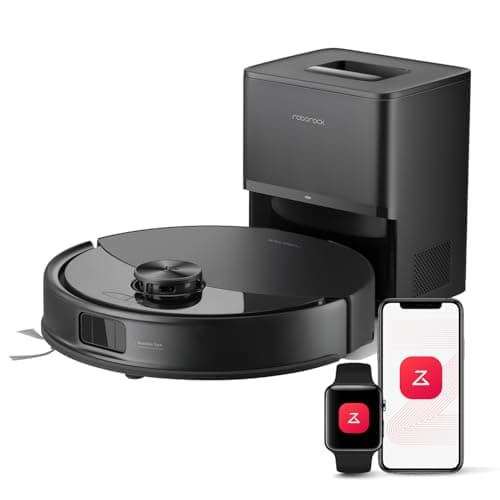
For luxury vinyl plank, buy the Roborock Q10 S5+. LVP is waterproof, so the constraint that limits mopping on hardwood does not apply - and the Q10 S5+ is the only machine under $300 that publishes a sonic mop at up to 3,000 scrubs per minute and lifts that pad 8 mm when it reaches a rug. If $280 is more than you want to spend, the Lefant N3 at around two hundred is the cheapest machine here with a mop that moves under its own power.
Vinyl plank gets lumped in with "hard floors" in most buying advice, which misses the two things that make it different from both hardwood and tile. One of them makes your life easier. The other is the reason a cheap robot vacuum can shorten the life of an expensive floor.
#
Product
Best for
Score
Price
01
Roborock Q10 S5+The only machine under $300 that maps with LiDAR and sees obstacles with structured light. Everything else here is navigating half-blind.
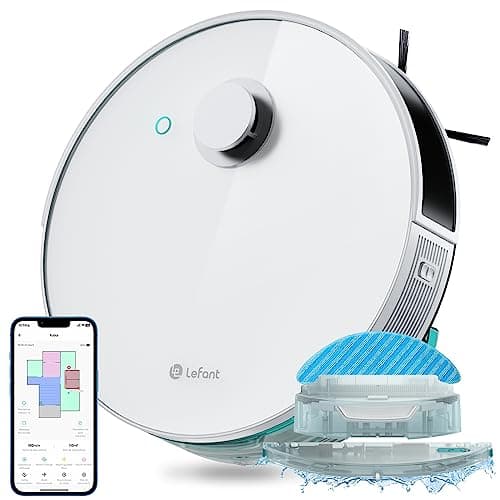
Lefant N3A sonic mop that vibrates 12,000 times a minute, which is a genuinely different mechanism from the damp cloth every other machine at this price drags around.
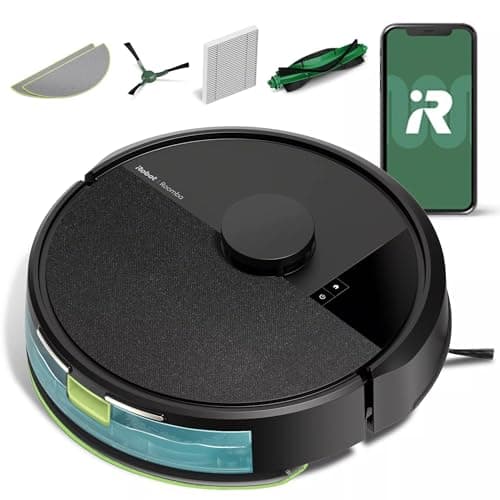
iRobot Roomba 105 ComboThe 105 Vac with a pump-fed mop pad bolted on for thirty dollars more. The mop is better engineered than most at this price and the carpet handling is the compromise you pay for it.
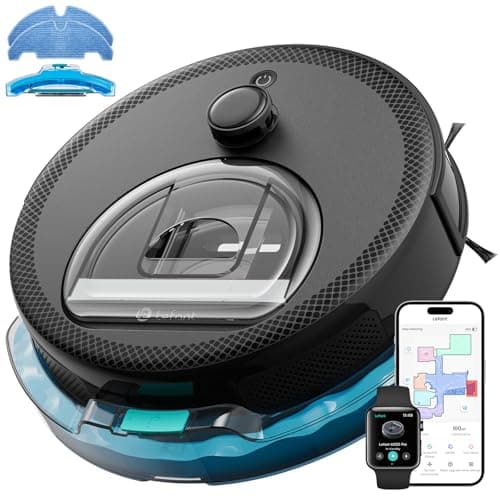
Lefant M330 ProPSD sensors that see cords and small objects, now with dToF mapping behind them. It publishes no suction figure at all, which is the trade.
Scores come from the published rubric on How We Pick: suction 25%, navigation 25%, pet hair 20%, running cost 20%, setup 10%. They are editorial judgments about published specifications, not test results.
What makes LVP different from hardwood
Most advice about robot mops on hard floors is really advice about water and wood. Hardwood swells, cups and lifts at the seams if it stays wet, which is why our hardwood page spends most of its length on controlling how much water reaches the floor.
Vinyl plank is a waterproof product. The wear layer is plastic and the core is either plastic or a composite that does not absorb. A damp microfiber pad is simply not a risk to it the way it is to an oak board. You can run a robot mop on LVP daily without worrying, and the machines that meter water carefully - which is a selling point on hardwood - are only a convenience here.
One caveat that is worth the sentence: waterproof planks sit in a floor that may not be. Standing water still finds the perimeter gap, the transition strips and any subfloor below. A robot mop leaves a damp film rather than puddles, so this is a concern about spills, not about the robot - but it is why "waterproof floor" does not mean "pour water on it".
What makes LVP different from tile: it is soft
Tile is ceramic. You can drag grit across it for twenty years and see nothing. Vinyl plank has a wear layer measured in mils - a thin transparent skin over a printed pattern - and it is soft enough that hard particles scratch it. Not dramatically, and not in one pass. What happens is a slow dulling across the traffic path as thousands of tiny scratches diffuse the light, and by the time you notice it, it is the whole room.
The particles that do this are sand, grit and the mineral fraction of ordinary household dust - and the thing that drags them across the floor most reliably is a spinning side brush that flings them sideways before the suction inlet reaches them. This is the argument for removing grit rather than moving it, and it makes suction genuinely relevant on LVP in a way it is not on tile.
It is also the argument for running the machine often. A daily pass on a floor with very little grit on it is gentler than a weekly pass on a floor with a week of grit, and it is the single most useful thing you can do for an LVP floor. Our how often to run it page makes the same argument for different reasons.
Bevels, embossing and where the dirt actually sits
Most LVP is sold with micro-bevelled edges, and much of it has embossed texture pressed into the surface to imitate grain. Both are small recesses, and small recesses hold fine dust that a suction pass skims over.
This is the one respect in which LVP behaves like tile with grout, and the answer is the same: a mop that moves relative to the floor. A pad dragged in a straight line rides over a bevel. A pad vibrating thousands of times a minute works into it. It is why the two machines at the top of this ranking are both machines whose mop is driven by a motor, and why a damp cloth clipped to the underside of a chassis - which is what most mopping at this price amounts to - does very little on a textured floor.
Machine
Mop mechanism (published)
Rug behavior
Live price tier
Roborock Q10 S5+
Sonic vibration, up to 3,000 scrubs per minute
Lifts pad 8 mm, ultrasonic detection
Top of the range
Lefant N3
Sonic scrubbing, 12,000 vibrations per minute stated
Refillable 200 ml tank, washable pad, no stated mechanism
Avoids in mop mode
Low
Tikom G8000 Max
300 ml tank used alongside the bin, no stated mechanism
None published
Low
The Roborock figure is scrubs per minute and the Lefant figure is vibrations per minute. Those are the manufacturers' own words and they are not the same unit, so the two numbers cannot be compared against each other - only against zero, which is what the bottom two rows publish.
Vinyl plank with rugs, and vinyl plank with carpet
Two of the most common searches on this topic are for vinyl plank and pet hair, and vinyl plank and carpet, which tells you most LVP homes are mixed. If yours has rugs or carpeted rooms, the mop behavior column above becomes the deciding column rather than a detail, and it is worth reading best for area rugs alongside this page.
For pet hair on LVP specifically, the floor makes life easier rather than harder - hair sits on top of a smooth surface instead of being worked into pile, and even a brushless machine picks it up well. The brush geometry argument that dominates our pet hair ranking matters much less if your home is all hard floor.
2.7 L bag, manufacturer states up to 70 daysSource: Manufacturer listing
Mopping
Sonic vibration mopping, up to 3,000 scrubs per minute, lifts up to 8 mm on carpetSource: Manufacturer listing
Carpet handling
Ultrasonic detection, raises the mop and increases suctionSource: Manufacturer listing
Anti-tangle
JawScrapers main brush plus anti-tangle side brushSource: Manufacturer listing
What it gets right
Structured-light obstacle avoidance is the single feature that separates a machine that finishes from one you rescue. Nothing else under $300 has it
A mop that lifts 8 mm means it can do hard floors and carpet in one run without wetting a rug
3,000 scrubs a minute is an actual scrubbing mechanism, not a damp pad
10,000Pa, dual anti-tangle brushes, multi-level maps - it gives up almost nothing to a $600 machine
What it gives up
The most expensive machine on this site, and it sits close to the ceiling
2.7 L bags are a recurring cost, and 70 days is mid-pack
The dock does not wash the mop - you rinse the pad yourself
2.4 GHz Wi-Fi only, which is an annoyance on a mesh network
Our scoring
Suction9.0
Navigation9.0
Pet hair8.5
Running cost6.5
Setup8.0
Weights and the arithmetic behind the total are published on How we pick so you can recompute this yourself.
Who it is for: A mixed-floor home with pets, clutter and rugs - the situation every other machine here handles by giving something up.
Skip it if: your floors are entirely hard and entirely tidy. Structured-light avoidance and an 8 mm mop lift are what you are paying the premium for, and a bare hard-floor flat uses neither.
A sonic mop that vibrates 12,000 times a minute, which is a genuinely different mechanism from the damp cloth every other machine at this price drags around.
Published specifications
Suction
Up to 4,000Pa, 4 levelsSource: Manufacturer listing
Navigation
LiDAR plus dToF sensors, detection to 10 m, real-time mappingSource: Manufacturer listing
Mopping
Sonic scrubbing at 12,000 vibrations per minuteSource: Manufacturer listing
Water tank
160 ml electronic, 3 levelsSource: Manufacturer listing
Runtime
Up to 200 minutes; manufacturer states 3,200 sq ftSource: Manufacturer listing
Carpet detection
Ultrasonic, raises suction and changes direction in mop modeSource: Manufacturer listing
What it gets right
Sonic scrubbing actually agitates dried-on marks instead of spreading them, which a passive pad cannot do
dToF is a better sensor than the bare LiDAR most machines at this price use - it is unaffected by ambient light
200 minutes and a claimed 3,200 sq ft covers a whole house in one run
Ultrasonic carpet detection means it stops wetting rugs without you drawing zones
What it gives up
4,000Pa is the lowest published figure of any LiDAR machine here
A 160 ml tank is small - a large hard-floor area will need a refill mid-run
No self-emptying dock
Sonic mopping consumes battery faster than a passive pad, so 200 minutes is the vacuum-only figure
Our scoring
Suction6.5
Navigation8.0
Pet hair6.0
Running cost8.0
Setup7.5
Weights and the arithmetic behind the total are published on How we pick so you can recompute this yourself.
Who it is for: Hard floors that actually get dirty - a kitchen, a hallway, a house with children.
Skip it if: your floors are mostly carpet. You would be paying for a mopping mechanism you cannot use and taking the weakest suction figure in the LiDAR group to get it.
The 105 Vac with a pump-fed mop pad bolted on for thirty dollars more. The mop is better engineered than most at this price and the carpet handling is the compromise you pay for it.
Published specifications
Suction
Not published as Pa. iRobot states '70x more power-lifting suction' relative to its own 600 seriesSource: Manufacturer listing
Navigation
ClearView LiDAR mapping, cleans in rows, works in the darkSource: Manufacturer listing
Micro-pump meters water to keep the pad uniformly moist; SmartScrub back-and-forth mode stated as '2x deeper scrubbing'Source: Manufacturer listing
Carpet handling while mopping
Detects and AVOIDS carpet - the pad does not liftSource: Manufacturer listing
Modes
Vac only, mop only, or combined; adjustable passes, suction level and water volumeSource: Manufacturer listing
Dock
Charging only - no self-emptyingSource: Manufacturer listing
Height
Not published by iRobotSource: No height figure appears on the listing
Wi-Fi
2.4 GHz required for setup and operationSource: Manufacturer listing
What it gets right
A real metered mop, not a damp cloth - the micro-pump keeps the pad evenly wet instead of soaking at the start and drying out halfway
SmartScrub scrubs back and forth rather than dragging in a straight line, which is the difference on a dried spill
The same ClearView LiDAR and keep-out zones as the 105 Vac, so you get a map and room targeting
Vac-only mode means it still works as a plain vacuum on days you do not want the mop
Thirty dollars over the vacuum-only 105 is the cheapest way into a Roomba that mops
What it gives up
It avoids carpet while mopping rather than lifting the pad, so a mop run skips your rugs entirely instead of vacuuming them
iRobot publishes no absolute suction number for this machine either - '70x the 600 series' is a comparison to a fifteen-year-old robot
No self-emptying dock, so you empty the bin and rinse the pad by hand
iRobot pads and filters cost more than the generic parts the budget brands use
Our scoring
Suction6.0
Navigation8.0
Pet hair6.0
Running cost6.0
Setup8.5
Weights and the arithmetic behind the total are published on How we pick so you can recompute this yourself.
Who it is for: Someone on mostly hard floors who wants iRobot's app and map and is willing to pay thirty dollars over the 105 Vac for a mop that is actually pumped rather than dragged.
Skip it if: your home is mostly carpet. A machine that refuses to drive onto pile with the pad fitted spends a mop run cleaning the gaps between your rugs.
#4 - Best obstacle avoidance under $150Score 7.5/10
PSD sensors that see cords and small objects, now with dToF mapping behind them. It publishes no suction figure at all, which is the trade.
Published specifications
Suction
Not published as Pa. Three modes: Quiet, Standard, MaxSource: Manufacturer listing
Navigation
dToF navigation scanning to 15 m, with multi-floor mapping and route planningSource: Manufacturer listing
Obstacle avoidance
PSD (position sensitive device) detection of furniture, cords and small objectsSource: Manufacturer listing
Runtime
Up to 150 minutesSource: Manufacturer listing
Dustbin / water tank
450 ml visible dustbin, 200 ml refillable tank with a washable padSource: Manufacturer listing
Height
95 mm (3.7 in)Source: Manufacturer listing
Carpet handling
Avoids carpet in mop mode, boosts suction when vacuuming itSource: Manufacturer listing
Wi-Fi
Dual band, 2.4 GHz and 5 GHzSource: Manufacturer listing
What it gets right
PSD avoidance is named for the objects it detects - furniture, cords and small items - which almost nothing else at this price claims
dToF mapping with multi-floor maps, at a price where most machines still have no map at all
An anti-tangle suction port rather than a roller, so there is nothing for hair to wrap around
A 450 ml visible bin, so you can see when it needs emptying instead of guessing
What it gives up
No published Pascal figure anywhere on the listing, so its headline capability cannot be compared with anything
At 95 mm it is taller than the slimmest machines here and will not clear the lowest furniture
The mop is a washable pad on a 200 ml tank - maintenance mopping, not scrubbing
No self-emptying dock, so the bin is yours to empty
Our scoring
Suction5.5
Navigation8.5
Pet hair7.5
Running cost8.5
Setup8.0
Weights and the arithmetic behind the total are published on How we pick so you can recompute this yourself.
Who it is for: A cluttered hard-floor home where cords and toys stop the machine more often than dirt does.
Skip it if: you shop on suction figures. Lefant publishes none for this machine, so on a specification-led ranking it is unverifiable exactly where you would want a number.
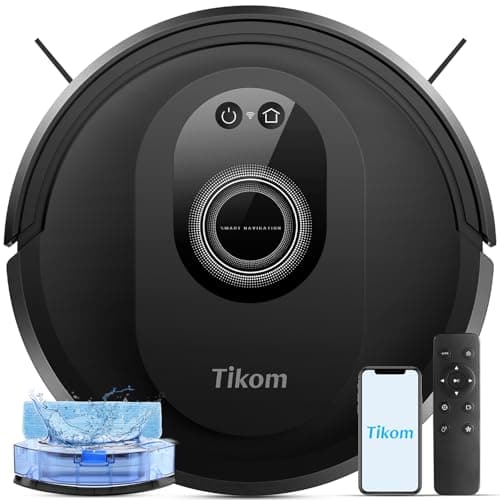
5,000Pa published, which is more than several machines here costing twice as much
A 450 ml bin is large for this price - most sub-$150 machines fill up mid-run
Vacuums and mops in one pass rather than making you swap modules between runs
Four ways to control it, including a physical remote, which matters if the app is a fight
What it gives up
No mapping, so no no-go zones, no room selection and no resume-where-it-left-off
A conventional roller brush, so long hair does wrap and does need cutting out
The mop is a damp cloth dragged behind the machine, not a scrubbing head
No self-emptying, so the 450 ml bin is a job you do by hand
Our scoring
Suction7.0
Navigation3.5
Pet hair5.5
Running cost7.5
Setup8.0
Weights and the arithmetic behind the total are published on How we pick so you can recompute this yourself.
Who it is for: Hard floors, a tight budget, and someone who genuinely wants mopping rather than treating it as a bullet point.
Skip it if: you were hoping to draw no-go zones around a pet bowl or a cable nest. Without a map there is nothing to draw them on, and you will be putting up physical barriers instead.
Questions people actually ask
+−What is the best robot vacuum for vinyl plank floors?
The Roborock Q10 S5+ under $300. LVP is waterproof so you can mop it freely, and the Q10 S5+ is the only machine at this price that publishes a sonic mop at up to 3,000 scrubs per minute and lifts the pad 8 mm when it meets a rug. The Lefant N3 is the cheaper answer if you do not have rugs to worry about.
+−Can a robot vacuum scratch vinyl plank flooring?
The machine itself will not. Grit will. Vinyl plank has a thin wear layer that is softer than tile, and hard particles dragged across it by a side brush cause fine scratching that dulls the traffic path over time. Running the robot more often, so there is less grit on the floor to drag, is the practical answer.
+−Can you use a robot mop on luxury vinyl plank?
Yes, and this is the floor where you can be most relaxed about it. LVP is waterproof, so the water-damage caution that applies to hardwood does not apply here. Keep spills off the perimeter gap and transition strips and the floor itself is fine with a daily damp pass.
+−Do I need a mop for vinyl plank floors?
Only if your floor gets marked rather than just dusty. A mop helps with kitchen grease, footprints and the fine dust that settles into embossed texture. If the problem is hair and crumbs on a smooth plank, a vacuum-only machine does the job with fewer chores attached.
+−Is a robot vacuum good for vinyl plank and carpet together?
It can be, but the mop behavior decides it. Only the Roborock Q10 S5+ lifts its pad and keeps cleaning when it reaches carpet. The Lefant N3, Lefant M330 Pro and Roomba 105 Combo avoid carpet while mopping, which protects the carpet but leaves it unvacuumed on that run.
+−Does vinyl plank need a high-suction robot vacuum?
More than tile does. Suction matters on LVP because lifting grit off the floor is better than sweeping it across a soft wear layer. You do not need the highest figure in the category, but this is not the floor to buy the weakest machine for either.
Sources
Every specification quoted above was read off one of these documents on the date shown. Where a manufacturer does not publish a figure, this site says "Not published" rather than estimating it.
Availability and specification re-check, 2026-09-20All five machines confirmed in stock and purchasable new on the day of publication, and each mop mechanism above quoted from its own listing.