Six machines that publish a Pascal figure, in order, from 12,000 down to 5,000. Then the part the listings leave out: what that number does and does not tell you.
By Scooter M., Enthusiast - published September 6, 2026
We have not tested these machines. Everything here comes from published specifications, manufacturer manuals and retailer listings, all cited below. Prices last verified September 21, 2026.
How this is funded: if you buy through a link here we may earn a commission, at no extra cost to you. It does not change which machines we recommend or what we say about them. Full disclosure.
The highest published suction figure under $300 is the Lefant M3 at 12,000Pa, followed by the Roborock Q7 M5+ at 10,000Pa and the Ecovacs DEEBOT N20 Plus at 8,000Pa. Read that ranking with one caveat firmly in mind: there is no shared test standard behind a Pascal rating, so these numbers are comparable within a brand and only loosely comparable across brands. The machine with the biggest figure is not automatically the machine that cleans your floor best.
This page exists because the figure is the first thing every listing shouts and the last thing anyone explains. So it starts with the criteria, gives you the ladder in order, and then says plainly where we would spend the money.
#
Product
Best for
Score
Price
01
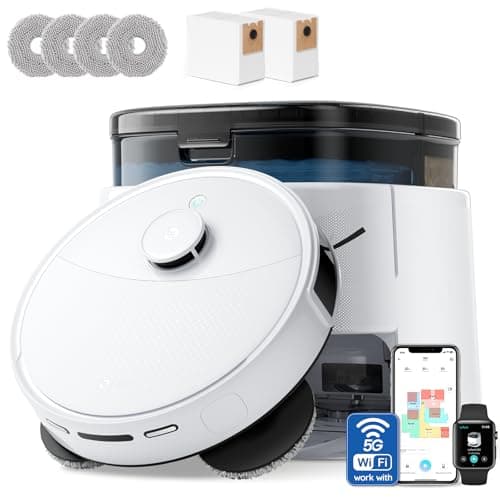
Lefant M312,000Pa and a dock that washes the mop in 45-degree water. The highest specification here by a distance, from the least established brand here.
#ad No live price for this one as of September 21, 2026. How we are funded
03
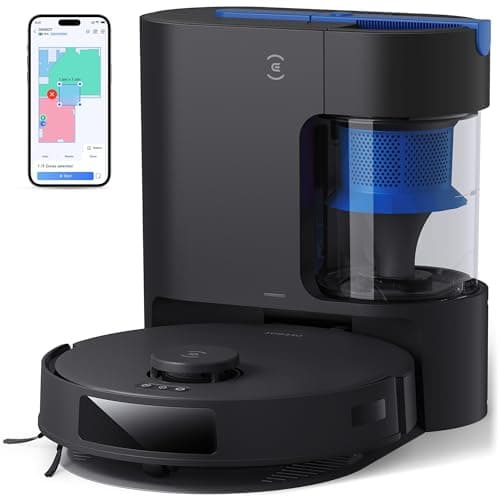
Ecovacs DEEBOT N20 PlusA self-emptying dock with no bag in it. Over three years that is the difference between this and everything else here, and it is not close.
Scores come from the published rubric on How We Pick: suction 25%, navigation 25%, pet hair 20%, running cost 20%, setup 10%. They are editorial judgments about published specifications, not test results.
What a Pascal rating actually measures
A Pascal is a unit of pressure, not of cleaning. The figure describes the pressure differential a machine's fan can generate, usually measured with the inlet sealed. It is a real physical quantity and it is not invented. What it does not describe is airflow at the floor, which is the thing that lifts grit out of a carpet pile.
Three things stand between a Pascal figure and a clean floor. Brush design - a beater bar agitates pile so the airflow has something loosened to carry away, and a brushless inlet does not. Inlet geometry and ride height - a strong fan pulling through a poorly-sealed head loses most of its advantage. Which mode was measured - some manufacturers publish the peak the machine reaches in its loudest mode for a few seconds, and it may not be the mode you ever run it in.
There is also no agreed test. Two brands can measure honestly, by different methods, and produce figures that cannot be compared. That is why this site weights suction at 25% of a machine's score rather than all of it, and why a machine that publishes nothing is scored as unverified instead of assumed weak. The full weighting is on how we pick, and the mechanics are in the Pa explainer.
The published ladder, in order
Every published Pascal figure on this site, ranked
Machine
Published suction
Carpet behavior
Brush type
Lefant M3
12,000Pa
Not published as automatic boost
Conventional roller
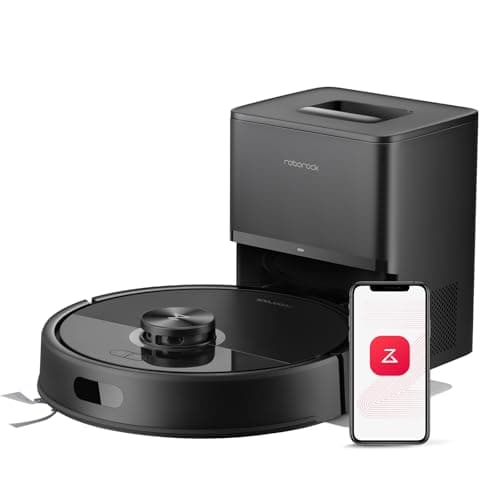
Roborock Q7 M5+
10,000Pa HyperForce
Not published as automatic boost
JawScrapers anti-tangle, plus anti-tangle side brush
Ecovacs DEEBOT N20 Plus
8,000Pa
Carpet detection sensors for floor transitions
ZeroTangle anti-tangle
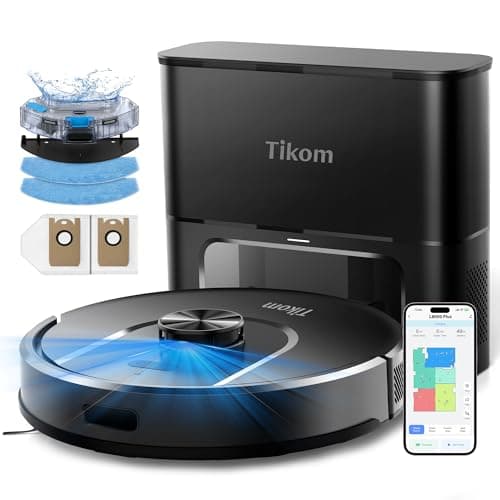
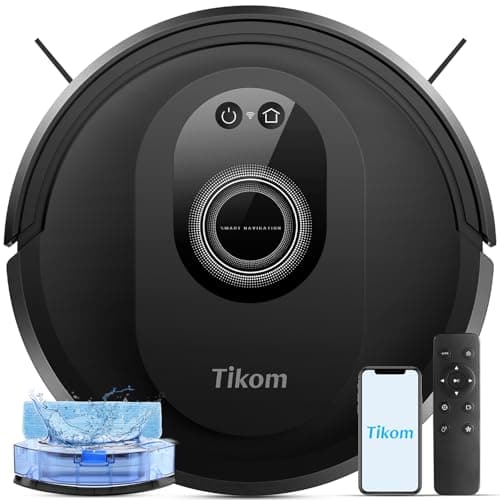
Tikom L8000 Plus
6,000Pa max
Automatically raises suction to 6,000Pa on carpet
Conventional roller
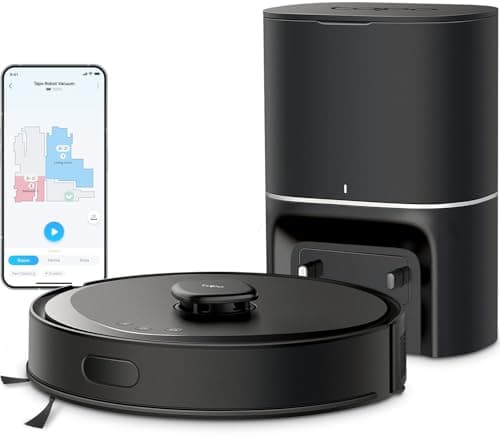
Tapo RV30 Max Plus
5,300Pa in Ultra mode
Raises suction on low-pile carpet, avoids carpet when mopping
Conventional roller
Tikom G8000 Max
5,000Pa
Stated for short and medium pile
Conventional roller
All figures read from each manufacturer's own listing. Machines that publish no figure are excluded from this ranking rather than estimated into it.
Notice the fourth column, because it is the one that changes outcomes. The Roborock Q7 M5+ is the only machine in this list whose anti-tangle design covers the side brush as well as the main brush, and the side brush is where long hair actually wraps. A machine at 10,000Pa that keeps its brushes clear will out-clean a machine at 12,000Pa whose roller is bound with hair by week three.
Why the top of the ladder is not our top pick
The Lefant M3 publishes the biggest number here and it is a genuinely well-equipped machine - a 90-day emptying interval and a dock that washes the mop pad in 45C water are specifications that normally cost much more. It leads this page because this page ranks published suction, and it publishes the most.
For most homes we would still buy the Roborock. The reason is that the 2,000Pa gap between them is a number without a shared test behind it, while the difference in brush design is a mechanism you can see in the product photographs. One of those is evidence and the other is a claim. When a specification is soft, you weight the hardware.
The same logic puts the Ecovacs DEEBOT N20 Plus third rather than fourth or fifth: 8,000Pa is a strong figure, ZeroTangle is a named anti-tangle mechanism, and its dock has no consumable in it at all. On a three-year view that last point is worth more than 4,000Pa of unverifiable headroom.
Carpet is where the number earns its keep
On a sealed hard floor, suction barely decides anything. Dust and hair sit on the surface, and almost any machine here will lift them - which is why our hardwood ranking is decided on mop behavior and body height rather than on Pascals.
On carpet the number starts to matter, and so does what the machine does with it. Two machines here publish an automatic carpet boost: the Tikom L8000 Plus raises itself to its 6,000Pa maximum when it detects pile, and the Tapo RV30 Max Plus raises suction on low-pile carpet and keeps the mop off it. A boost that happens by itself is worth more than a higher figure you have to remember to select, because nobody remembers.
It is still worth being clear about the ceiling on all of this. No machine at this price will deep-clean medium or high-pile carpet, at 5,000Pa or 12,000. That limit is set by weight and battery, not by the fan - our carpet guide has the honest threshold.
The brands that publish nothing
Three of the best-known names in this category - iRobot, Shark and eufy on the models we rank - publish no Pascal figure at all. iRobot states 70 times more power-lifting suction than its own 600 series, which is a ratio against a fifteen-year-old machine rather than a specification. Shark states no figure of any kind for the Matrix Plus. eufy describes BoostIQ suction adjustment without a rating.
That is not proof those machines are weak - all three are competent, and two of them are on this site as picks in their own categories. It does mean they cannot appear on this page, because this page is a ranking of published figures and inventing one for them would be exactly the fabrication the ranking exists to avoid. If you want to weigh them anyway, Shark against Roomba is where that argument is had.
How to shop this specification without being fooled
Check whether the figure is a peak or a normal mode. Ultra, Max and Turbo modes are louder and shorter-lived. If a listing quotes only the peak, that is the number you get for a fraction of the run.
Look for automatic carpet boost. A machine that raises its own suction when it meets pile beats a higher headline figure you have to select by hand.
Weight the brush over the fan. Anti-tangle geometry, and especially an anti-tangle side brush, changes real-world performance more than 2,000Pa of unverified headroom.
Ignore cross-brand comparisons of a few hundred Pascals. With no shared test standard, the difference between 5,000 and 5,300 is noise. The difference between 5,000 and 12,000 is a signal, but a soft one.
Treat a missing figure as missing, not as bad. Some strong machines publish nothing. Score it as unverified and decide on what they do publish.
What owners consistently report about this specification
The complaint that recurs in owner reviews across this whole price band is not weak suction - it is hair wrapping the brushes, which reduces effective suction over weeks until the machine is cleaned. That is a maintenance and design problem rather than a fan problem, and it is why our pet hair ranking is ordered by brush design rather than by Pascals. We link owner discussions where we cite them; we do not paraphrase them into our own voice.
3.2 L bag, manufacturer states up to 90 daysSource: Manufacturer listing
Mop care
45C hot water wash with cool-air dryingSource: Manufacturer listing
Battery / runtime
5,200 mAh, up to 220 minutesSource: Manufacturer listing
Mopping coverage
Manufacturer states 2,368 sq ft (220 m2) per tankSource: Manufacturer listing
Wi-Fi
Dual band, 2.4 GHz and 5 GHzSource: Manufacturer listing
What it gets right
12,000Pa is a flagship-tier published figure at a sub-$250 price
A mop-washing dock at this price is genuinely unusual - most stop at self-emptying
Cool-air drying rather than heat, which is what stops a pad going stiff and smelling
Dual-band Wi-Fi, which sounds trivial until you own a mesh network that keeps handing it to the 5 GHz radio
What it gives up
A washing dock is plumbing. Two tanks, a tray and a pad to keep clean, and more to go wrong
Pa figures are not comparable between manufacturers - there is no shared test standard, and a big number is not automatically better cleaning
Still buying 3.2 L bags
The least established brand here for warranty and spare parts
Our scoring
Suction9.0
Navigation8.0
Pet hair7.0
Running cost6.0
Setup7.0
Weights and the arithmetic behind the total are published on How we pick so you can recompute this yourself.
Who it is for: A hard-floor home where mopping is the actual point and the dock has somewhere to live.
Skip it if: you want fewer chores rather than better ones. A self-washing dock removes the worst job and adds three small ones, and plenty of people would rather rinse a pad in the sink.
#ad No live price for this one as of September 21, 2026. How we are funded
10,000Pa, a self-emptying dock, and the only anti-tangle system here that treats the side brush as part of the problem.
Published specifications
Suction
10,000Pa HyperForceSource: Manufacturer listing
Navigation
PreciSense LiDAR with real-time mappingSource: Manufacturer listing
Self-emptying
2.7 L sealed bag, manufacturer states 7 to 9 weeksSource: Manufacturer listing
Anti-tangle
JawScrapers main brush plus a stated 0% hair-tangling side brushSource: Manufacturer listing
Mopping
Vacuum and mop in one pass, 3 water flow settingsSource: Manufacturer listing
What it gets right
Both brushes are designed against tangling. Every other anti-tangle claim here covers only the main brush, and the side brush is where long hair actually wraps
10,000Pa published, matching machines at three times the price
Roborock's app is the most capable in this group after iRobot's, and its maps survive furniture moves
Vacuums and mops in a single pass rather than two runs
What it gives up
2.7 L and 7 to 9 weeks is a shorter interval than the Tikom L8000 Plus manages
No structured-light obstacle avoidance at this price - that is the Q10's feature
Sealed bags are a recurring cost
The mop still cannot be washed by the dock
Our scoring
Suction9.0
Navigation8.5
Pet hair8.5
Running cost6.5
Setup8.0
Weights and the arithmetic behind the total are published on How we pick so you can recompute this yourself.
Who it is for: A shedding dog or a long-haired cat, on any floor type.
Skip it if: your home is cluttered at floor level. LiDAR maps walls, not socks and charging cables, and without obstacle avoidance this machine will eventually eat one.
3 suction levels, 3 water flow settingsSource: Manufacturer listing
What it gets right
Ninety days between bag changes is 50% longer than the Tapo docks and beats most flagships
Five saved maps handles a three-story house, which is unusual under $250
Separate no-mop zones, so you can keep it off a rug without banning it from the room
6,000Pa published, with automatic carpet boost
What it gives up
Bags are still a recurring cost, just a less frequent one
150 minutes is mid-pack, and a big home will need the resume feature to finish
A conventional main brush - no anti-tangle geometry is claimed
Tikom is a small brand; spare-part availability in three years is a genuine unknown
Our scoring
Suction8.0
Navigation8.0
Pet hair6.5
Running cost6.5
Setup7.5
Weights and the arithmetic behind the total are published on How we pick so you can recompute this yourself.
Who it is for: A multi-floor home where the dock is somewhere inconvenient and you want to visit it as rarely as possible.
Skip it if: you have long-haired pets. Nothing in this machine's published specification addresses hair wrap, and at a similar price the Roborock Q7 M5+ and the Ecovacs N20 Plus both name an anti-tangle mechanism.
5,000Pa published, which is more than several machines here costing twice as much
A 450 ml bin is large for this price - most sub-$150 machines fill up mid-run
Vacuums and mops in one pass rather than making you swap modules between runs
Four ways to control it, including a physical remote, which matters if the app is a fight
What it gives up
No mapping, so no no-go zones, no room selection and no resume-where-it-left-off
A conventional roller brush, so long hair does wrap and does need cutting out
The mop is a damp cloth dragged behind the machine, not a scrubbing head
No self-emptying, so the 450 ml bin is a job you do by hand
Our scoring
Suction7.0
Navigation3.5
Pet hair5.5
Running cost7.5
Setup8.0
Weights and the arithmetic behind the total are published on How we pick so you can recompute this yourself.
Who it is for: Hard floors, a tight budget, and someone who genuinely wants mopping rather than treating it as a bullet point.
Skip it if: you were hoping to draw no-go zones around a pet bowl or a cable nest. Without a map there is nothing to draw them on, and you will be putting up physical barriers instead.
Questions people actually ask
+−What is the highest suction robot vacuum under $300?
The Lefant M3, at a published 12,000Pa, followed by the Roborock Q7 M5+ at 10,000Pa and the Ecovacs DEEBOT N20 Plus at 8,000Pa. There is no shared test standard behind Pascal ratings, so treat the ladder as an indication rather than a measurement.
+−Is 5,000Pa enough for a robot vacuum?
For hard floors and low-pile carpet, comfortably. Suction is rarely the limiting factor on a sealed floor - brush design, coverage and how often the machine runs matter more. For medium or high-pile carpet, no machine at this price is enough, at any Pascal figure.
+−Does more Pa mean better cleaning?
Not reliably. Pa measures the pressure a fan generates with the inlet sealed, not airflow at the floor. Brush design, inlet geometry and which mode was measured all sit between the figure and the result, and manufacturers do not use a common test.
+−Which budget robot vacuums boost suction on carpet automatically?
On this site, the Tikom L8000 Plus raises itself to its 6,000Pa maximum when it detects carpet, and the Tapo RV30 Max Plus increases suction on low-pile carpet while keeping the mop off it. Automatic boost is worth more than a higher figure you have to select manually.
+−Why do Shark and iRobot not publish suction figures?
They do not say. iRobot publishes a comparison against its own older 600 series rather than an absolute figure, and Shark publishes nothing for the Matrix Plus. We score an unpublished figure as unverified rather than guessing at one.
+−Have you tested the suction of these machines?
No. Every figure on this page is read from the manufacturer's own listing and cited, and we have not measured any of them. The page ranks what is published, which is a different claim from ranking what is true.
Sources
Every specification quoted above was read off one of these documents on the date shown. Where a manufacturer does not publish a figure, this site says "Not published" rather than estimating it.