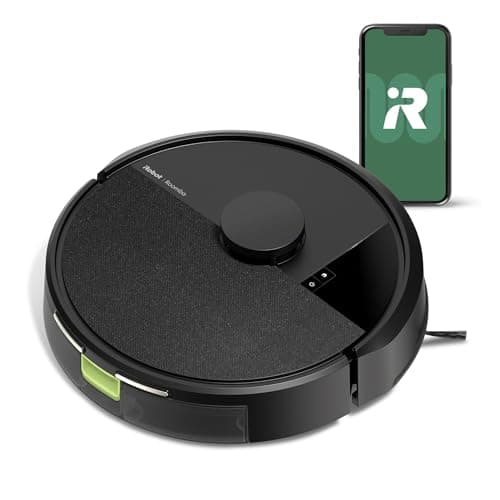
iRobot sells four machines near the bottom of its range and the differences are smaller than the price gaps suggest. Each step up adds precisely one capability.
By Scooter M., Enthusiast - published October 17, 2026
We have not tested these machines. Everything here comes from published specifications, manufacturer manuals and retailer listings, all cited below. Prices last verified October 17, 2026.
How this is funded: if you buy through a link here we may earn a commission, at no extra cost to you. It does not change which machines we recommend or what we say about them. Full disclosure.
Buy the Roomba 105 Vac. It is the cheapest machine iRobot sells with real LiDAR mapping, and each dearer cheap Roomba adds exactly one thing to it: the 105 Combo adds a pump-fed mop, the 105 AutoEmpty adds a sealed dock rated at 75 days, and the 115X Combo adds a published suction figure and a 90-day dock at a price that has climbed well above this site's $300 ceiling. Buy the 105 Combo if you have hard floors and want mopping; buy the 105 AutoEmpty if somebody in the house reacts to dust; skip the 115X at today's price.
iRobot's naming makes this harder than it needs to be. There is a 105 Vac, a 105 Combo, a 105 Vac with an AutoEmpty dock and a 115X Combo, and the model numbers do not tell you which is which. The good news is that the underlying machine barely changes.
#
Product
Best for
Score
Price
01
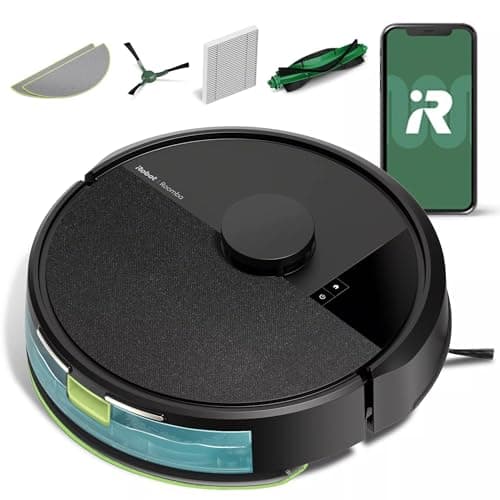
iRobot Roomba 105 VacThe lowest price at which you can buy genuine LiDAR mapping from a company that has been doing this for twenty years. It publishes no suction figure.
iRobot Roomba 105 ComboThe 105 Vac with a pump-fed mop pad bolted on for thirty dollars more. The mop is better engineered than most at this price and the carpet handling is the compromise you pay for it.
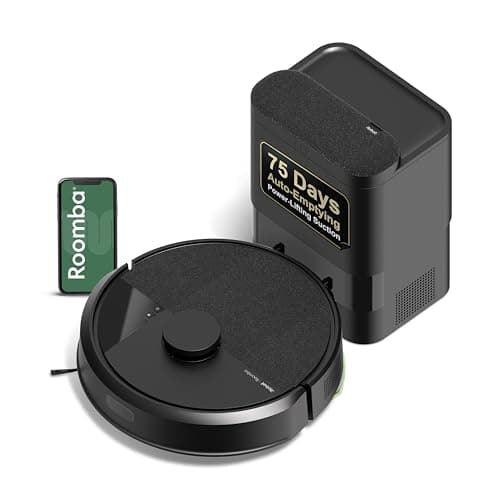
iRobot Roomba 105 Vac with AutoEmpty DockThe 105 Vac plus a sealed-bag dock that traps particles down to 0.7 microns. The only machine here that publishes a filtration figure that small.
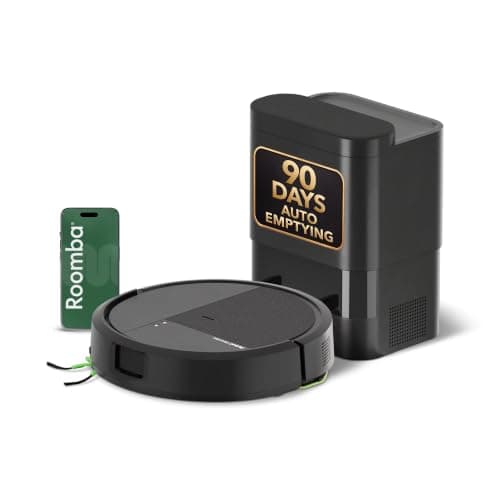
iRobot Roomba 115X ComboThe only iRobot we rank that prints a Pascal figure, with the longest dock interval iRobot states. The number is new enough to deserve skepticism, and the price has since climbed well above this site's ceiling.
Both machines scored on the published rubric from How We Pick: suction 25%, navigation 25%, pet hair 20%, running cost 20%, setup 10%. Editorial judgments about published specifications, not test results.
The criteria, before any machine
Three of these four are the same robot. That makes this an unusually clean comparison, because the question is not which machine is better - it is which single upgrade is worth its price gap to you.
The map is not optional and all four have it. Every machine here uses iRobot's ClearView LiDAR with keep-out zones. Mapping is the feature that decides whether a robot vacuum becomes part of your week, and it is already included at the bottom of this ladder - so it is not a reason to step up.
Then: do you want it to mop? That is the only difference between the 105 Vac and the 105 Combo, and it is one step on the ladder.
Then: do you want it to empty itself? That is the only difference between the 105 Vac and the 105 AutoEmpty, and it is a bigger step than the mop.
Last: do you want a number for the suction? That is what the 115X adds, and at its current price it is the most expensive answer on this page by a wide margin.
The ladder, one rung at a time
What each step up the cheap-Roomba ladder actually buys
Machine
What it adds
Mop
Dock
Published suction
Roomba 105 Vac
The baseline: ClearView LiDAR, keep-out zones, recharge and resume
None
Charging only
None - a ratio against iRobot's own 600 series
Roomba 105 Combo
A micro-pump mop with SmartScrub back-and-forth scrubbing
Pump-fed pad; detects and avoids carpet
Charging only
None - the same ratio
Roomba 105 AutoEmpty
A sealed AutoEmpty dock, stated 75 days, bag traps 99% of allergens to 0.7 microns
None
Self-emptying, bagged
None - the same ratio
Roomba 115X Combo
A printed Pascal figure, a 90-day dock, an anti-hair-wrap claim
Washable pad with SmartScrub; No Mop Zone keeps it off rugs
Self-emptying, 2.5 L AllergenLock bag
15,000 Pa
Read from each machine's own Amazon listing. The 105 line states '70x more power-lifting suction' relative to iRobot's 600 series, which is a comparison to a machine from 2012 rather than a specification. Live prices and the date each was verified appear on the picks above; none is written into this text.
That table is the page. Three of the four rows are the same robot with one accessory, and the fourth is a different, newer machine that has drifted out of the budget tier.
The mop step: is the 105 Combo worth it over the 105 Vac?
On hard floors, yes, and the reason is the pump. Most mop combos at this price are a damp cloth dragged behind the machine, soaking at the start of a run and dry by the end. iRobot's uses a micro-pump that meters water to keep the pad uniformly moist, and a SmartScrub mode that moves back and forth rather than in one direction, which is the difference on a dried spill rather than on dust.
The catch is carpet. The 105 Combo detects carpet and avoids it - the pad does not lift. So a mop run cleans your hard floors and drives around your rugs, which is correct behavior and is not the same as cleaning the whole floor. If your home is a real mix of carpet and hard flooring, the machine that lifts its pad is not a Roomba at this price, and best for carpet and hard floors is the page for that.
The dock step: is the 105 AutoEmpty worth it over the 105 Vac?
It depends entirely on which problem you have, and the two answers are genuinely different.
If emptying is a chore you dislike: no, not at this gap. Three brands here sell a self-emptying machine for less than iRobot charges for the dock alone, and two of them state a longer interval. The cheapest self-emptying docks page ranks them.
If emptying is the actual problem - somebody reacts to dust: yes, and it is the best answer on the site. Tipping a bin releases exactly the fine particles you removed from the floor, indoors. The AutoEmpty bag is sealed and iRobot states it traps 99% of allergens as small as 0.7 microns, which is the finest published figure we can cite on any machine here. Best for allergies makes the full case.
The 115X: a real upgrade at the wrong price
The Roomba 115X Combo is the most interesting machine iRobot has put near this price range, and we do not recommend buying it today. Both halves of that need explaining.
It is interesting because iRobot finally prints a number. 15,000 Pa, on a brand that spent years declining to publish any Pascal figure and quoting ratios against its own old machines instead. It also carries an anti-hair-wrap claim iRobot has never made for the 105 line, and a dock stated at 90 days rather than 75.
We do not recommend it because of what the live price has done. When we reviewed it, the 115X undercut every self-emptying machine on this site. It has since climbed well past the $300 ceiling this site exists to serve, which removes the only argument for buying it over iRobot's own 105 AutoEmpty - the same app, the same LiDAR, a sealed bag with a finer published filtration figure, and inside the ceiling. The price on its card above is read from the retailer daily, so check it rather than trusting this paragraph: if it comes back under the ceiling, it is a strong machine and the argument reverses.
Two further caveats apply whatever it costs. A brand-new 15,000 Pa claim from a manufacturer that previously published nothing deserves one raised eyebrow, because Pascal figures have no shared test standard between manufacturers and cannot be compared backwards against iRobot's own ratio-quoting 105 line. And its published coverage is up to 900 sq ft per charge, where the 105 line states recharge-and-resume - so for a large floor plan the cheaper machine may finish a job the dearer one does not.
What every cheap Roomba gives up
A fair comparison has to include the things all four lack, because at these prices rival brands include several of them.
A published suction figure on the 105 line. '70x more power-lifting suction' is a comparison to iRobot's 600 series, a machine from 2012. It is not a specification and it cannot be ranked against the 6,000Pa to 12,000Pa figures the budget brands print.
Multi-floor maps. The 105 listings state room selection and keep-out zones; none of them claims saved maps for more than one floor. Several cheaper machines do, which matters in a two-story house - see best for a two-story house.
Structured-light obstacle avoidance. No machine on this page has it. The 115X states it steers around shoes, pet bowls and furniture; the 105 line maps walls, which is not the same thing. The only machine under $300 with structured light is the Roborock Q10 S5+.
Cheap consumables. iRobot filters, pads and dock bags cost more than the generic parts the budget brands use, and the 115X listing asks for filters and brushes every three to six months. Over three years that gap is real money - the arithmetic is on running costs.
If none of these is the answer
The honest summary of this page is that you pay iRobot for the app, the map maturity and the certainty that filters will still be on sale in five years - and you pay for it in published specification. If that trade does not appeal, the best Roomba alternatives under $300 is the page that spends the same money on hardware instead, and Roborock vs Roomba is the brand-level version of the argument.
What we did not verify
We have not handled any of these machines. Every figure above is iRobot's own, read off the four listings and cited below: the 0.7-micron bag figure, the 75-day and 90-day dock intervals, the 15,000 Pa claim, the 900 sq ft coverage figure and the SmartScrub description. We have not timed an emptying cycle, measured what a sealed bag releases, compared the 105 line's unpublished suction against anything, or confirmed whether the 115X's map handles more than one floor. Where iRobot does not publish a figure - the 105 Combo's height, any Pascal number on the 105 line - we have written that rather than estimating it.
Charging only - no self-emptyingSource: Manufacturer listing
Recharge and resume
YesSource: Manufacturer listing
Wi-Fi
2.4 GHz required for setup and operationSource: Manufacturer listing
What it gets right
Real LiDAR mapping at $149 - two years ago this feature started around $400
Keep-out zones you draw in the app, which is the single most useful thing a map buys you
The Roomba app is the most mature in the category and the least likely to lose your map
Recharges and resumes, so a large floor plan is one job rather than three
What it gives up
iRobot publishes no absolute suction number. '70x the 600 series' is a comparison to a fifteen-year-old machine, not a specification
No self-emptying dock at this price - you empty the bin yourself
iRobot consumables cost more than the generic parts the budget brands use
Vacuum only. No mop, no water tank, no pretending otherwise
Our scoring
Suction6.0
Navigation8.0
Pet hair6.0
Running cost6.5
Setup8.5
Weights and the arithmetic behind the total are published on How we pick so you can recompute this yourself.
Who it is for: Someone who wants a map, an app that works, and a brand that will still be selling filters in five years.
Skip it if: you want a suction figure you can compare against anything else. If specifications are how you shop, a machine that refuses to publish one is a machine you cannot rank.
The 105 Vac with a pump-fed mop pad bolted on for thirty dollars more. The mop is better engineered than most at this price and the carpet handling is the compromise you pay for it.
Published specifications
Suction
Not published as Pa. iRobot states '70x more power-lifting suction' relative to its own 600 seriesSource: Manufacturer listing
Navigation
ClearView LiDAR mapping, cleans in rows, works in the darkSource: Manufacturer listing
Micro-pump meters water to keep the pad uniformly moist; SmartScrub back-and-forth mode stated as '2x deeper scrubbing'Source: Manufacturer listing
Carpet handling while mopping
Detects and AVOIDS carpet - the pad does not liftSource: Manufacturer listing
Modes
Vac only, mop only, or combined; adjustable passes, suction level and water volumeSource: Manufacturer listing
Dock
Charging only - no self-emptyingSource: Manufacturer listing
Height
Not published by iRobotSource: No height figure appears on the listing
Wi-Fi
2.4 GHz required for setup and operationSource: Manufacturer listing
What it gets right
A real metered mop, not a damp cloth - the micro-pump keeps the pad evenly wet instead of soaking at the start and drying out halfway
SmartScrub scrubs back and forth rather than dragging in a straight line, which is the difference on a dried spill
The same ClearView LiDAR and keep-out zones as the 105 Vac, so you get a map and room targeting
Vac-only mode means it still works as a plain vacuum on days you do not want the mop
Thirty dollars over the vacuum-only 105 is the cheapest way into a Roomba that mops
What it gives up
It avoids carpet while mopping rather than lifting the pad, so a mop run skips your rugs entirely instead of vacuuming them
iRobot publishes no absolute suction number for this machine either - '70x the 600 series' is a comparison to a fifteen-year-old robot
No self-emptying dock, so you empty the bin and rinse the pad by hand
iRobot pads and filters cost more than the generic parts the budget brands use
Our scoring
Suction6.0
Navigation8.0
Pet hair6.0
Running cost6.0
Setup8.5
Weights and the arithmetic behind the total are published on How we pick so you can recompute this yourself.
Who it is for: Someone on mostly hard floors who wants iRobot's app and map and is willing to pay thirty dollars over the 105 Vac for a mop that is actually pumped rather than dragged.
Skip it if: your home is mostly carpet. A machine that refuses to drive onto pile with the pad fitted spends a mop run cleaning the gaps between your rugs.
The 105 Vac plus a sealed-bag dock that traps particles down to 0.7 microns. The only machine here that publishes a filtration figure that small.
Published specifications
Suction
Not published as PaSource: Manufacturer listing
Navigation
ClearView LiDAR mapping with keep-out zonesSource: Manufacturer listing
Self-emptying
AutoEmpty dock, manufacturer states up to 75 daysSource: Manufacturer listing
Dock filtration
Bag traps 99% of allergens as small as 0.7 microns (manufacturer-reported)Source: Manufacturer listing
Recharge and resume
YesSource: Manufacturer listing
What it gets right
0.7 microns is a finer published figure than the 'HEPA-style' language most of this field uses
A sealed bag means emptying never releases a dust cloud, which is the whole point for an allergy household
75 days between bag changes
Mature LiDAR mapping and the best app here
What it gives up
Still no published suction rating
iRobot dock bags cost more than the generic-brand equivalents
Vacuum only - no mop
A substantial premium over the same robot without the dock
Our scoring
Suction6.0
Navigation8.0
Pet hair6.5
Running cost6.0
Setup8.5
Weights and the arithmetic behind the total are published on How we pick so you can recompute this yourself.
Who it is for: A household where somebody reacts to dust, and emptying a bin by hand is the problem rather than the chore.
Skip it if: nobody in the house has allergies. Without that, the sealed bag is the more expensive way to do what the Ecovacs N20 Plus does with no consumable at all.
#4 - The first Roomba that publishes suctionScore 7.9/10
The only iRobot we rank that prints a Pascal figure, with the longest dock interval iRobot states. The number is new enough to deserve skepticism, and the price has since climbed well above this site's ceiling.
Published specifications
Suction
15,000 PaSource: Manufacturer listing - the first published Pa figure on any iRobot machine we rank
Navigation
ClearView LiDAR, cleans in neat rows in low light, states it steers around shoes, pet bowls and furnitureSource: Manufacturer listing
Self-emptying
AutoEmpty dock with a 2.5 L AllergenLock bag, stated up to 90 days; bag seals on removalSource: Manufacturer listing
Dock filtration
Bag stated to trap 99% of pollen and moldSource: Manufacturer listing
Mopping
Washable microfiber pad with SmartScrub, stated 2x deeper; No Mop Zone keeps it off rugsSource: Manufacturer listing
Coverage
Up to 900 sq ft per chargeSource: Manufacturer listing
Brushes
Anti-hair-wrap brushes, plus an extended mop pad and edge-sweeping brush for cornersSource: Manufacturer listing
Cleaning levels
1-2 passes, 4 suction levels, 3 water or solution levelsSource: Manufacturer listing
Wi-Fi
2.4 GHz required for setupSource: Manufacturer listing
What it gets right
A self-emptying dock stated at 90 days - the longest interval iRobot states on any machine we rank
iRobot finally publishes a suction figure - 15,000 Pa - instead of a ratio against its own 2012 machine
An anti-hair-wrap claim, which iRobot has never made for the 105 line
ClearView LiDAR with a stated obstacle-avoidance behavior, not just mapping
The AllergenLock bag seals as you pull it out, so emptying releases no dust cloud
What it gives up
15,000 Pa is a brand-new claim from a brand that spent years refusing to publish one, and Pascal figures have no shared test standard between manufacturers
It cannot be compared backwards against iRobot's own 105 line, which still quotes a ratio rather than a number
900 sq ft per charge is modest - this is a small-to-medium-home machine
The mop is a washable pad, not the micro-pump of the 105 Combo or a vibrating plate
The pad does not lift, so rugs need a No Mop Zone drawn around them
iRobot consumables cost more, and the listing asks for filters and brushes every 3 to 6 months
It launched near the $200 mark and the live price has since climbed well past this site's $300 ceiling, which undoes the only argument for buying it over iRobot's own 105 AutoEmpty
Our scoring
Suction9.0
Navigation8.5
Pet hair7.5
Running cost6.0
Setup8.5
Weights and the arithmetic behind the total are published on How we pick so you can recompute this yourself.
Who it is for: Somebody who specifically wants a self-emptying Roomba with a published suction figure and is willing to pay well over this site's ceiling to get one. At the price it is selling for now we would buy the 105 with AutoEmpty instead.
Skip it if: you are shopping the budget tier this site exists for. At its current price this machine is no longer a budget pick, and iRobot's own 105 with AutoEmpty does the same job inside the ceiling. It is also a small-to-medium-home machine: 900 sq ft per charge is the published figure, and recharge-and-resume is not stated on this listing the way it is on the 105 line.
Questions people actually ask
+−Which cheap Roomba should I buy?
The Roomba 105 Vac. It is the cheapest Roomba with real LiDAR mapping and keep-out zones, which is the feature that decides whether one of these machines is useful. Step up to the 105 Combo if you want a mop for hard floors, or to the 105 AutoEmpty if somebody in the house reacts to dust and emptying a bin by hand is the problem.
+−What is the difference between the Roomba 105 and the 105 Combo?
One thing: the Combo adds a mop. It is the same robot, the same ClearView LiDAR map and the same keep-out zones, plus a micro-pump that keeps the pad evenly moist and a SmartScrub mode that scrubs back and forth. The Combo also still runs as a plain vacuum with the pad removed.
+−What is the difference between the Roomba 105 and the 115X?
The 115X is a newer, different machine rather than a 105 with an accessory. It publishes a suction figure - 15,000 Pa, the first iRobot has printed on anything we rank - carries an anti-hair-wrap brush claim, and docks into a 90-day AllergenLock base. It is also now priced well above this site's $300 ceiling, while the 105 AutoEmpty does a similar job inside it.
+−Is the Roomba 105 AutoEmpty worth the extra over the plain 105?
For an allergy household, yes - the bag is sealed and iRobot states it traps 99% of allergens as small as 0.7 microns, so emptying never releases a dust cloud. If you just dislike the chore, no: several rival brands sell a complete self-emptying machine for less than iRobot charges for the dock, and two of them state a longer interval between bag changes.
+−Do cheap Roombas have a suction figure?
The 105 line does not. iRobot states '70x more power-lifting suction' relative to its own 600 series, which is a comparison to a 2012 machine rather than a number you can rank. The 115X Combo is the first exception, at 15,000 Pa - and because there is no shared Pascal test standard between manufacturers, that figure cannot be compared backwards against the 105 line either.
+−Can a cheap Roomba handle two floors?
You can carry it upstairs, but none of the 105 listings claims saved maps for more than one floor, so it may re-learn the second floor each visit. Several cheaper machines from other brands do state multi-floor mapping, and one states the count.
+−Which Roomba should I avoid?
The Roomba Vac Essential. It has no map, which means no keep-out zones, no room selection and no resume where it left off - it drives in rows until the battery runs down. The 105 Vac is the cheapest Roomba we would actually recommend.
Sources
Every specification quoted above was read off one of these documents on the date shown. Where a manufacturer does not publish a figure, this site says "Not published" rather than estimating it.
Availability and price check, 2026-10-17All four ASINs resolved through the Amazon Creators API on the day of publication and confirmed in stock with a new-condition offer and a catalog image. The 115X Combo returned a live price well above this site's $300 ceiling, which is why the page recommends against it today and says so in the text rather than quietly leaving it out.