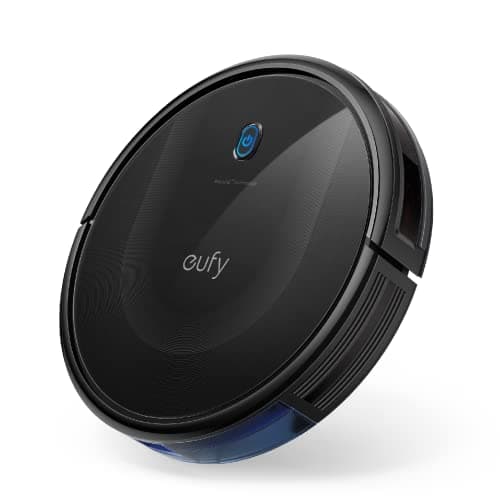
If it does not fit under the sofa, nothing else on the specification sheet matters. Four machines under $300 publish a height - and every one of them gives up something to be that thin.
By Scooter M., Enthusiast - published September 20, 2026
We have not tested these machines. Everything here comes from published specifications, manufacturer manuals and retailer listings, all cited below. Prices last verified September 21, 2026.
How this is funded: if you buy through a link here we may earn a commission, at no extra cost to you. It does not change which machines we recommend or what we say about them. Full disclosure.
The slimmest robot vacuum under $300 is the eufy RoboVac 11S MAX at a published 2.85 inches. If you need a map as well as a low profile, the Lefant M330 Pro at 3.7 inches is the thinnest machine here that holds one. There is nothing in between, and that gap is the whole story of this page.
Height is the one specification that is binary. Suction, navigation and battery life are all matters of degree - a machine with less of them cleans a bit worse. A machine that is 3.7 inches tall in a home with 3.5 inches of clearance under the sofa does not clean under the sofa at all, ever, and no amount of anything else compensates.
#
Product
Best for
Score
Price
01
eufy 11S MAXNo Wi-Fi, no app, no account. A remote control and two buttons. For a specific kind of buyer that is the feature, not the limitation.
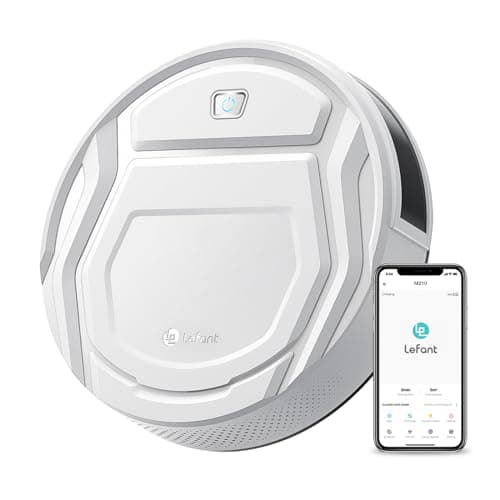
Lefant M210A brushless suction port instead of a roller brush, which is why it handles hair better than machines twice its price. It has no map and never will.
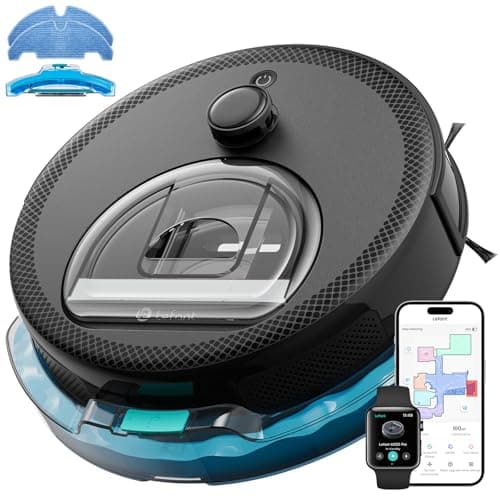
Lefant M330 ProPSD sensors that see cords and small objects, now with dToF mapping behind them. It publishes no suction figure at all, which is the trade.
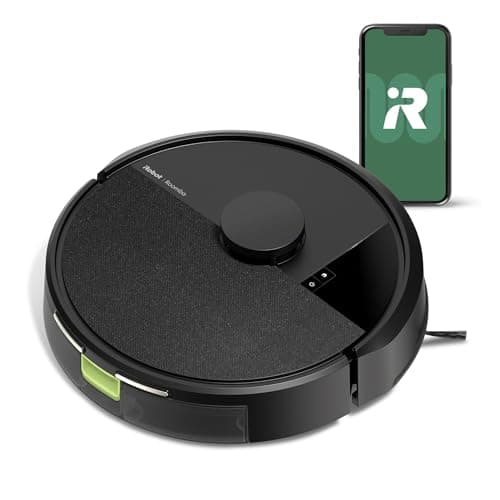
iRobot Roomba 105 VacThe lowest price at which you can buy genuine LiDAR mapping from a company that has been doing this for twenty years. It publishes no suction figure.
Scores come from the published rubric on How We Pick: suction 25%, navigation 25%, pet hair 20%, running cost 20%, setup 10%. They are editorial judgments about published specifications, not test results.
Most brands do not publish a height, and that is the finding
We read the live listing for every machine on this site. Four of them state a height. The rest say "slim design" or "low-profile" and leave it there.
Machine
Published height
Holds a map?
Source
eufy RoboVac 11S MAX
2.85 in
No
Manufacturer listing
Lefant M210
2.99 in
No
Manufacturer listing
Tikom G8000 Max
2.99 in
No
Manufacturer listing
Lefant M330 Pro
3.7 in (95 mm)
Yes
Manufacturer listing
Lefant M3
Not published
Yes
Listing states 12.6 in wide, no height
Lefant N3
Not published
Yes
No height on the listing
Roomba 105 Vac
Not published
Yes
No height on the listing
Roomba 105 Combo
Not published
Yes
No height on the listing
Roomba Vac Essential
Not published
No
Listing says 'low-profile', gives no figure
Roborock Q7 M5+
Not published
Yes
No height on the listing
Roborock Q10 S5+
Not published
Yes
No height on the listing
Tikom L8000 Plus
Not published
Yes
No height on the listing
Amazon's dimensions field is not a substitute. For machines that ship with a dock it returns the shipping carton, which is why the Roborock Q7 M5+ appears there as 10.24 inches tall. We do not publish a figure we cannot attribute to the manufacturer.
Two entries in that table deserve calling out. The Roomba Vac Essential listing markets a low-profile design that will "slide into tighter spots and grab dust and dirt under beds and sofas" - and then gives you no number to check that against. The Lefant M3 listing says the machine "glides effortlessly under furniture" and supports it with a width figure, 12.6 inches, which tells you nothing about clearance. Both are the same move: the benefit without the measurement.
The trade-off: at this price, thin and smart are mutually exclusive
Look down the map column. Every machine under three inches has no mapping at all. The eufy 11S MAX has no Wi-Fi either - it is a remote and two buttons. The Lefant M210 and Tikom G8000 Max have apps but navigate by bump-and-turn.
This is not a coincidence, it is packaging. A LiDAR turret is a physical object that spins on top of the machine, and it is roughly half an inch tall. That is why the thinnest mapping machine here, the Lefant M330 Pro, uses dToF laser ranging with the sensor set into the body rather than a raised turret - and why it lands at 3.7 inches rather than the four-plus inches a turret machine needs.
So the decision is genuinely forced. Under about three inches of clearance, you are buying a machine with no map and you should choose it on the other merits. Over roughly four inches, height stops constraining you and you should ignore this page entirely and buy on navigation or suction instead.
Measure before you shop, and measure the right thing
The number you need is the gap between the floor and the lowest point of the underside - usually a rail or a frame, not the visible skirt. Measure at the front, because sofas sag toward the front and many have a lower crossbar there.
Measure the clearance under each piece of furniture you actually want cleaned under: sofa, bed, sideboard, kitchen toe-kick.
Take the smallest of those numbers. That is your constraint, not the average.
Subtract a quarter of an inch. A robot that fits exactly will wedge itself on a rug or a slightly uneven floor, and a wedged robot under a sofa is worse than one that never went under.
Compare what is left against the published-height column above. If your figure is below 2.85 inches, no machine on this site fits and the honest answer is a handheld and a long attachment.
"It keeps getting stuck under the couch" is usually not a height problem
If a machine already goes under your furniture and then gets trapped, height is not what is failing. Three other things cause it, and all three are fixable.
A tapering gap. The clearance at the edge is fine and the frame slopes lower toward the back. The robot drives in, the gap closes, and it wedges. A mapping machine can be told to keep out; a non-mapping one needs a physical barrier.
Cliff sensors on dark flooring. Under a sofa is dark. Some machines read very dark flooring as a drop and refuse to move, then sit there reporting an error. Wiping the downward-facing sensors fixes the false positives caused by dust, which is the more common version of this.
Trailing cables. The area under furniture is where cables live. This is an obstacle-avoidance problem rather than a clearance problem, and it is covered on obstacle avoidance.
No Wi-Fi, no app, no account. A remote control and two buttons. For a specific kind of buyer that is the feature, not the limitation.
Published specifications
Suction
Not published on this listingSource: eufy states BoostIQ adjustment but no Pa figure for this ASIN
Navigation
Infrared obstacle sensing and drop sensors, no mappingSource: Manufacturer listing
Runtime
Up to 100 minutes on hardwoodSource: Manufacturer listing
Height
2.85 inSource: Manufacturer listing
Connectivity
None. No Wi-Fi and no app supportSource: Manufacturer listing
Brush
Single side brushSource: Manufacturer listing
What it gets right
2.85 inches is the slimmest machine in this entire field - it goes under furniture nothing else here clears
No app means no account, no firmware update that breaks it, and no cloud service to be discontinued
BoostIQ raises suction within 1.5 seconds when it meets carpet, without you asking
Tempered glass top, which after two years of being kicked under a sofa is not nothing
What it gives up
eufy publishes no Pa rating on this listing, so its headline capability is unrankable
No app also means no scheduling from your phone, no map, no room selection, no history
100 minutes is the shortest runtime here
A single side brush covers edges more slowly than a dual-brush machine
Our scoring
Suction5.5
Navigation3.0
Pet hair6.0
Running cost8.5
Setup9.0
Weights and the arithmetic behind the total are published on How we pick so you can recompute this yourself.
Who it is for: A small hard-floor home, or anybody buying for someone who will never open an app.
Skip it if: you want to start a clean from work, or you want a cleaning history. This machine deliberately does not connect to anything, and no update will change that.
The brushless inlet has nothing for hair to wrap around, so there is no brushroll to cut free every fortnight
2.99 inches tall clears most sofa and bed frames that stop taller machines
Lithium iron phosphate cells, a chemistry that tolerates daily full cycles better than the usual lithium-ion
Nothing to subscribe to and no dust bags to buy
What it gives up
No published suction rating at all, which for a machine sold on suction is a strange omission
No mapping. It covers a room by bouncing around it, so a large floor plan takes several passes
The manufacturer says not to use zigzag mode on carpet, which rules out its most efficient pattern on rugs
Brushless inlets are weaker on embedded carpet grit than a beater bar
Our scoring
Suction5.0
Navigation3.5
Pet hair7.5
Running cost8.5
Setup8.0
Weights and the arithmetic behind the total are published on How we pick so you can recompute this yourself.
Who it is for: A one-bedroom apartment with hard floors, a shedding pet, and a hard budget ceiling under $100.
Skip it if: you have more than about 800 square feet of open floor, or any medium-pile carpet you actually want cleaned rather than skimmed. Without a map it will miss areas, and without a brushroll it will not dig.
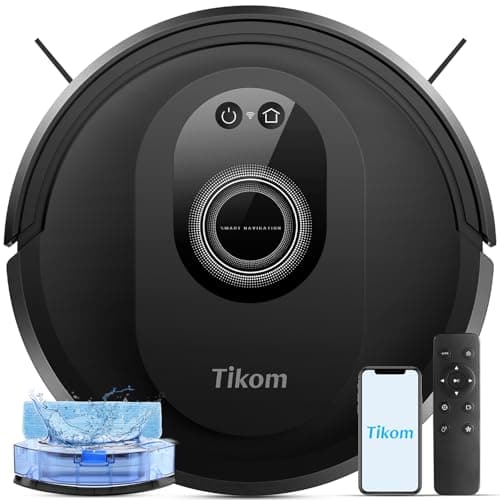
5,000Pa published, which is more than several machines here costing twice as much
A 450 ml bin is large for this price - most sub-$150 machines fill up mid-run
Vacuums and mops in one pass rather than making you swap modules between runs
Four ways to control it, including a physical remote, which matters if the app is a fight
What it gives up
No mapping, so no no-go zones, no room selection and no resume-where-it-left-off
A conventional roller brush, so long hair does wrap and does need cutting out
The mop is a damp cloth dragged behind the machine, not a scrubbing head
No self-emptying, so the 450 ml bin is a job you do by hand
Our scoring
Suction7.0
Navigation3.5
Pet hair5.5
Running cost7.5
Setup8.0
Weights and the arithmetic behind the total are published on How we pick so you can recompute this yourself.
Who it is for: Hard floors, a tight budget, and someone who genuinely wants mopping rather than treating it as a bullet point.
Skip it if: you were hoping to draw no-go zones around a pet bowl or a cable nest. Without a map there is nothing to draw them on, and you will be putting up physical barriers instead.
#4 - Best obstacle avoidance under $150Score 7.5/10
PSD sensors that see cords and small objects, now with dToF mapping behind them. It publishes no suction figure at all, which is the trade.
Published specifications
Suction
Not published as Pa. Three modes: Quiet, Standard, MaxSource: Manufacturer listing
Navigation
dToF navigation scanning to 15 m, with multi-floor mapping and route planningSource: Manufacturer listing
Obstacle avoidance
PSD (position sensitive device) detection of furniture, cords and small objectsSource: Manufacturer listing
Runtime
Up to 150 minutesSource: Manufacturer listing
Dustbin / water tank
450 ml visible dustbin, 200 ml refillable tank with a washable padSource: Manufacturer listing
Height
95 mm (3.7 in)Source: Manufacturer listing
Carpet handling
Avoids carpet in mop mode, boosts suction when vacuuming itSource: Manufacturer listing
Wi-Fi
Dual band, 2.4 GHz and 5 GHzSource: Manufacturer listing
What it gets right
PSD avoidance is named for the objects it detects - furniture, cords and small items - which almost nothing else at this price claims
dToF mapping with multi-floor maps, at a price where most machines still have no map at all
An anti-tangle suction port rather than a roller, so there is nothing for hair to wrap around
A 450 ml visible bin, so you can see when it needs emptying instead of guessing
What it gives up
No published Pascal figure anywhere on the listing, so its headline capability cannot be compared with anything
At 95 mm it is taller than the slimmest machines here and will not clear the lowest furniture
The mop is a washable pad on a 200 ml tank - maintenance mopping, not scrubbing
No self-emptying dock, so the bin is yours to empty
Our scoring
Suction5.5
Navigation8.5
Pet hair7.5
Running cost8.5
Setup8.0
Weights and the arithmetic behind the total are published on How we pick so you can recompute this yourself.
Who it is for: A cluttered hard-floor home where cords and toys stop the machine more often than dirt does.
Skip it if: you shop on suction figures. Lefant publishes none for this machine, so on a specification-led ranking it is unverifiable exactly where you would want a number.
Charging only - no self-emptyingSource: Manufacturer listing
Recharge and resume
YesSource: Manufacturer listing
Wi-Fi
2.4 GHz required for setup and operationSource: Manufacturer listing
What it gets right
Real LiDAR mapping at $149 - two years ago this feature started around $400
Keep-out zones you draw in the app, which is the single most useful thing a map buys you
The Roomba app is the most mature in the category and the least likely to lose your map
Recharges and resumes, so a large floor plan is one job rather than three
What it gives up
iRobot publishes no absolute suction number. '70x the 600 series' is a comparison to a fifteen-year-old machine, not a specification
No self-emptying dock at this price - you empty the bin yourself
iRobot consumables cost more than the generic parts the budget brands use
Vacuum only. No mop, no water tank, no pretending otherwise
Our scoring
Suction6.0
Navigation8.0
Pet hair6.0
Running cost6.5
Setup8.5
Weights and the arithmetic behind the total are published on How we pick so you can recompute this yourself.
Who it is for: Someone who wants a map, an app that works, and a brand that will still be selling filters in five years.
Skip it if: you want a suction figure you can compare against anything else. If specifications are how you shop, a machine that refuses to publish one is a machine you cannot rank.
Questions people actually ask
+−What is the slimmest robot vacuum under $300?
The eufy RoboVac 11S MAX, at a published 2.85 inches. The Lefant M210 and Tikom G8000 Max follow at 2.99 inches. Those are the three thinnest machines on this site that publish a height at all.
+−What is the thinnest robot vacuum that still makes a map?
The Lefant M330 Pro at 3.7 inches. It uses dToF laser ranging set into the body rather than a raised LiDAR turret, which is how it stays under four inches while still mapping.
+−How much clearance does a robot vacuum need?
Its published height plus about a quarter of an inch. A machine that fits exactly will wedge when it drives onto a rug or crosses an uneven floorboard, and the space under furniture is where that is hardest to recover from.
+−Why does my robot vacuum keep getting stuck under the couch?
Usually a gap that tapers toward the back, so the machine drives into a space it cannot reverse out of. Dusty cliff sensors and trailing cables are the other two common causes. If it fits at the edge but traps at the back, the fix is a keep-out zone rather than a thinner machine.
+−Will a robot vacuum fit under my bed?
Measure the lowest point of the frame rather than the visible gap, and compare it against the published-height table above. Beds are usually the easiest piece of furniture in the house for clearance; sofas and sideboards are where machines fail.
+−Do slim robot vacuums clean worse?
At this price they navigate worse rather than clean worse. Every sub-three-inch machine here does without mapping, so it covers a room by bouncing rather than in planned rows. Suction and brush design are not obviously compromised by the thinner body.
Sources
Every specification quoted above was read off one of these documents on the date shown. Where a manufacturer does not publish a figure, this site says "Not published" rather than estimating it.
Height audit across the full range, 2026-09-20Listing copy for all in-stock machines on this site was read for a stated height or clearance figure. Four publish one; the remainder are recorded as not published rather than estimated.