The cheapest real map from the brand that invented the category, against a newer brand that fits more sensors for less money. Neither will tell you how hard its machine pulls.
By Scooter M., Enthusiast - published September 16, 2026
We have not tested these machines. Everything here comes from published specifications, manufacturer manuals and retailer listings, all cited below. Prices last verified September 21, 2026.
How this is funded: if you buy through a link here we may earn a commission, at no extra cost to you. It does not change which machines we recommend or what we say about them. Full disclosure.
Buy the Roomba 105 Vac if you want the map that is least likely to cause you trouble: genuine LiDAR, keep-out zones and the most mature app in the category, from a company with a twenty-year parts supply. Buy the Lefant M330 Pro if you want more hardware for less money (full review): dToF mapping plus PSD sensors that Lefant says detect cords and small objects, a mop, and dual-band Wi-Fi. Buy the Lefant M210 only if the budget is the whole decision - it has no map at all. And note what is missing on all three: neither brand publishes a suction figure for any of them.
That last point is the unusual thing about this comparison, and it is why this page does not do what most brand comparisons do, which is line up two Pascal figures and declare a winner. There are no figures to line up. What is left is a set of published specifications that actually differ - and they point in clearly different directions.
#
Product
Best for
Score
Price
01
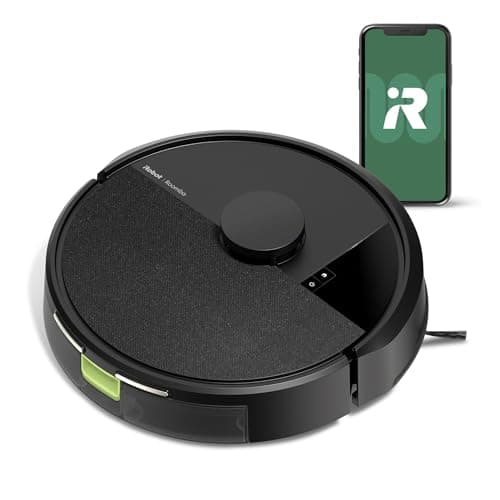
iRobot Roomba 105 VacThe lowest price at which you can buy genuine LiDAR mapping from a company that has been doing this for twenty years. It publishes no suction figure.
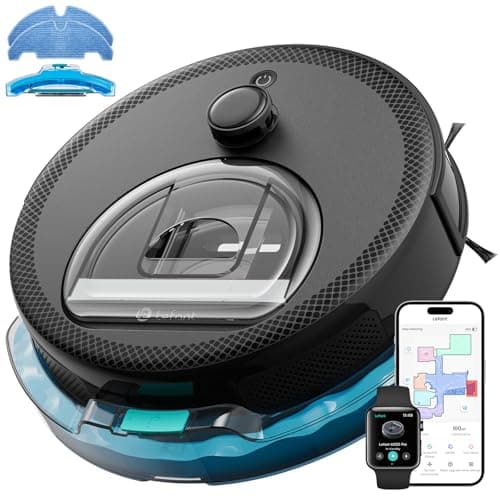
Lefant M330 ProPSD sensors that see cords and small objects, now with dToF mapping behind them. It publishes no suction figure at all, which is the trade.
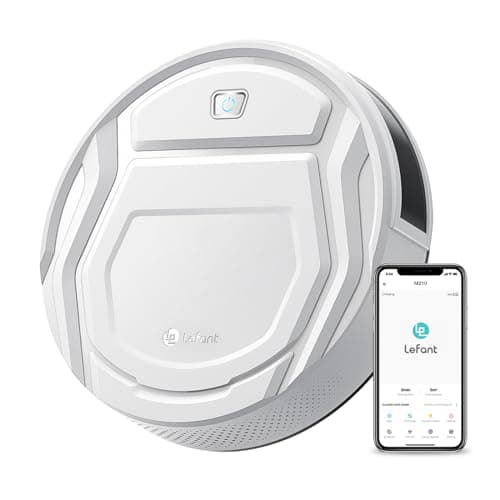
Lefant M210A brushless suction port instead of a roller brush, which is why it handles hair better than machines twice its price. It has no map and never will.
All three machines scored on the published rubric from How We Pick: suction 25%, navigation 25%, pet hair 20%, running cost 20%, setup 10%. Editorial judgments about published specifications, not test results.
Buy the Roomba if
It is your first robot vacuum. iRobot's app is the most mature here: the map survives furniture being moved, the schedule holds, and the Clean Map report shows where the machine actually went. That reliability is worth more on a first purchase than any feature you have not learned to use yet. Our beginners ranking is built on exactly that argument.
You want spare parts in five years. Filters, brushes and batteries for a Roomba are ordinary parts from a company that has been selling them for two decades. That is invisible on a specification sheet and it is the whole cost of year four.
You want keep-out zones to be the thing you rely on. Drawing a zone around the cable nest is the most dependable way to protect a machine at this price, and it only works if the map underneath it stays put. iRobot's does.
You do not want a mop. The 105 Vac is a vacuum and says so. There is no tank to fill and no pad to rinse.
Buy Lefant if
You want the most sensors per dollar. The M330 Pro pairs dToF mapping that scans to 15 meters with PSD obstacle sensing that Lefant names for furniture, cords and small objects. The Roomba publishes LiDAR steering and cliff sensors, and nothing that claims to see a cord.
You have more than one floor. Lefant publishes multi-floor mapping for the M330 Pro. The Roomba 105 Vac's listing states room selection and keep-out zones but no multi-floor maps.
Your router keeps handing devices to 5 GHz. The M330 Pro supports dual-band Wi-Fi. iRobot states the 105 Vac needs a 2.4 GHz network for setup and operation, and pairing failures on mesh routers are the commonest first-day problem in the whole category.
You have a shedding pet and hate cutting hair off a roller. Both Lefants use a suction port instead of a roller brush - an anti-tangle port on the M330 Pro, a brushless inlet on the M210 - so there is nothing for hair to wrap around.
Head to head on what each brand publishes
Head to head on published figures
Roomba 105 Vac
Lefant M330 Pro
Lefant M210
Published suction
Not published as Pa
Not published as Pa
Not published as Pa
Navigation
ClearView LiDAR, keep-out zones
dToF to 15 m, multi-floor maps
No map - infrared anti-collision
Obstacle sensing
Steers around obstacles, cliff sensors
PSD - furniture, cords, small objects
6D infrared anti-collision
Brush
Multi-surface brush plus edge brush
Anti-tangle suction port
Brushless suction port
Mopping
None
200 ml tank, washable pad
None
Runtime
Not published
Up to 150 minutes
Up to 120 minutes, low suction
Height
Not published
95 mm (3.7 in)
2.99 in
Wi-Fi
2.4 GHz required
Dual band 2.4 and 5 GHz
App plus on-device buttons
Dock
Charging only
Charging only
Charging only
Every entry read from the manufacturer's own listing. Not published means the manufacturer states no figure. iRobot states 70x more power-lifting suction than its own 600 series, which is a ratio rather than a specification.
The suction question neither brand will answer
iRobot describes the 105 Vac as having 70 times more power-lifting suction than its own 600 series - a comparison with a machine line that dates back more than a decade, chosen by the company doing the comparing. Lefant describes the M210 as having strong suction from a digital motor and states no figure, and the M330 Pro's listing offers three modes - Quiet, Standard and Max - without saying what any of them measures.
People notice. Search for the M330 Pro and one of the completions Google suggests is its suction power - a question its own listing does not answer. On our published rubric an unpublished figure is scored as unverified rather than assumed good, which is why all three machines on this page score between 5.0 and 6.0 on suction. If comparing numbers is how you shop, this is the wrong pair of brands - our highest published suction ranking is where the machines that do publish are ranked against each other.
The map is the real decision
Strip away the missing suction figures and this comparison is about navigation, and the two brands have taken different routes to the same place.
iRobot's route is maturity. ClearView LiDAR is not the most sensor-rich system here, but it is attached to the app with the longest track record in the category. Keep-out zones hold, room selection works, recharge-and-resume finishes large floor plans, and the map does not quietly drift when you move a chair. For a buyer who wants the machine to become invisible, that is the feature.
Lefant's route is hardware. dToF measures distance by timing a light pulse, so it is unaffected by a sunlit room - see our navigation explainer for why that matters in a kitchen. Add PSD sensing that claims to detect cords and small objects, and on paper the M330 Pro sees more than the Roomba does. What Lefant cannot offer is a long track record for how that app and map behave in year three, because the brand simply has not been selling at this scale for as long. Our obstacle avoidance ranking puts the M330 Pro's sensing in context against the rest of the field.
Lefant M210 vs Roomba: the specific question people ask
It is a common pairing because both are near the bottom of the price ladder, and it is not a close call once you see what separates them: the Roomba maps and the M210 does not. The M210 covers a room by pattern - zigzag, random, edge, spot - and has no idea where it has been. The Roomba cleans in rows, remembers the floor plan and takes keep-out zones.
The M210's case is narrow and real. It is 2.99 inches tall, so it clears furniture a taller machine cannot. Its brushless inlet has nothing for hair to wrap around. It runs on lithium iron phosphate cells, which is an unusual and welcome disclosure at this price. And it costs meaningfully less. For a one-bedroom hard-floor flat with a shedding pet, that is a coherent purchase - its full review sets out where it stops. For anything bigger, the map is worth the difference.
Where neither brand does well
Neither publishes suction. Said already, and worth repeating as a buying principle: at this price Roborock, Ecovacs, Tikom and Tapo all print a Pascal rating on machines like these. These two brands ask you to trust them instead.
Neither has a self-emptying dock on these models. All three are machines whose bins you empty by hand, which with a shedding pet is a twice-weekly job. iRobot does sell an AutoEmpty version of the 105 Vac, and our Shark vs Roomba comparison covers what its sealed-bag dock is worth. If a dock is the point, read is a self-emptying dock worth it and start from our self-emptying ranking instead.
Neither publishes a battery cycle count, so neither will tell you what year three looks like - see our battery life guide for how universal that gap is.
Which we would actually buy
For a first robot vacuum, or for anyone who wants the map to simply work for years: the Roomba 105 Vac. For a cluttered hard-floor home, a two-story house or a household on a mesh network: the Lefant M330 Pro, which gives you more published capability for less money in exchange for a shorter track record. For a small flat on the tightest budget: the Lefant M210. And if mopping that scrubs rather than drags is what you want from Lefant, the Lefant N3 is the one to read about.
Charging only - no self-emptyingSource: Manufacturer listing
Recharge and resume
YesSource: Manufacturer listing
Wi-Fi
2.4 GHz required for setup and operationSource: Manufacturer listing
What it gets right
Real LiDAR mapping at $149 - two years ago this feature started around $400
Keep-out zones you draw in the app, which is the single most useful thing a map buys you
The Roomba app is the most mature in the category and the least likely to lose your map
Recharges and resumes, so a large floor plan is one job rather than three
What it gives up
iRobot publishes no absolute suction number. '70x the 600 series' is a comparison to a fifteen-year-old machine, not a specification
No self-emptying dock at this price - you empty the bin yourself
iRobot consumables cost more than the generic parts the budget brands use
Vacuum only. No mop, no water tank, no pretending otherwise
Our scoring
Suction6.0
Navigation8.0
Pet hair6.0
Running cost6.5
Setup8.5
Weights and the arithmetic behind the total are published on How we pick so you can recompute this yourself.
Who it is for: Someone who wants a map, an app that works, and a brand that will still be selling filters in five years.
Skip it if: you want a suction figure you can compare against anything else. If specifications are how you shop, a machine that refuses to publish one is a machine you cannot rank.
#2 - Best obstacle avoidance under $150Score 7.5/10
PSD sensors that see cords and small objects, now with dToF mapping behind them. It publishes no suction figure at all, which is the trade.
Published specifications
Suction
Not published as Pa. Three modes: Quiet, Standard, MaxSource: Manufacturer listing
Navigation
dToF navigation scanning to 15 m, with multi-floor mapping and route planningSource: Manufacturer listing
Obstacle avoidance
PSD (position sensitive device) detection of furniture, cords and small objectsSource: Manufacturer listing
Runtime
Up to 150 minutesSource: Manufacturer listing
Dustbin / water tank
450 ml visible dustbin, 200 ml refillable tank with a washable padSource: Manufacturer listing
Height
95 mm (3.7 in)Source: Manufacturer listing
Carpet handling
Avoids carpet in mop mode, boosts suction when vacuuming itSource: Manufacturer listing
Wi-Fi
Dual band, 2.4 GHz and 5 GHzSource: Manufacturer listing
What it gets right
PSD avoidance is named for the objects it detects - furniture, cords and small items - which almost nothing else at this price claims
dToF mapping with multi-floor maps, at a price where most machines still have no map at all
An anti-tangle suction port rather than a roller, so there is nothing for hair to wrap around
A 450 ml visible bin, so you can see when it needs emptying instead of guessing
What it gives up
No published Pascal figure anywhere on the listing, so its headline capability cannot be compared with anything
At 95 mm it is taller than the slimmest machines here and will not clear the lowest furniture
The mop is a washable pad on a 200 ml tank - maintenance mopping, not scrubbing
No self-emptying dock, so the bin is yours to empty
Our scoring
Suction5.5
Navigation8.5
Pet hair7.5
Running cost8.5
Setup8.0
Weights and the arithmetic behind the total are published on How we pick so you can recompute this yourself.
Who it is for: A cluttered hard-floor home where cords and toys stop the machine more often than dirt does.
Skip it if: you shop on suction figures. Lefant publishes none for this machine, so on a specification-led ranking it is unverifiable exactly where you would want a number.
The brushless inlet has nothing for hair to wrap around, so there is no brushroll to cut free every fortnight
2.99 inches tall clears most sofa and bed frames that stop taller machines
Lithium iron phosphate cells, a chemistry that tolerates daily full cycles better than the usual lithium-ion
Nothing to subscribe to and no dust bags to buy
What it gives up
No published suction rating at all, which for a machine sold on suction is a strange omission
No mapping. It covers a room by bouncing around it, so a large floor plan takes several passes
The manufacturer says not to use zigzag mode on carpet, which rules out its most efficient pattern on rugs
Brushless inlets are weaker on embedded carpet grit than a beater bar
Our scoring
Suction5.0
Navigation3.5
Pet hair7.5
Running cost8.5
Setup8.0
Weights and the arithmetic behind the total are published on How we pick so you can recompute this yourself.
Who it is for: A one-bedroom apartment with hard floors, a shedding pet, and a hard budget ceiling under $100.
Skip it if: you have more than about 800 square feet of open floor, or any medium-pile carpet you actually want cleaned rather than skimmed. Without a map it will miss areas, and without a brushroll it will not dig.
Questions people actually ask
+−Is Lefant or Roomba better?
It depends what you value. The Roomba 105 Vac has the more mature app and a long parts supply, and its LiDAR map is the least likely to cause trouble. The Lefant M330 Pro publishes more hardware for less money - dToF multi-floor mapping, PSD obstacle sensing and dual-band Wi-Fi - with a shorter track record behind it.
+−Which has more suction, Lefant or Roomba?
Nobody can honestly say. iRobot publishes a comparison with its own older 600 series rather than a figure for the 105 Vac, and Lefant publishes no Pascal rating for the M330 Pro or the M210. Any ranking that puts one above the other on cleaning power is either measuring it independently or asserting it.
+−Is the Lefant M210 better than a Roomba?
Only for a narrow case. The M210 is slimmer at 2.99 inches, has a brushless inlet that does not tangle, and costs less - but it has no map. The Roomba 105 Vac maps with LiDAR and takes keep-out zones, which in anything larger than a small flat is the more important difference.
+−Does the Lefant M330 Pro avoid cords?
Lefant states its PSD sensing detects and avoids furniture, cords and small objects. It publishes no detection rate, so we record that as a claim rather than a measurement - and a drawn keep-out zone around the cable area is still the more reliable protection at this price.
+−Which is better for pet hair, Lefant or Roomba?
Lefant, on design. Both Lefant machines here use a suction port rather than a roller brush, so there is nothing for hair to wrap around. The Roomba uses a multi-surface brush and an edge-sweeping brush, which pick up hair well and still need clearing periodically.
+−Have you tested these machines?
No. Every figure on this page is read from each manufacturer's own listing and cited below, and the comparison is explicitly about what each brand publishes rather than about measured performance.
Sources
Every specification quoted above was read off one of these documents on the date shown. Where a manufacturer does not publish a figure, this site says "Not published" rather than estimating it.
Live price layerEvery price on this page is read from the retailer daily and stamped with the date it was last verified. The Roomba Vac Essential is named but carries no buy link because its buy box was a used unit on the day of writing.