Both of these map your home with a laser, neither has a dock, and they solve the same problem in opposite ways. One keeps a roller brush and designs it against tangling; the other deletes the roller entirely. That single decision is what you are choosing between, and the right answer is set by your floors rather than your budget.
By Scooter M., Enthusiast - published October 13, 2026
We have not tested these machines. Everything here comes from published specifications, manufacturer manuals and retailer listings, all cited below. Prices last verified October 17, 2026.
How this is funded: if you buy through a link here we may earn a commission, at no extra cost to you. It does not change which machines we recommend or what we say about them. Full disclosure.
If you have carpet: buy the Roborock Q7 L5. It keeps a roller brush, so something is actually agitating the pile, and it is the only one of the two that publishes a suction figure at all - 8,000Pa. If your floors are hard, cluttered, or your furniture sits low: buy the Lefant M330 Pro. It has no roller brush, so hair cannot wrap around anything; its PSD sensor actually steers around cords and furniture in real time; and at 95 mm it fits under things the Roborock cannot reach. It is also the cheaper machine. Neither has a dock, so you are emptying a bin either way.
This is not a ladder. It is two different engineering answers at a similar price, and the comparison people usually get wrong is assuming the one with the published Pascal figure is simply the better machine. On a hard floor with a shedding pet, it is not.
#
Product
Best for
Score
Price
01
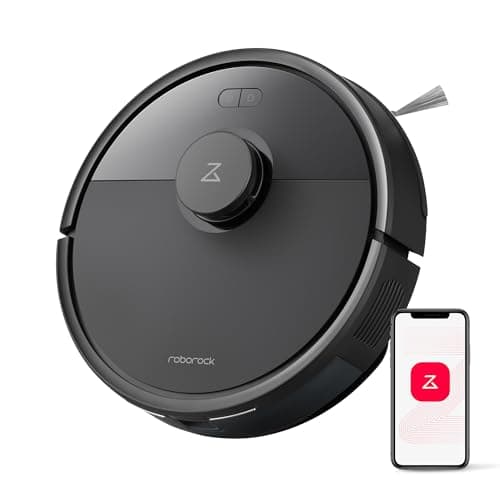
Roborock Q7 L58,000Pa and real LiDAR mapping with no dock to buy bags for. The highest published suction of any machine here that empties into its own bin.
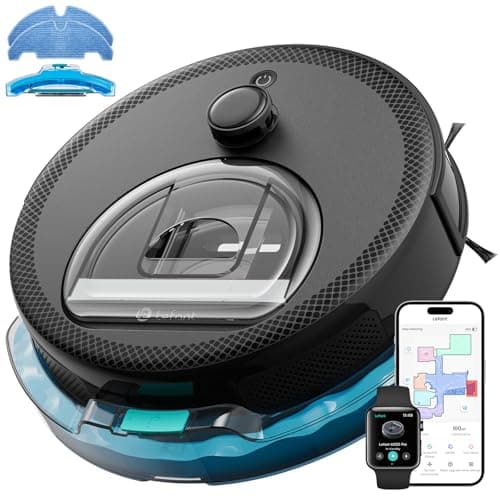
Lefant M330 ProPSD sensors that see cords and small objects, now with dToF mapping behind them. It publishes no suction figure at all, which is the trade.
Both machines scored on the published rubric from How We Pick: suction 25%, navigation 25%, pet hair 20%, running cost 20%, setup 10%. Editorial judgments about published specifications, not test results.
The criteria, before either machine
Four things decide this particular pair. We are setting them out first because three of the four are not on the front of either box.
What happens to hair. Either the machine has no roller for hair to wrap around, or it has a roller designed against wrapping. Both of these qualify, by completely different routes, and the route matters on carpet.
Whether anything agitates carpet pile. Suction lifts what sits on top of a carpet. Only a turning brush digs into it. This is the single axis where a published Pascal figure starts to matter.
Whether it sees obstacles or merely maps walls. A laser map knows where your walls are. It does not know a charging cable is on the floor. These two machines differ sharply here, and not in the direction the price suggests.
How tall it is, and how big the bin is. Both are things you live with daily and neither appears in a headline. One of these machines is nearly an inch taller than the other, and one holds more than twice as much dust while mopping.
The difference that decides it: one has a brush, one does not
The Q7 L5 keeps a conventional roller brush and specifies anti-tangle geometry on it, plus what Roborock calls a zero-tangle side brush. That second half is the part most anti-tangle claims in this price range quietly leave out, and the side brush is where long hair winds itself into a solid collar. So the Roborock's answer to hair is: keep the brush, engineer it so hair slides off.
The M330 Pro's answer is to remove the brush. Lefant states it has upgraded the anti-tangle suction port to eliminate hair wrap - debris goes straight into the airflow path through an open inlet, and there is simply no roller present for hair to wrap around. Maintenance drops to emptying the bin: no scissors, no weekly surgery on a brushroll.
On hard floors the brushless design is genuinely excellent and it is why the cheap Lefants punch above their price in pet households. On carpet it is a real weakness, because nothing is agitating the pile - the machine lifts what is sitting on top and leaves what is worked in. That is the whole trade, and the full version of it is on best for carpet and best for pet hair.
Specification by specification
Specification
Roborock Q7 L5
Lefant M330 Pro
What it means here
Hair handling
Anti-tangle main brush plus zero-tangle side brush
Anti-tangle suction port - no roller fitted
Both have an answer; only one works on carpet
Carpet
Roller brush agitates pile; 8,000Pa published
Detects carpet, boosts suction in vacuum mode, avoids it in mop mode
The Roborock's advantage, and the clearest reason to pay more
Suction
8,000Pa HyperForce
Not published as Pa - three modes (Quiet, Standard, Max)
dToF scanning to 15 m, multi-floor mapping, route planning
Both map and both hold more than one floor
Obstacle avoidance
Identifies cables and table legs, then suggests no-go zones
190-degree PSD, states millimeter-precision avoidance of cords and small objects
The cheaper machine makes the stronger claim
Height
3.89 in
95 mm (3.74 in)
Measure your sofa before choosing
Dustbin
Shared with the 270 ml water tank as one integrated part
450 ml visible dustbin, separate from the tank
Mopping costs the Roborock dust capacity
Mopping
270 ml tank, 3 water levels, mop and vacuum in one pass
200 ml refillable tank, washable pad
Similar; neither mop lifts
Runtime
150 minutes
150 minutes
Identical published figure
Wi-Fi
2.4 GHz only
Dual band, 2.4 GHz and 5 GHz
Matters on a mesh router, not otherwise
Self-emptying
None - charging dock only
None - charging dock only
You empty a bin on either machine
Every figure read from the two manufacturer listings on the day of publication. Lefant publishes no Pascal rating for the M330 Pro, which is recorded as not published rather than assumed weak.
What the Roborock does better
It publishes a suction figure, and it has a brush to use it with. 8,000Pa is a real number from a company that reports them consistently, and paired with a turning roller it means the machine can dig into carpet rather than skim it. If any meaningful part of your floor is carpet or a medium-pile rug, this is the machine on this page, and the rest of the comparison is secondary.
Its anti-tangle claim covers both brushes. Most do not. The side brush is where hair actually wraps worst, and Roborock names it specifically.
It mops and vacuums in a single pass with three water levels, rather than asking you to run the floor twice. Whether a budget robot mop earns its keep at all is argued on is a robot mop worth it.
What the Lefant does better
Nothing can wrap around a part that is not there. For a long-haired cat or a shedding dog on hard floors, an anti-tangle suction port beats an anti-tangle brush, because the failure mode is removed rather than mitigated. This is the single most underrated specification in the budget tier.
It is 95 mm tall and the Roborock is 3.89 inches. That is roughly a sixth of an inch of difference on paper and the difference between fitting and not fitting under a specific sofa in practice. The Q7 L5's LiDAR turret sits on top of the body and there is no way around it. Published heights across the whole field are tabulated on best for low furniture.
A 450 ml visible dustbin, separate from the water tank. Roborock designs the Q7 L5's tank and dustbin as a single integrated part, so filling the tank costs you dust capacity on that run. On a machine with no dock, where you are the emptying mechanism, that is a daily difference rather than a spec-sheet one. Lefant also makes the bin visible so you can see when it needs emptying.
It detects carpet and does something sensible about it. In mopping mode it avoids carpet to keep it dry; in vacuum mode it boosts suction to maximum when it meets one. The Roborock's mop does not lift either, so a rug needs a no-go zone drawn around it manually.
Dual-band Wi-Fi and a stronger avoidance claim, both covered above. And it is the cheaper of the two.
What neither of them does
Neither empties itself. Both ship with a charging dock and nothing more, so with a shedding pet you are emptying a bin every run or two. If that is the chore you actually want solved, neither machine on this page is the answer and you should be reading the cheapest self-emptying robot vacuums instead, or is a self-emptying robot vacuum worth it first.
Neither mop lifts. Both are a damp pad dragged behind the machine, so neither can do a mixed floor of hard surface and rug in one pass without a zone drawn around the rug. And neither has structured-light obstacle avoidance - the M330 Pro's PSD is the better of the two claims by some distance, but it is not the same sensor class.
Which one we would buy
Mixed floors with any real carpet: the Roborock Q7 L5. The roller brush and the published 8,000Pa are what carpet actually needs, and its anti-tangle geometry means the brush is not a liability in a pet household. You pay more, you get a taller machine with a smaller effective bin while mopping, and on hard floors you are paying for an advantage you will not use.
Hard floors, pets, clutter or low furniture: the Lefant M330 Pro. No roller to unwind, a sensor that claims to steer around the cable nest rather than annotate it afterwards, 95 mm of height, a bigger separate bin, dual-band Wi-Fi, and a lower price. The honest caveat is that Lefant publishes no suction figure for it, so its headline capability cannot be placed on the same scale as anything that does - and Lefant is a less established name for warranty and spare parts in three years than Roborock is.
8,000Pa is the highest published suction figure of any machine here without a self-emptying dock, and nothing under about $150 publishes more than 5,300Pa
Real LiDAR with multi-level maps, so keep-out zones and room-by-room cleaning both work
Both brushes are designed against tangling, and the side brush is where long hair actually wraps
No dock means no bags, ever. The filter is washable and there is nothing on subscription
Vacuums and mops in a single pass rather than making you run the floor twice
What it gives up
3.89 inches tall - the LiDAR turret puts it nearly an inch above the slimmest machines here, so low sofas and bed frames are out
You empty the bin yourself, and the tank and dustbin are a single integrated part, so mopping costs you dust capacity
Roborock publishes no dustbin volume for this model at all
It suggests no-go zones around cables rather than seeing and steering around objects - that is not obstacle avoidance
2.4 GHz Wi-Fi only, which is an annoyance on a mesh network
The listing advertises three water levels but the published specification table states two power levels, and Roborock does not reconcile the two
Our scoring
Suction8.0
Navigation8.5
Pet hair8.0
Running cost8.5
Setup8.0
Weights and the arithmetic behind the total are published on How we pick so you can recompute this yourself.
Who it is for: Somebody who wants mapping and real suction on hard floors and rugs, and would rather empty a bin than keep buying bags.
Skip it if: anything you need cleaned under sits lower than four inches. At 3.89 inches this machine is tall for the class, and no amount of suction helps with a floor it cannot reach.
#2 - Best obstacle avoidance under $150Score 7.5/10
PSD sensors that see cords and small objects, now with dToF mapping behind them. It publishes no suction figure at all, which is the trade.
Published specifications
Suction
Not published as Pa. Three modes: Quiet, Standard, MaxSource: Manufacturer listing
Navigation
dToF navigation scanning to 15 m, with multi-floor mapping and route planningSource: Manufacturer listing
Obstacle avoidance
PSD (position sensitive device) detection of furniture, cords and small objectsSource: Manufacturer listing
Runtime
Up to 150 minutesSource: Manufacturer listing
Dustbin / water tank
450 ml visible dustbin, 200 ml refillable tank with a washable padSource: Manufacturer listing
Height
95 mm (3.7 in)Source: Manufacturer listing
Carpet handling
Avoids carpet in mop mode, boosts suction when vacuuming itSource: Manufacturer listing
Wi-Fi
Dual band, 2.4 GHz and 5 GHzSource: Manufacturer listing
What it gets right
PSD avoidance is named for the objects it detects - furniture, cords and small items - which almost nothing else at this price claims
dToF mapping with multi-floor maps, at a price where most machines still have no map at all
An anti-tangle suction port rather than a roller, so there is nothing for hair to wrap around
A 450 ml visible bin, so you can see when it needs emptying instead of guessing
What it gives up
No published Pascal figure anywhere on the listing, so its headline capability cannot be compared with anything
At 95 mm it is taller than the slimmest machines here and will not clear the lowest furniture
The mop is a washable pad on a 200 ml tank - maintenance mopping, not scrubbing
No self-emptying dock, so the bin is yours to empty
Our scoring
Suction5.5
Navigation8.5
Pet hair7.5
Running cost8.5
Setup8.0
Weights and the arithmetic behind the total are published on How we pick so you can recompute this yourself.
Who it is for: A cluttered hard-floor home where cords and toys stop the machine more often than dirt does.
Skip it if: you shop on suction figures. Lefant publishes none for this machine, so on a specification-led ranking it is unverifiable exactly where you would want a number.
Questions people actually ask
+−Is the Roborock Q7 L5 or the Lefant M330 Pro better?
It depends on your floors, not your budget. The Q7 L5 keeps a roller brush and publishes 8,000Pa, so it is the better machine on carpet. The M330 Pro has no roller at all, so hair cannot wrap around it, and it is slimmer, has a bigger bin, claims real obstacle avoidance and costs less - which makes it the better machine on hard floors.
+−Which one is better for pet hair?
On hard floors, the Lefant M330 Pro, because its anti-tangle suction port has no roller for hair to wind around - the failure mode is removed rather than mitigated. On carpet, the Roborock Q7 L5, because its anti-tangle roller still agitates pile while resisting wrap. Both have a genuine answer to hair, which is unusual at this price.
+−Do both of these map your home?
Yes, and both hold more than one floor. The Q7 L5 uses 360-degree LiDAR with multi-level maps; the M330 Pro uses dToF scanning to 15 meters with multi-floor mapping and route planning. Neither is the compromise option on navigation.
+−Which one avoids obstacles better?
The Lefant M330 Pro, on the published claims. Lefant states a 190-degree PSD sensor that detects and avoids furniture, cords and small objects with millimeter precision. Roborock states the Q7 L5 identifies things like cables and then suggests no-go zones for them, which is a map annotation rather than live avoidance. Neither uses structured light.
+−Does either one empty itself?
No. Both come with a charging dock only, so you empty the bin by hand. The Lefant holds 450 ml in a visible bin separate from its water tank; Roborock builds the Q7 L5's dustbin and 270 ml tank as a single part, so mopping reduces its dust capacity.
+−Which is slimmer?
The Lefant M330 Pro at 95 mm, against 3.89 inches for the Roborock Q7 L5, whose LiDAR turret sits on top of the body. If you are buying specifically to clean under a low sofa or bed frame, measure the gap first - that difference decides it.
Sources
Every specification quoted above was read off one of these documents on the date shown. Where a manufacturer does not publish a figure, this site says "Not published" rather than estimating it.
Availability and specification check, 2026-10-13Both ASINs resolved through the Amazon Creators API on the day of publication and confirmed in stock with a new-condition offer, and both listings re-read in full on the same day. Model identity confirmed from each listing's own specification table (roborock Q7 L5; M330 Pro). Every figure on this page is quoted from those two listings.